
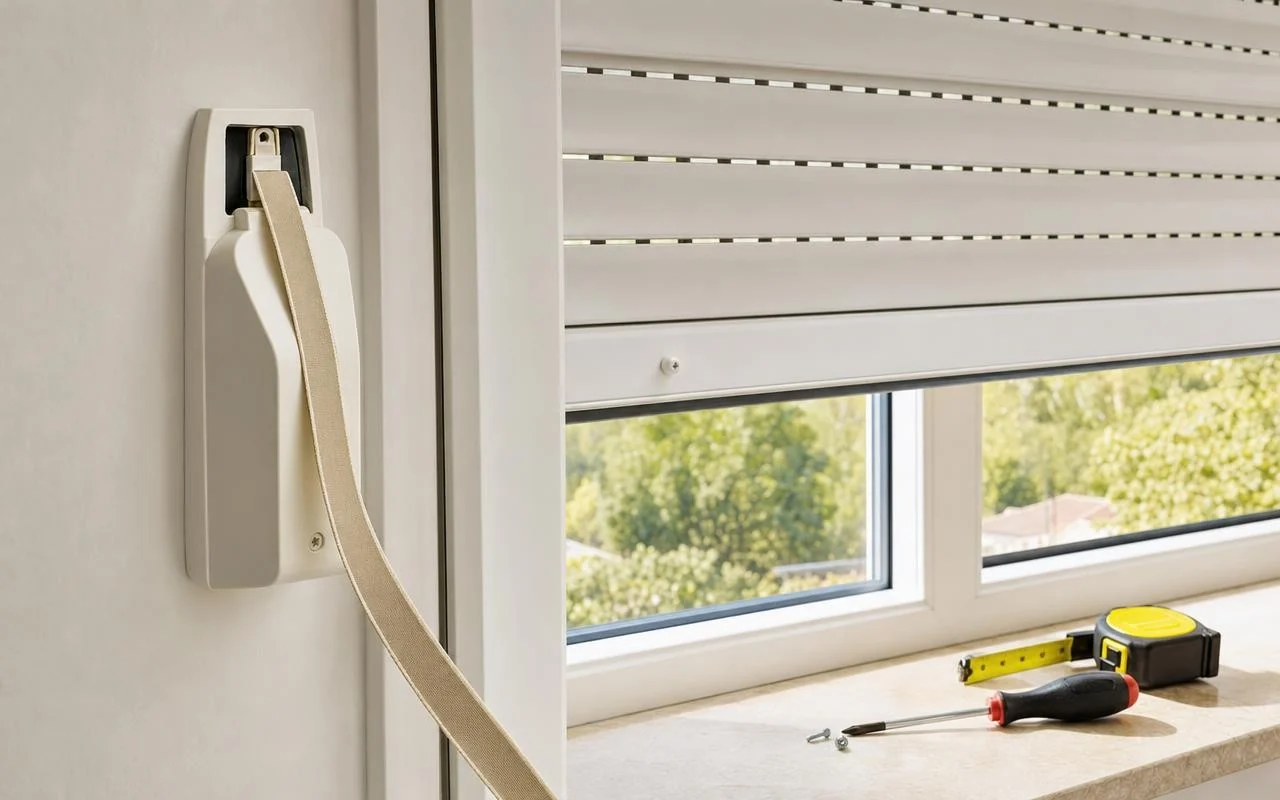
The scene is familiar in many homes: you pull on the strap of the roller shutter, a small crack is heard and the strap stays in your hand. The shutter is stuck, darkness fills the room, and it feels like you’ll have to call a repairman urgently. This little everyday incident often gives the impression of a technical repair reserved for professionals in closures.
Yet, professionals and experienced DIYers all say the same thing: on a manual roller shutter in good condition, replacing the roller shutter’s strap takes only a few minutes. In a video, a DIY-obsessed neighbor sums up the situation with a laugh: “The rope of the shutter has broken? Don’t worry, we’ll fix it in a moment,” explains the handyman. The whole challenge is to correctly identify the right case and the single truly delicate step.
Replacing the rolling shutter strap: when five minutes are realistic
Professionals remind us: the fast method applies to manual rolling shutters with a strap, the most common in homes. With use, friction and sun exposure wear the strap, it loosens and eventually breaks. As long as the sash moves up and down correctly, the axle turns freely, and the housing opens without difficulty, we remain in the simple scenario where doing it oneself stays reasonable.
The tutorial described in the source specifies that this method concerns these strap-driven manual shutters. If the shutter is motorized, operates with a crank, or if the issue comes from the axle, the slats, or the guides, the repair changes entirely in nature and becomes more complex. The same applies if the housing is very difficult to open, or if the shutter is particularly large and heavy, which makes handling risky. In these situations, specialists clearly recommend calling a professional.
Tools, suitable strap and preparation for the rolling shutter
Before getting started, it’s best to be well prepared. The source mentions a very short list: a screwdriver, scissors or a utility knife, a new strap, and, if the old model is damaged, a new roller with its housing. A key point: the new strap must have the same width as the old one, otherwise it will jam in the pulley or in the roller. The most practical approach is to bring a piece of the old strap to the shop for comparison.
For the length, the text suggests a simple rule: choose a strap a little longer than twice the height of the window, the spring of the roller taking care of absorbing the excess. Once the material is ready, open the shutter housing, lower the shutter to the maximum, then unhook the fasteners that connect it to the axle. At the bottom, unscrew the old roller and cut the worn strap so you can remove the covering cleanly.
Key steps and spring tension: the mistake to avoid
The repair itself follows a series of short actions. The source details a very concrete sequence:
- thread the new strap through the housing, tie a sturdy knot and fasten it to the pulley on the axle inside the housing;
- wind the strap by hand onto the pulley, then reattach the shutter to the axle and raise the shutter so that the strap descends;
- thread the strap through the brake of the new roller, apply tension to the spring by turning it clockwise;
- lock the spring, clamp the strap into its anchoring tab with a small notch, then let the spring take up the excess before screwing the roller back on.
It’s precisely the tension of the roller’s spring that accounts for most mistakes. The source stresses: if you give it too few turns, the strap won’t wind back completely and will hang loose. If you force it too much, the spring will operate continuously and may break faster. You must therefore turn it gradually, feel the force by hand, and never let go suddenly, as it stores energy and can whip your fingers. Work gloves provide real comfort. Before closing the housing, professionals recommend moving the shutter up and down several times to check that the strap slides smoothly, without twisting, and that everything nests properly.
Sources
- Maison & Travaux
“Planes and buses have them, but trains don’t: here’s why trains don’t have seat belts”
