
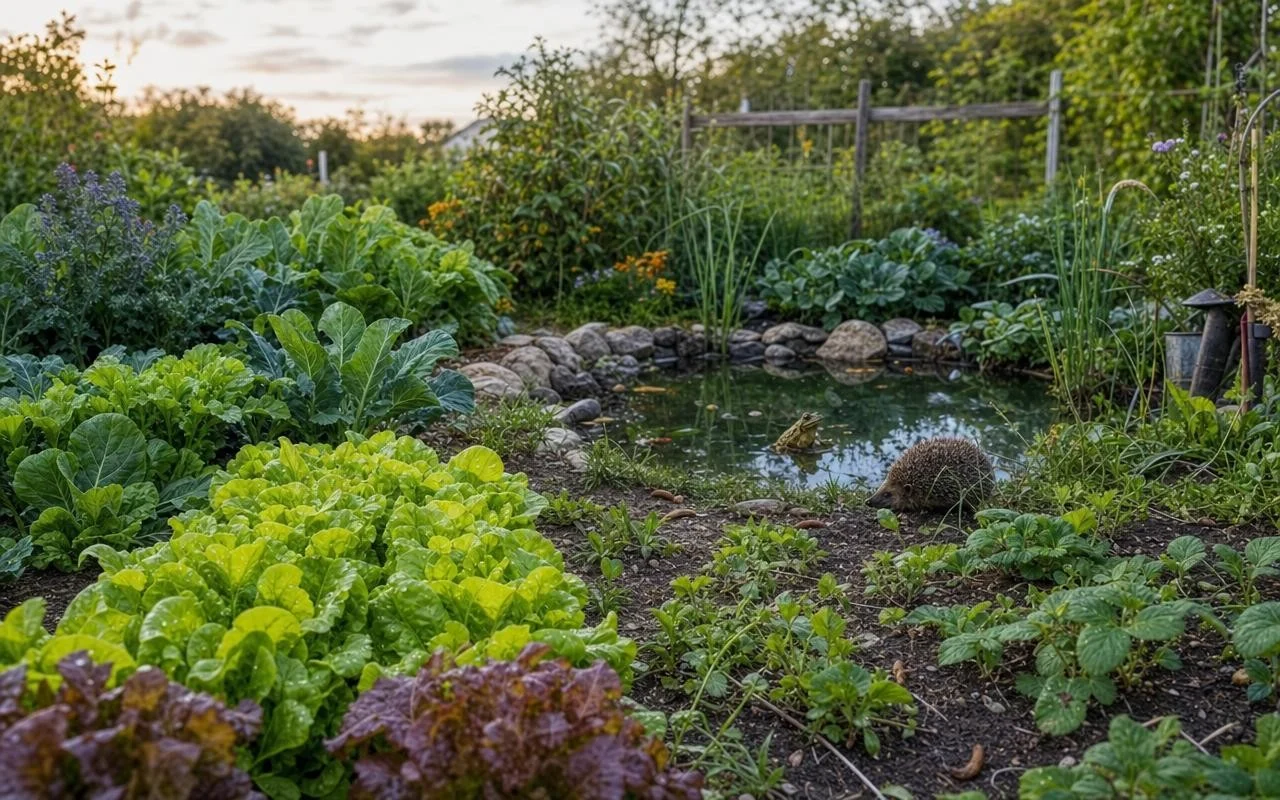
At first, I mainly noticed the damage: rows of lettuce shaved off in a single night, strawberries punctured, young seedlings gone by morning. Like many, I tried slug pellets, ash barriers, a few improvised traps, without really getting back a handle on the vegetable garden.
The turning point came at the end of summer, almost by chance, when I dug a small hollow at the back of the garden, simply filled with rainwater. When the nights cooled, early September, the slugs began to become rare around the beds. The most surprising thing happened actually around this tiny water point.
Water point in the garden: why the slugs had the upper hand
The humid summer months create ideal conditions for slugs: cool soil, tender foliage, frequent watering. These gastropods come out at night, hide at daybreak and can destroy entire rows of young plants in a few hours. Without natural regulation, their population climbs very quickly, especially in gardens that are very “tidy”.
In reality, the problem wasn’t just the number of slugs, but the absence of predators capable of curbing them. Vegetable plots without piles of leaves, nor dense hedges, nor available water: many useful animals, such as the common toad, frogs or the hedgehog, simply don’t find their place there. The biological imbalance then leaves the way clear for slugs.
Mini-pond, water bucket and predators: how the water point makes slugs disappear
Digging a small pond of 40 to 60 centimeters in diameter and 30 to 50 centimeters in depth amounts to installing a new micro-habitat. In a few days, insects, birds, amphibians and small mammals come there to drink or to hunt. The end of August proves ideal: nights begin to cool, while remaining sufficiently mild for new inhabitants to settle in permanently.
Naturalist associations like The Wildlife Trusts remind us that “ponds are a vital habitat for frogs and important for other amphibians as well, because that’s where they breed,” and also essential hydration points, these animals absorbing water through their skin. In the evening, toads and frogs patrol around the water and swallow an impressive amount of slugs. The hedgehog, drawn to a water reserve as well, completes this trio of nocturnal hunters by crunching slugs and snails along the way.
Create at home this little water point to deter slugs, without mosquitoes or chemicals
To reproduce this trick, two options are equally valid: a mini-pond dug into the ground or a large bucket transformed into a basin. Dorset Wildlife Trust advises burying the container flush with the ground so that amphibians and hedgehogs can access it easily, with a gentle slope or a “ramp” formed by a stone, a brick or a piece of wood. Rainwater remains the best option, complemented by a bit of soil and a few tufts of grass that will create natural border vegetation.
Wildlife protection organizations stress several simple rules. No trace of pesticides or toxic baits should be around the basin, because frogs and toads also absorb chemicals through their skin. It’s better to avoid fish, which would devour eggs and tadpoles. To ensure that this refuge does not become a mosquito nursery, informational articles remind that their eggs can hatch in 24 to 72 hours in completely stagnant water; however, checking every two or three days is enough to keep the balance:
- remove dead leaves and floating debris,
- gently stir the surface of the water,
- add a little clean water if evaporation occurs.
A slightly shaded location limits warming of the water and evaporation, while maintaining a cool atmosphere appreciated by amphibians. Nearby, a wild corner with fallen leaves and small pieces of wood provides shelter for hedgehogs and other helpers. By adjusting the garden’s watering to the morning rather than the evening, the soil dries before nightfall and the slugs have more trouble moving. As the first cool nights of September arrive, the activity of these nocturnal visitors increases, and the rows of lettuce gradually stop being gnawed.
Sources
- Mon Jardin Ma Maison
“Why gardeners advise putting a bucket of water in the garden right now” - Modes & Travaux
“Against March slugs, forget beer: this 0-euro trick works much better”
