
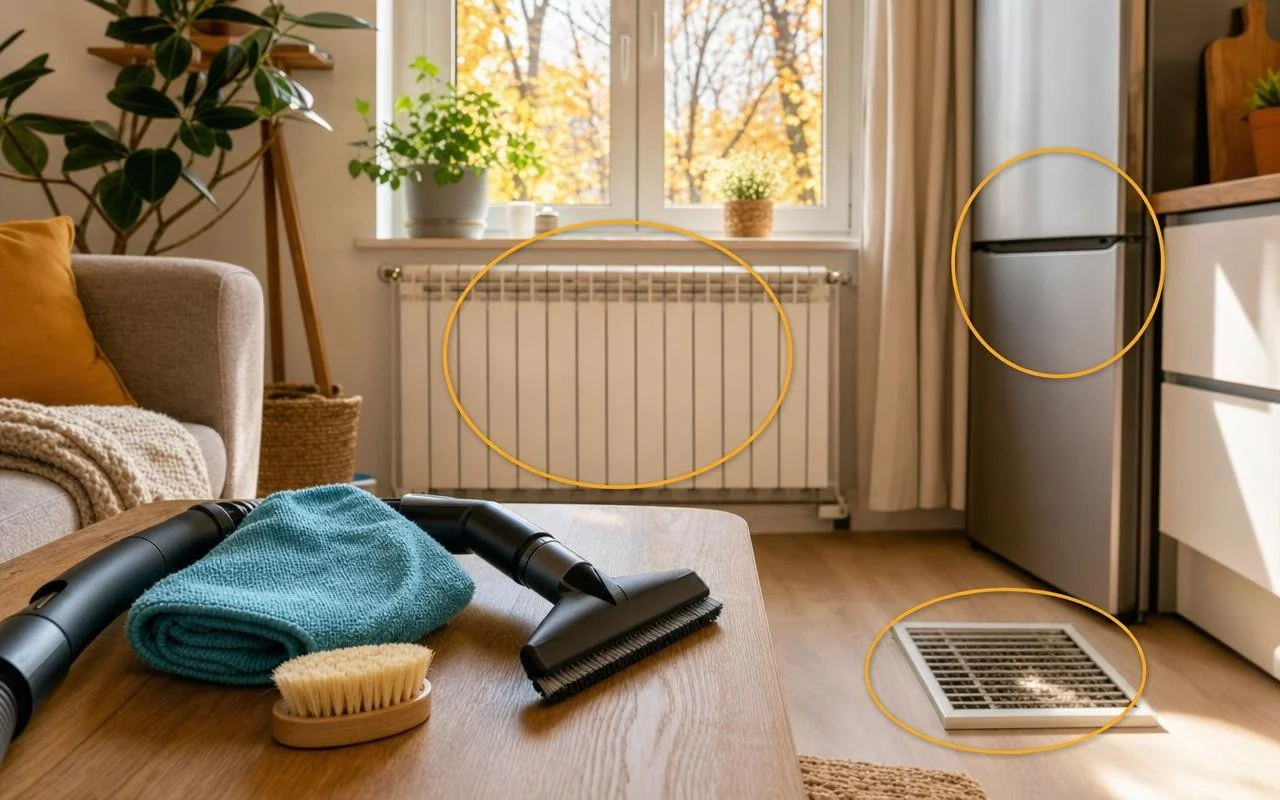
When autumn arrives and the temperatures drop, we immediately think of turning up the thermostat or pulling out the blankets. What’s less noticeable are the layers of dust, grease, or frost hiding inside the home that push your appliances to consume more energy. Before cranking up the heat, a quick round of cleaning can already make a difference on the energy bill.
Good news: this isn’t about big renovations but seven small zones to check, each in five minutes or less. By freeing heat and improving air circulation, you let your radiators, your freezer, or even your washing and cleaning machines run faster and for shorter periods. Dirt then acts as insulation or a clog, and that’s where the kilowatt-hours soar.
Heating and Cooling: Two Quick Clean-Ups for Radiators and the Freezer
First stop around the heating system. A radiator covered in dust disperses heat less effectively, because this thin layer acts as a barrier and insulates it. As a result, it must stay hot longer to reach the same room temperature. To fix this in a few minutes, lay a towel on the floor, switch off the radiator, then run a radiator brush between the fins before finishing with a slightly damp microfiber cloth on the front.
In the kitchen, then check your freezer. An excessive thickness of frost, beyond about six millimeters, forms an insulating layer and forces the motor to run longer to maintain the proper temperature. Start by discarding any foods that are unidentifiable or frost-covered, clear the air vents, then unplug the appliance to start defrosting. These steps take under five minutes, and the rest happens as the ice melts.
Washing Machines and Dishwashers: Remove Scale and Residues for More Efficient Cycles
On the laundry side, the washing machine deserves a rapid maintenance as well. When scale coats the heater and detergent residues clog the ducts, water heats more slowly and the machine works harder. The simplest solution is to run a cleaning cycle on a hot empty load with a dedicated washing-machine cleaner. Some people occasionally use white vinegar, 200 milliliters in the detergent tray, but only occasionally, as it can weaken the seals.
The dishwasher works on the same principle. Scale and leftover food slow water circulation and force the pump as well as the heating element. In practice, remove the filter, rinse it under hot water, manually remove visible clumps, then put it back in place. Then run a hot empty cycle with a cleaning and descaling product; another option is a 500-milliliter bowl of white vinegar placed on the top rack, to be reserved for occasional cleansings.
Oven, Tumble Dryer and Solar Panels: Three Areas to Clean to Limit Consumption
In the kitchen, the oven can quickly become an energy sink when it is coated with baked-on grease. A cleaning company estimates that a very dirty appliance can use 10 to 25% more energy, because heat is absorbed by the deposits instead of heating the food. In five minutes, remove the racks, scrub thick splatters with a sponge and an appropriate cleaner, or empty the oven and run a pyrolysis cycle after ensuring that no cloth touches the door.
Last overlooked duo: tumble dryer and solar panels. A clogged lint filter blocks hot air, extends drying cycles and raises consumption; open it after every load and simply remove the lint with your fingers. For solar panels easily accessible from the ground, removing dead leaves and small branches is enough to limit performance losses observed when modules remain dirty.
