
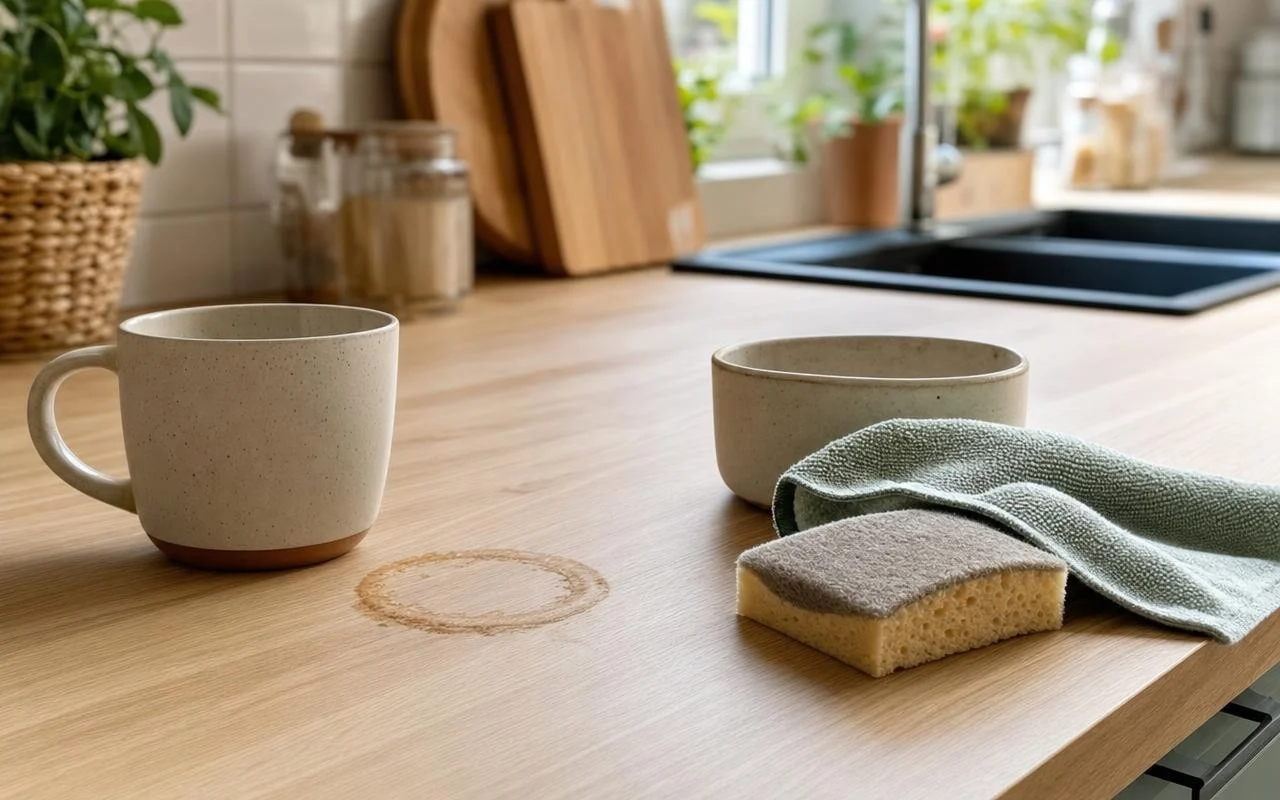
A cup of coffee left a few minutes too long, and suddenly a nasty brown halo appears on the worktop. On a laminated countertop, the temptation is strong to scrub hard or reach for a very powerful product, risking a permanent mark on the surface.
The good news is that laminate has a smooth, nearly hermetic surface: most stains stay on the surface and can be removed with simple moves, provided you use the right products. To remove a coffee stain on a laminated worktop without damaging the finish, the key is the order of methods and the gentleness of cleaning.
Immediate coffee cleaning on laminate: the right reflexes
As soon as the coffee spills, start by blotting with absorbent paper, without rubbing. Then a very gentle cleaning is often enough. Mix warm water with a drop of dish soap, then wipe the stained area with a microfiber cloth or a non-abrasive sponge. Rinse with clear water to remove any soap residue, then dry carefully, especially near joints and the sink where water tends to pool.
What really damages the finish are overly aggressive moves. Laminate manufacturers explicitly advise against abrasive sponges and scouring powders, which scratch the protective resin and whiten the pattern. Keep this in mind when you’re in a hurry:
- No scrubbing sponge or metal pad
- No scouring powder
- No steel wool
- Do not rub with heavy pressure
Removing a baked-in coffee stain without scratching
If the coffee mark has dried or the circle remains visible despite warm soapy water, a somewhat more active option is to use baking soda. Make a paste with a little water, apply it to the stain and let it sit for about two minutes. Then wipe with a damp microfiber cloth, rubbing very gently, rinse thoroughly and dry. Baking soda remains slightly abrasive, so it should be used as a spot treatment, not as your everyday cleaner.
For certain discolorations caused by a coffee residue left for a long time, a mild cleaning cream can help. Kitchen care guides recommend applying a pea-sized amount of Cif Cream or pure Chemico on a soft damp sponge, then rub the stained area without forcing. Once the stain fades, rinse well and wipe with a clean cloth. For a dark or very matte finish, a quick test in a less visible corner helps ensure the effect remains discreet.
Old Coffee Stains: Last Resort and Mistakes to Avoid
When the coffee stain is old and seems to have yellowed the laminate, a mild whitening agent like hydrogen peroxide can sometimes improve the appearance. Lightly dampen a cloth with hydrogen peroxide, place it over the mark for a moment while watching, then remove it. Rinse immediately with clear water and dry. Specialists recommend testing this type of product beforehand on a discreet area and limiting contact time to avoid altering the finish.
To protect your countertop in the long term, some reflexes are as important as stain removal itself. Manufacturers remind that laminate does not like concentrated bleach, nor strong or stripping solvents, which can discolor or leave the surface sticky. It’s also best to avoid placing a coffee maker or a hot mug directly on the surface, as heat can set marks. Wipe up coffee splashes immediately, use a coaster or a small mat under the coffee machine, and regularly clean with warm soapy water then dry thoroughly: these steps greatly reduce the risk of stubborn stains.
