
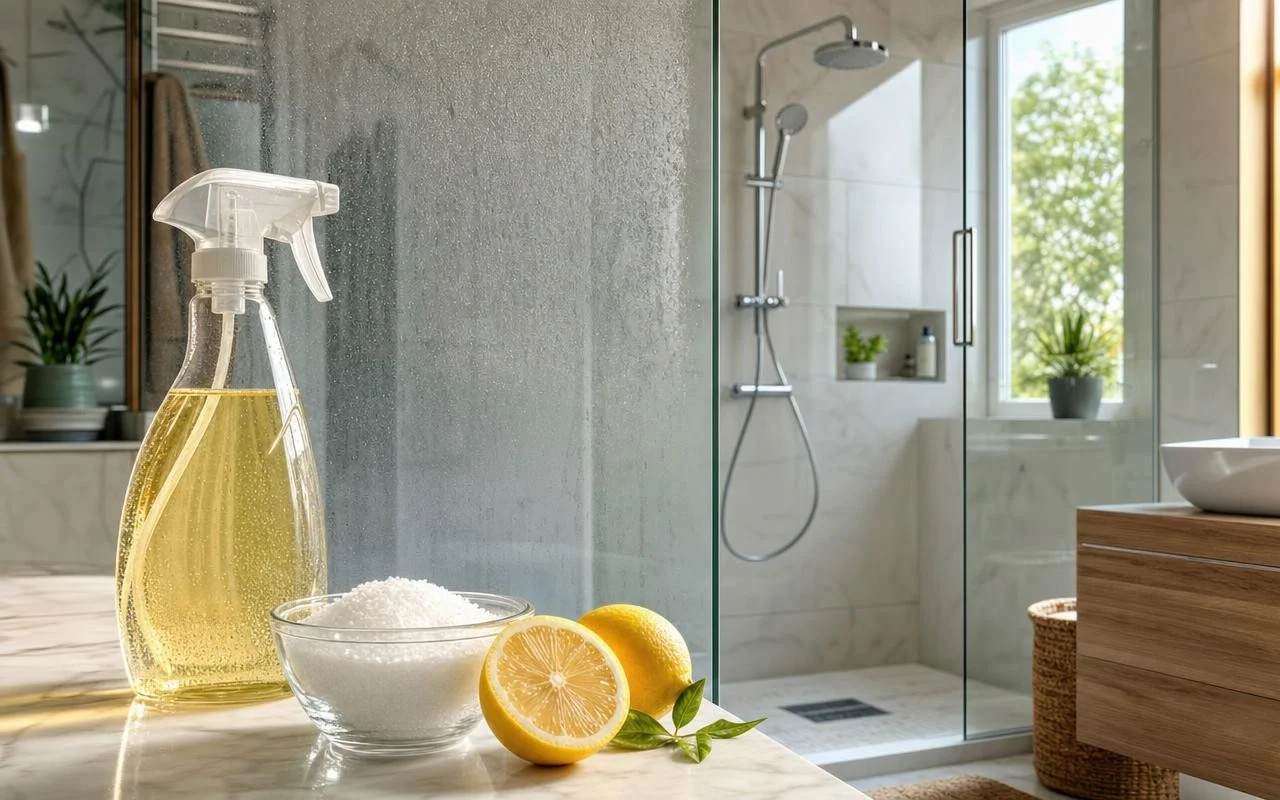
Stubborn white film, frozen droplets, a rough bottom edge on the glass… On the
shower wall, a mixture of mineral scale and soap quickly forms an opaque layer that resists ordinary cleaners. Many people end up wasting money on harsh products or scrubbing with abrasive sponges, risking scratching the glass.
Faced with this recurring problem, a simple solution often comes up: dissolve citric acid in water and apply it to the wall. This mild acid, used in many household descalers, is presented as highly effective against limescale while remaining user-friendly at home. Still, one must understand what it actually does and how to use it safely.
Why diluted citric acid works so well on the wall’s limescale
The mineral marks on the glass come from the minerals in the water (calcium carbonate and magnesium) that settle as they dry. Citric acid reacts with these mineral deposits and converts them into soluble salts that rinse away with water. On a shower wall, it attacks both the “crust” of the scale and the veil where soap residue and limescale mingle.
Compared to plain white vinegar, housekeeping guides emphasize that citric acid is nearly odorless and often more effective on deposits that are well entrenched. Manufacturers like Briochin pair it with vinegar in bathroom descaling foams, highlighting its ability to remove scale even when it’s firmly anchored and to leave surfaces clean and shiny.
How to properly dissolve citric acid in water before using it on the shower
For it to work correctly, the acid must first dissolve completely. Cleaning professionals remind that it does not dissolve well in cold water and can then recrystallize on the surface. They recommend preparing it in hot water, for example 1 tablespoon of citric acid powder for half a liter of hot water, then pouring it into a spray bottle.
Once the solution is ready, the key factor is the contact time. A manufacturer like Höfer Chemie indicates a contact time of 15 to 20 minutes for normal limescale, and up to 45 to 60 minutes in cases of substantial crust maintained under a damp absorbent paper against the glass. Practically, one can consider the following guidelines:
- Fresh film: even spraying, 10 to 15 minutes of contact, then rinse.
- Very encrusted limescale, especially at the bottom of the wall: a damp, absorbent paper towel applied against the glass for 30 to 60 minutes, then rinse.
- Regular maintenance: a lighter solution periodically applied to prevent the crusts from reappearing.
Precautions, common mistakes and regular maintenance of the shower wall
Manufacturers of acid-based descalants, such as Briochin, advise against using these products on surfaces sensitive to acids such as marble, calcareous stone or travertine. On these surfaces, citric acid could attack the stone itself. It is also wise to test the solution on a discreet area of silicone joints or aluminum trim to check for any unwanted reaction.
Another safety point echoed in housekeeping guides: never mix an acidic product (vinegar or citric acid) with Java bleach or any other chlorinated product. Briochin’s site also stresses the need to ventilate the room, protect your eyes, wash your hands after use, and keep the product out of reach of children. For those who prefer ready-to-use solutions, some citric acid-based cleaners, such as CITRUS or vinegar plus citric acid foams certified by Ecocert, advertise short action times, sometimes less than a minute on a clean panel, with a slight anti-fog effect to boot. Cleaning professionals finally recommend a simple step to limit the return of lime scale: run a squeegee over the glass about 30 seconds after each shower, followed by a gentle weekly cleaning with a diluted citric acid solution.
