
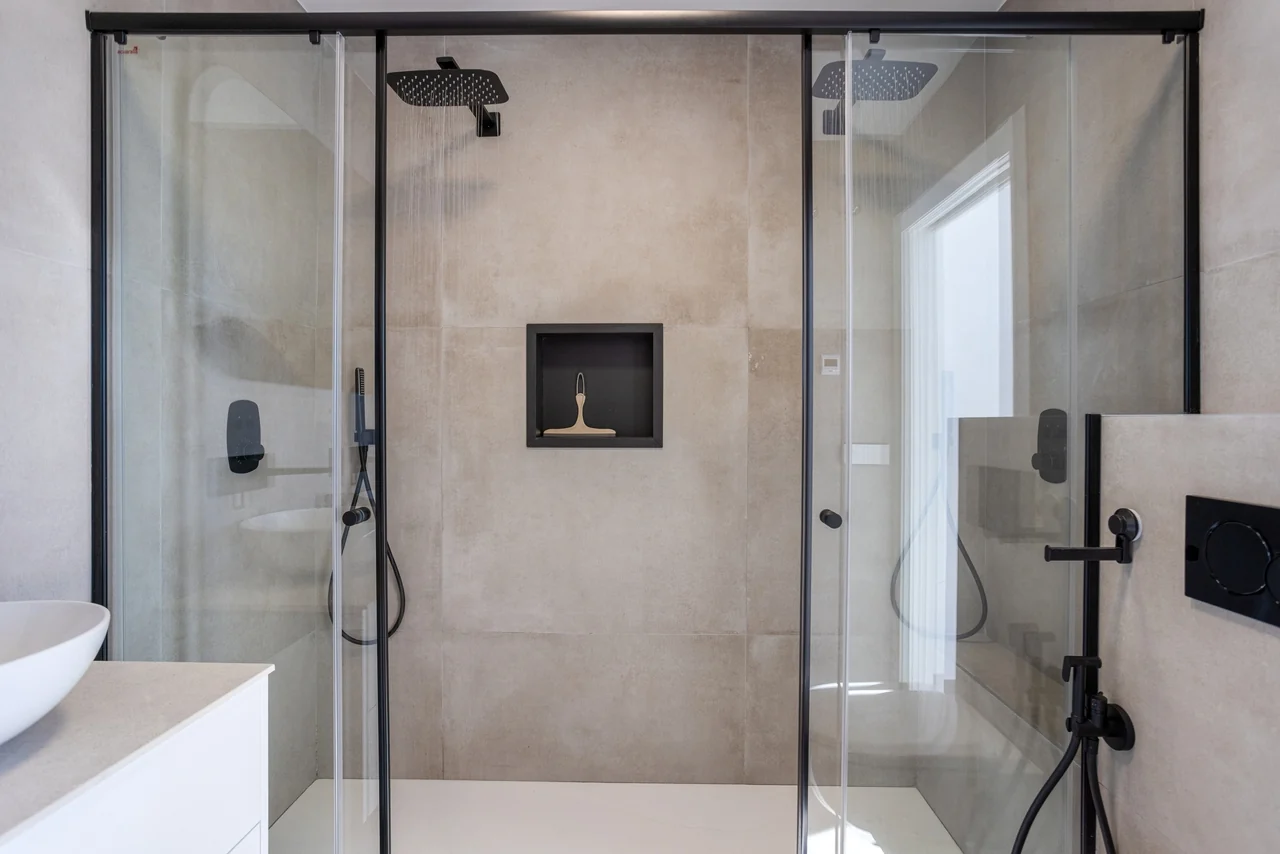
For more than a decade, the decorating magazine darling has been the iconic walk-in shower: an ultra-flat tray, transparent panels, and a spa-like feel at home. In reality, many bathrooms ended up dominated by vast shower zones, sometimes at the expense of storage and daily comfort. Between families with young children, fans of hot baths, and compact apartments, the model is starting to show its limits.
Interior designers today describe an opposite movement, inspired by bathrooms from the 1960s and 1970s. The aim is no longer to open up space to the maximum, but to recreate a bathing nook that is more enveloping, rational, and easy to live with on a daily basis. One particular configuration is drawing all the attention and shaking up habits.
Why the built-in bathtub is competing with the walk-in shower
The House Journal sums it up bluntly: “The built-in bathtub is indeed the element that returns to the front of the stage in bathrooms in 2026.” It refers to a tub installed against one or more walls, surrounded by tiled or mineral cladding. According to data reported by Maison et Travaux, 42 % of renovations listed on Houzz France choose a built-in bathtub, including 20 % in a rectangular alcove version, compared with only 18 % for freestanding bathtubs.
This rise is explained by space savings and ease of maintenance. A freestanding tub requires around 55 cm of clearance all around, which makes it hard to fit in less than 6 m². In an article cited by ELLE Decor, the freestanding tub is even described as “troublesome to clean.” The built-in version hugs the tub to the wall, eliminates corners, and hides the plumbing behind an apron with a removable access hatch, as the Facq guide notes. It also makes it possible to install a wall-mounted shower above for a true bath-and-shower combo.
Smart rim and winning configurations for a built-in tub
Another key advantage highlighted in 2026: the rim. Experts recommend a lip of 10 to 20 cm all around, functioning as an integrated shelf. Bottles, towels, a small lamp, or plants naturally rest there, without adding extra furniture. This rim also serves as a grip to enter the bath or to sit down, a detail appreciated in homes with children or seniors.
In terms of placement, this solution adapts to the most complex layouts. It can occupy an existing alcove, be raised on a platform to manage drainage, or tuck behind a small wall that hides the toilet. Before getting started, architects advise checking a few simple points:
- The width available between the walls to accommodate the chosen tub.
- The acceptable step height if a platform is necessary.
- The possibility of creating an apron with an access hatch to the plumbing.
- The possible addition of a shower screen over the tub for mixed use.
Materials and colors 2026: a truly design-driven built-in bathtub
Once considered ordinary, the built-in tub totally changes its image thanks to its cladding. Marble remains a safe bet to give character, with models like Arabescato Corchia or Carrara cited by ELLE Decor. Some architects opt for blue-tinged quartzites, such as Arcadia, or for a cobalt cobalt zellige. The House Journal also mentions olive-green tiles, perfect for drawing a distinctly styled bathing corner without erecting a full partition wall.
Wood also makes a very noticeable comeback. Teak, naturally more resistant to humidity, is often chosen to dress the apron and rim, provided that the right species is selected, installation is done carefully, and the room is well ventilated. An arched tiled arch above the tub or a partial low wall helps frame the volume, while letting light pass through. The result: a compact, practical bathroom, yet with a strong signature that bears little resemblance to the 60s models.
Sources
- JLM
“The walk-in shower is over: this 60s trend is returning to bathrooms for our utmost pleasure”
