
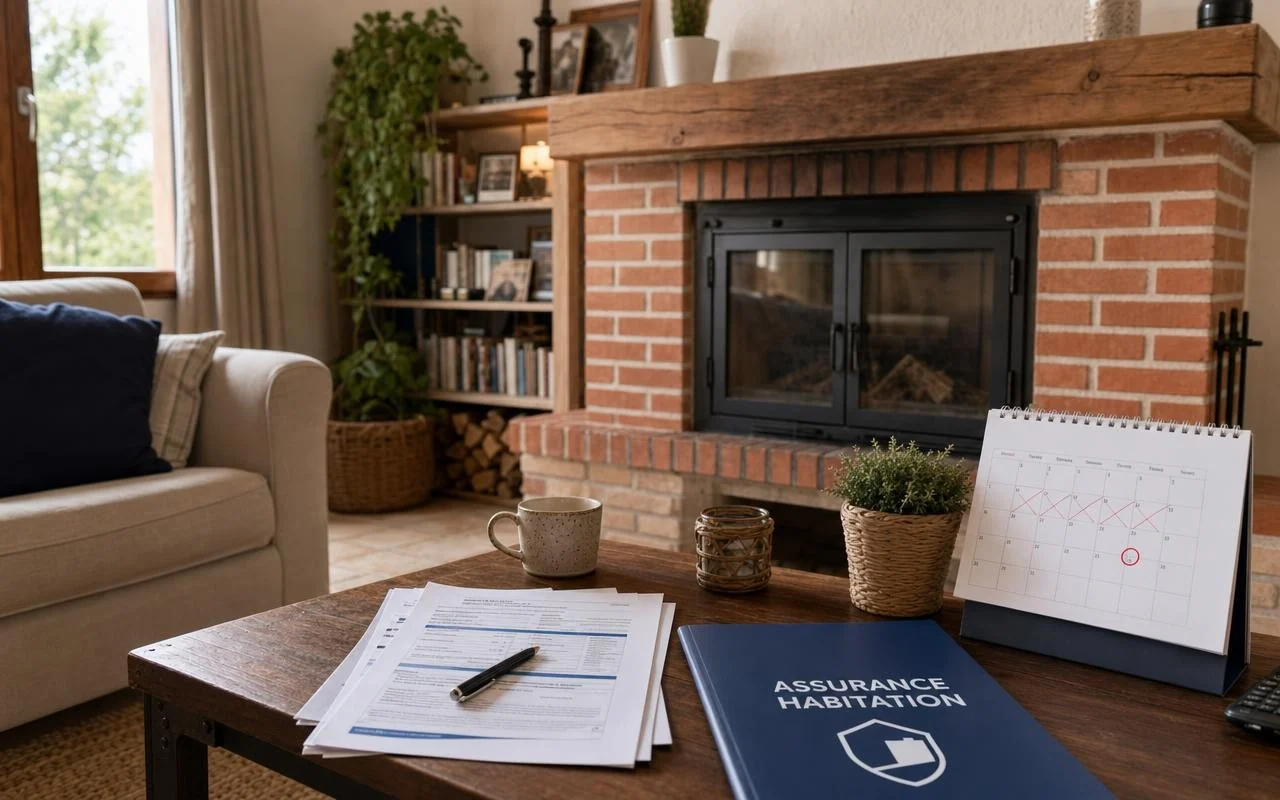
You have already summoned the chimney sweep for your fireplace this year, and you are convinced you are compliant. The maintenance log is stamped, the soot has fallen, and the heating period is approaching calmly. Yet one question remains unresolved: is this single visit truly sufficient in the eyes of the law, or could your department impose a second chimney sweep without you knowing it?
Since the entry into force of the Decree No. 2023-695 of July 29, 2023, the Public Health Code governs the sweeping of flue ducts and connecting pipes with greater precision. Article R1331‑71 establishes a national rule, but it also points to the powers of the prefect and the mayor through Article L1311‑2. In plain terms, this common baseline is sometimes supplemented by much stricter local requirements.
Ramonage obligatoire : que dit la loi nationale depuis 2023 ?
At the national level, the rule stated by Article R1331‑71 is simple on paper: flue ducts and connecting pipes must be swept “at least every twelve months.” It is a twelve-month interval, not a requirement tied to the calendar year. For collective installations, the text provides sweeping of the flue ducts at least every six months, including during the heating period. Some collective installations fueled exclusively by gaseous fuels benefit from a reduced cadence, limited to twelve months.
The same article also specifies what happens when the appliance is not in use. For individual installations, if it has not been used for at least twelve months, no sweeping is required during that period, but a visit remains mandatory before any restart. For some collective devices, the minimum pause is six months. This national baseline, arising from the 2023 decree, constitutes a minimum; local texts can go further.
Quand un arrêté préfectoral impose 2 ramonages obligatoires par an
This is where Article L1311‑2 of the Public Health Code comes into play: it allows the prefect or the mayor to issue a prefectural or municipal order to strengthen these rules, in the name of health protection. The official site Service-public.fr indicates that, in most departments, the departmental health regulation already requires two mandatory sweeps per year for chimneys and wood stoves, including one during the heating period.
A concrete example illustrates this tightening possibility well: in Bas-Rhin, the departmental health regulation provides that flue ducts must be swept at least twice a year, with one intervention during the usage period. Other territories have adopted similar rules. If these frequencies are not observed, you face a Class 3 misdemeanor, meaning a fine of up to €450, and potentially complicated discussions with your insurer in the event of a fire.
Cas particuliers, attestation de ramonage et comment vérifier votre département
For buildings in co-ownership with collective heating, the sweeping of the flue ducts is organized by the property manager. Article R1331‑71 requires a visit at least every six months, including during the heating period, unless the collective installation operates solely on gas with ducts never used for solid or liquid fuels, in which case the interval becomes twelve months.
Another often overlooked point: the text creates a right for the user, the attestation of sweeping. In accordance with Article R1331‑75, the professional must provide, after each intervention, a document noting, among other things, the emptiness of the duct; it must be kept for at least two years. To determine whether one or two mandatory sweeps per year are required in your area, the simplest approach is to check with your town hall or the prefecture and to request the departmental health regulation and any municipal orders on the matter.
