
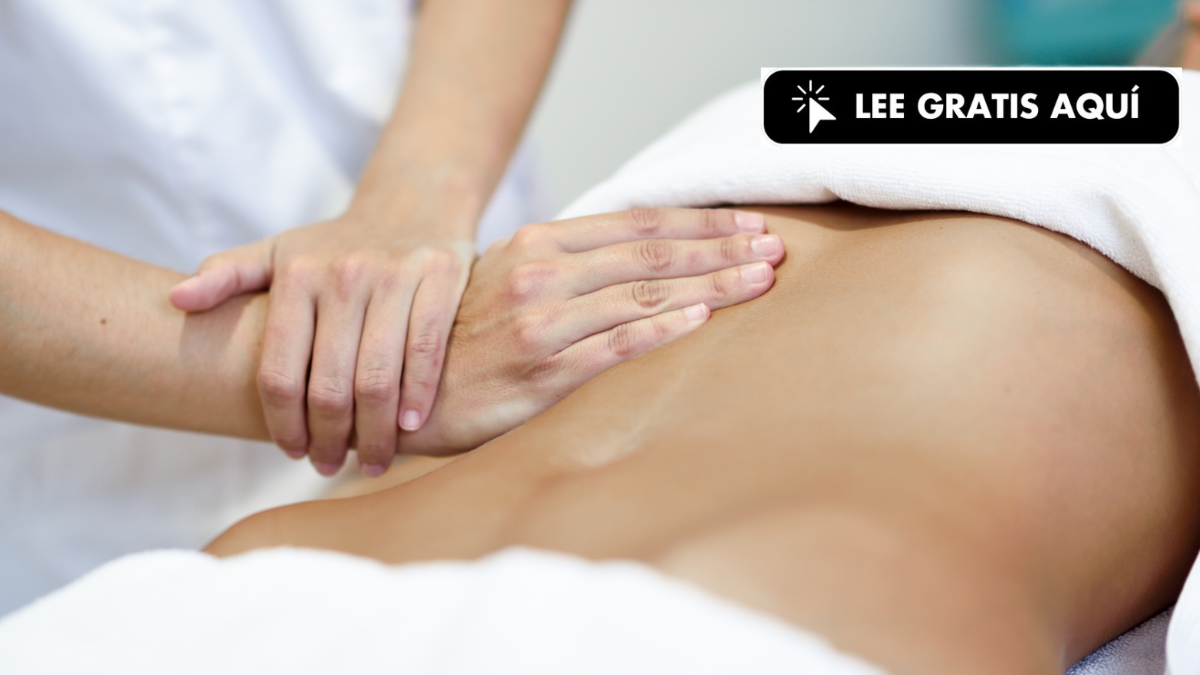
I have spent years trying out massages and body treatments. In fact, I remember that when I was little, my mother already went to a masseuse who worked opposite our home and who performed fairly intense manual massages.
Later, when I started to worry about cellulite, I even asked for a massage package as a birthday gift.
Since then, they have become a regular part of my routine: I try to fit one or two sessions into my week, and whenever I can, “I don’t skip a session.”
I have tested different techniques and professionals in various places in Spain and also outside our country, in cities like Rio de Janeiro or São Paulo. That’s why, when I encounter a method that particularly interests me, I like to understand what lies behind it and who carries it out.
That is what happened with Daniela Cavalcante, creator of Dany Redux, a technique that combines manual massage with other tools and that, from my experience, “goes a step beyond” conventional reductive treatments.
A personalized massage that does not always follow the same steps
Daniela has been working as a masseuse for about 20 years. Her path began in Brazil, where she trained and started treating people who needed specific care after surgery. Today, she runs a center in Barcelona, where she has been for nine years, and also sees clients in Madrid on Fridays and Saturdays.
View this post on Instagram
One of the peculiarities of her method is that she does not apply exactly the same technique to every person. Before starting, she observes the needs of each body and adapts the treatment according to what she considers most appropriate.
It is not the same to work with someone who mainly experiences fluid retention as it is with another who seeks to address areas with greater fat deposition or sagging.
To do this, she combines different resources. Manual massage occupies a central place, while radiofrequency can be incorporated when she aims to tackle sagging, and cavitation when she considers a higher density of fat.
View this post on Instagram
The treatment finishes with a facial massage that incorporates movements inspired by Kobido, a Japanese technique renowned for its work on the face. It’s a detail that turns the session into a more complete experience and, personally, I appreciate it.
The Importance of Choosing Good Hands
After so many years of trying massages, I’ve learned that not all of them are the same. The experience and training of the person performing them are fundamental. It’s not just about applying force or insisting on a particular area; it’s about understanding the body and knowing which technique to use at each moment.
I also believe that massages can be a valuable complement to other habits, such as physical activity and daily care, though they do not replace a healthy lifestyle or provide permanent results.
As Daniela explains to me, the duration of the changes also depends on aftercare and ongoing maintenance.
Over the years I have tried many massages and continue to enjoy discovering new techniques. But if there’s one conclusion I’ve reached, it’s that when I find skilled hands and a treatment that feels right, I make sure to schedule it into my calendar.
