
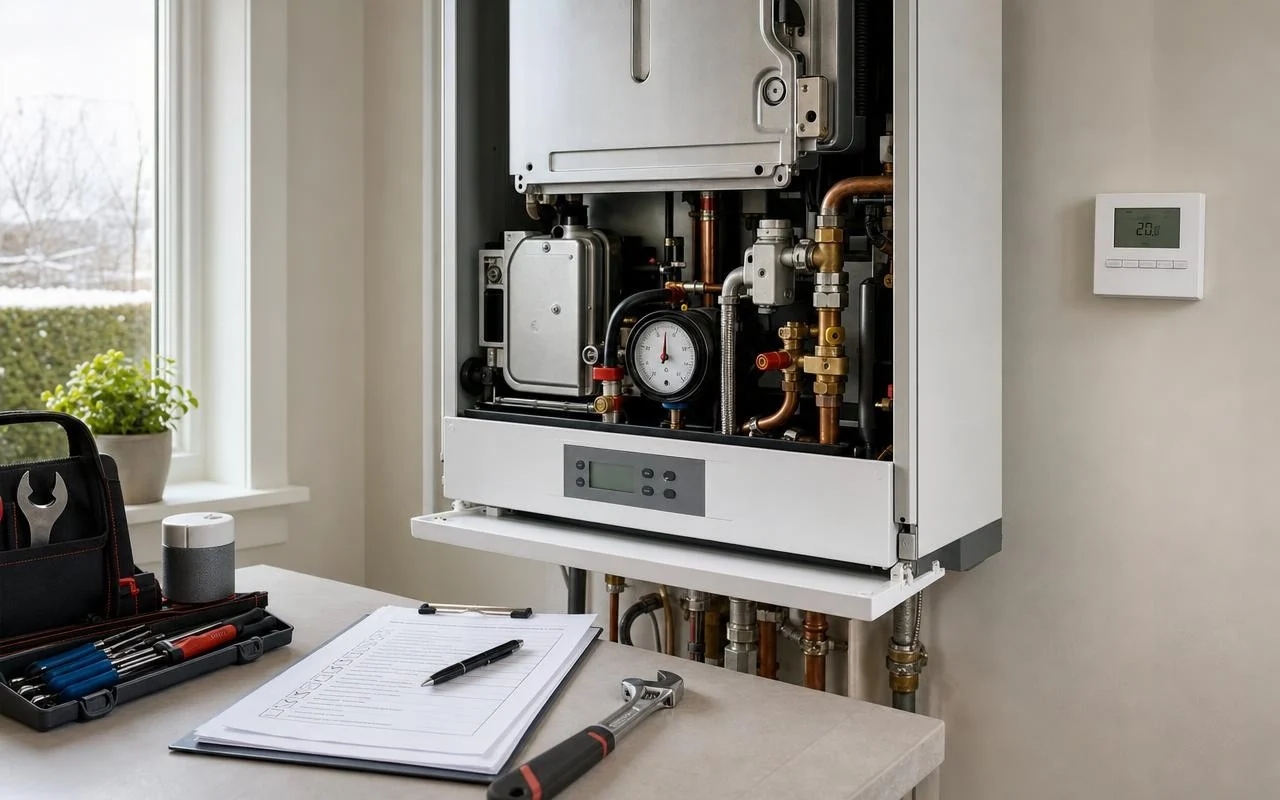
Cold autumn mornings, a boiler coughing, tepid radiators: each fall, tradespeople see an influx of urgent calls for avoidable breakdowns. For specialists in air conditioning and plumbing, the message is clear: before winter, a few simple checks are enough to prevent discomfort, energy waste and risks to the installation. Yet one must know where to start and what to check.
HVAC and plumbing experts summarize the priority in a single clear directive: “Make sure to follow these steps to ensure optimal operation,” they explain. Open valves, no leaks, correct pressure, radiator bleeding, well-placed thermostat… This checklist, echoed by Spanish and French professionals, allows stress-free preparation for restarting the boiler before winter. A routine of a few minutes that can prevent many unpleasant surprises.
Restarting the boiler: the initial checks to perform before winter
Even before pressing the start button, the pros advise a visual inspection. You should check that all supply and return valves are open, that the pipes and radiators show no signs of moisture or drips on the floor. A leak, even a tiny one, ends up damaging the installation. Radiators should also stay clear, with no furniture, curtains or clothes resting on them.
The circulation of heat within the rooms also plays a key role. A radiator tucked behind a sofa or a thick curtain mostly warms the wall, not the room. Experts also recommend taking advantage of the winter sun by raising the shutters and opening the curtains during the day, then closing them in the evening. This simple reflex reduces the need to call on the boiler before winter.
Boiler pressure and radiator bleeding: the adjustments pros recommend
Another indispensable point: the boiler pressure. On the pressure gauge, most manufacturers recommend a value between 1 and 1.5 bar for normal operation, as recalled by the National Confederation of Installers and Fluids Associations (CONAIF). Too low a pressure prevents proper circulation of hot water, radiators stay lukewarm and the boiler may enter safety mode.
When a radiator is hot at the bottom but cold at the top, or it makes gurgling sounds, trapped air is often to blame. “Bleeding the radiators is a fundamental task for the proper functioning of a heating system, because the presence of air can affect its efficiency and increase energy consumption,” notes Mario Rial Axpe, head of the technical department of CONAIF. He advises turning off the heating, slowly opening the bleed valve, and waiting for the air to escape. “You must keep the valve open until water comes out steadily; this is how you know the intervention has been performed correctly. In this way, we ensure the radiator expels the air it contains,” adds the CONAIF spokesperson, before recalling that the pressure should then be checked again on the gauge.
Thermostat, temperature and safety: the final steps for optimal heating
Once the boiler and radiators are adjusted, specialists urge you to look at the room thermostat. It should be placed away from a heat source or a draft, otherwise it will skew the measurement and trigger the boiler too often. For comfort, they recommend a temperature around 21 °C, every additional degree adding about 7% to the bill.
They also highlight the benefits of thermostatic valves and programmable thermostats, which adjust heat to rooms and times and offer, according to cited studies, energy savings of 8 to 13%. Safety matters just as much: clear air vents, a potential carbon monoxide detector, and consulting a professional if pressure frequently drops or if some radiators remain cold.
