
You step out of the living room, lowering the switch almost automatically, convinced you’re doing something good for the planet and for your bill. This habit of turning off the light when leaving a room has been taught since childhood, to the point of seeming indisputable. Yet energy-saving specialists remind us that this gesture does not always have the effect imagined on the lifespan of bulbs and on real savings.
However, everyone looks for simple ideas to lighten their bill. EDF’s guides highlight that heating accounts for more than 60% of a home’s energy consumption and that lowering the thermostat by one degree saves about 7% on that item. Lighting, by contrast, weighs in at roughly 10 to 15% depending on Engie. The real challenge then becomes less about turning everything off and more about turning it off at the right moment, depending on the bulb and the duration of absence.
Turning off the light: a good reflex that depends on the bulb
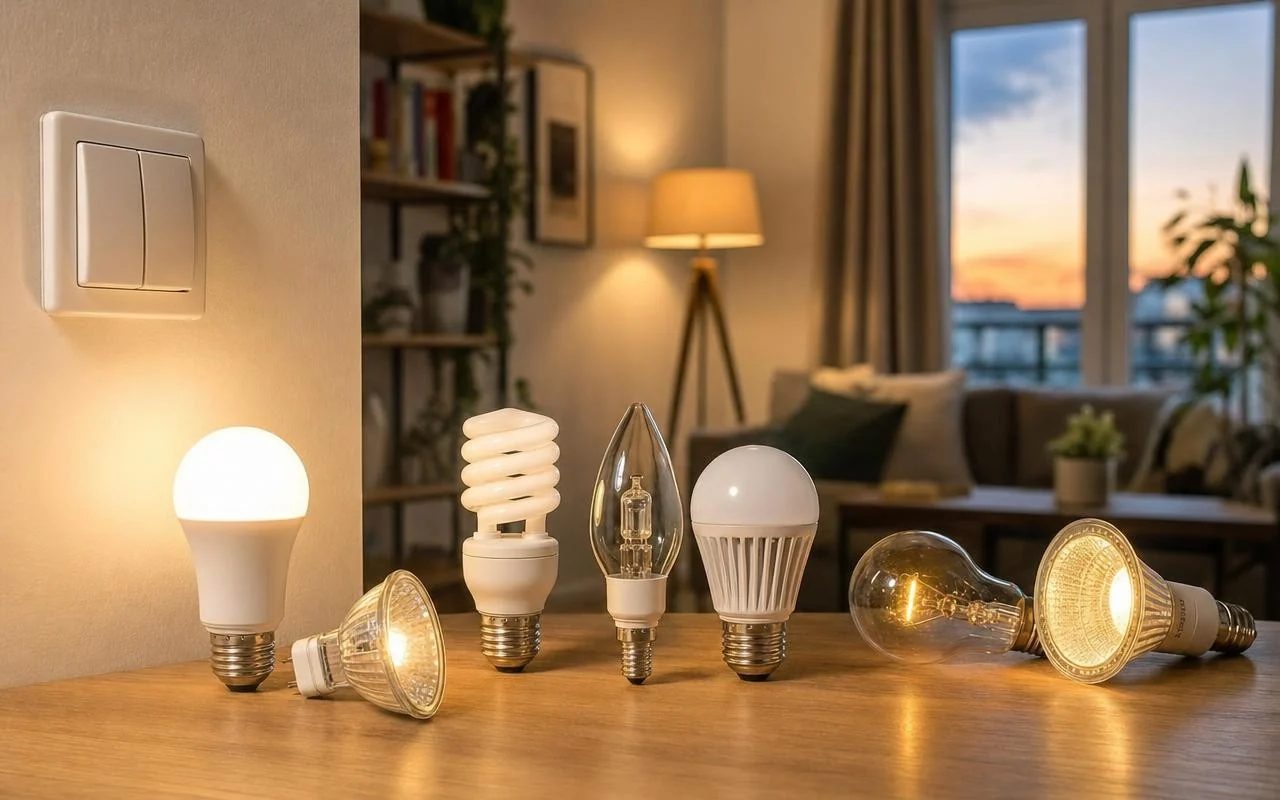
Experts are clear: an unused bulb should be turned off, but the gain depends on the type of lamp. LED bulbs, compact fluorescents, halogens and incandescent bulbs do not react the same way to repeated switch-ons. The myth that turning lights back on consumes more than leaving them on does not hold; the startup power spike is very brief. In reality, the trade-off is mainly between energy savings and premature wear, especially for compact fluorescents.
For LEDs, the studies cited by Okdiario remind that they convert most of the electricity into light and consume up to 90% less than old incandescent bulbs. Their lifespan centers around 25,000 hours and turning them on or off frequently wears them very little. With this type of lamp, turning off the light when you leave, even for a few minutes, remains beneficial. The big lever remains replacing the old bulbs with LEDs.
15-minute rule: when to switch off or leave on
Compact fluorescent lamps, or CFLs, offer about 85% efficiency and an average lifetime close to 8,000 hours, according to Okdiario. Their weakness lies in on-off cycling: too frequent extinguishments shorten their lifespan. Specialists advise turning them off if the room will be empty for more than 15 minutes; below that, the energy benefit becomes small in the face of accelerated wear. The peak energy at ignition hardly increases the bill.
For halogen and incandescent bulbs, the reasoning changes again. They primarily convert electricity into heat and wear out quickly, with lifespans of 750 to 2,000 hours depending on Okdiario. A simple daily guideline can help:
- LEDs: switch off as soon as the room is empty, even briefly.
- CFLs: switch off if the absence exceeds 15 minutes; otherwise tolerate the on.
- Halogen or incandescent: switch off as soon as you leave, and plan a replacement by LED.
How to turn off the light without thinking about it: sensors and priorities
To avoid asking the question during every round trip, motion detectors, timer switches, or presence sensors automatically cut the lighting once the room is empty. These solutions work well in hallways, toilets, laundry rooms or basements, where people often forget to switch off. Paired with LED bulbs, they limit waste without changing your habits.
Energy advisers remind that lighting remains a small item compared with heating, which weighs more than 60% of a home’s consumption according to EDF. Optimizing the use of lights is useful, but the bulk of savings comes mainly from heating and replacing old bulbs.
