
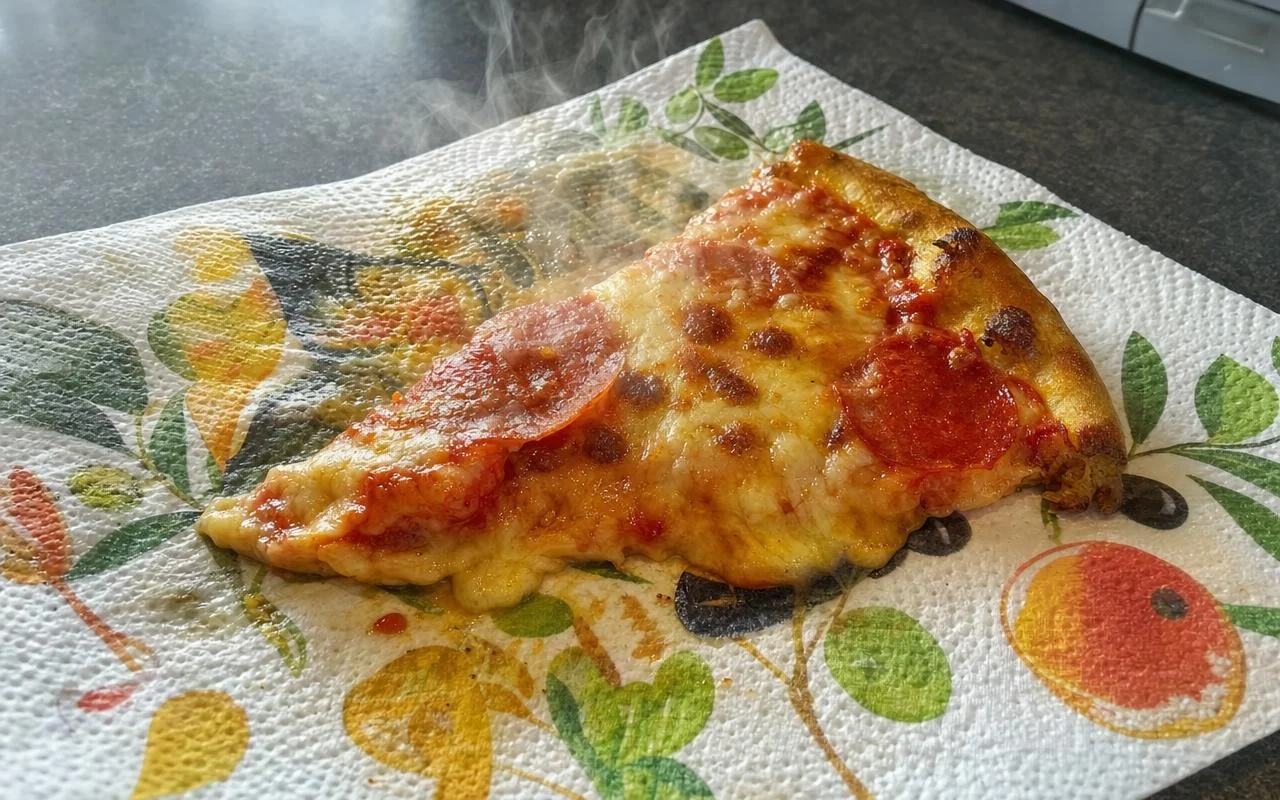
Baked pizza fresh from the oven, donuts just drained, a quiche still hot: by reflex, many people place them on a roll of decorative paper towel, very convenient for absorbing the grease and brightening the work surface. The gesture seems harmless, almost reassuring, as these colorful sheets occupy a mundane place in the kitchen.
These sheets, however, remain materials that come into contact with foodstuffs and are subject to a precise framework. In January 2019, the Directorate General for Competition, Consumer Affairs and Fraud Control (DGCCRF) reminded the rules for papers and cartons used with foods, from simple paper towels to pizza boxes. Everything hinges on heat when it comes into play.
Decorative paper towel, food contact and the framework laid out by the DGCCRF
In its fact sheets, the DGCCRF classifies household paper towels and table napkins among products that are “reasonably likely to come into contact with foods in the course of their normal use.” They therefore fall under the European regulation on materials in contact with foods, which requires that they not transfer substances to food in quantities likely to harm health or alter taste and odor.
The same fact sheet adds a direct warning: “As part of good manufacturing practices, it is not advised to place printed surfaces, whether foiled or not finished with a printing varnish, in direct contact with foodstuffs because this practice carries a significant risk of contamination of these foods by the constituents of the printing ink,” explains the DGCCRF. In other words, the decoration itself remains the most vulnerable area, especially when it touches the food.
Inks, colorants and heat: what happens under a very hot food
Decorated papers and cartons contain inks, pigments, colorants, and sometimes varnishes. The DGCCRF furthermore recommends “not to use pigments and colorants in papers and cartons used for hot cooking or for hot filtration/filling applications.” This statement targets precisely situations where the temperature rises: heat facilitates migration, i.e., the transfer of certain molecules from the paper to the food.
The fact sheet describes, to evaluate this migration, extraction tests in water at 80 °C, with a duration appropriate for items with short contact like paper towels. This detail shows how much temperature and humidity matter. A very hot food, often fatty or moist (pizza, fries, toastie coming from the pan), placed directly on the decorated surface of a paper towel brings together several factors favorable to the transfer of ink or varnish constituents. In this logic, using a decorative paper towel as direct support for a very hot food does not correspond to the most prudent usage scenario.
The right habits to adopt with decorative paper towels in the kitchen
The regulation does not ban decorative printed paper outright, but it governs its use. In practice, several simple gestures limit exposure: avoid letting the decorative part touch hot foods directly, favor brief contact only to absorb a few drops, and reserve this type of paper for cold or lukewarm preparations.
- Place very hot dishes on an plate, a smooth dish, or a board rather than on printed paper.
- Use parchment paper for preparations intended to go in the oven or to hold hot foods.
- Choose, for quick absorption of grease under foods still hot, an unprinted paper towel or napkin, labeled as safe for contact with food.
- Let fried foods drain on a rack placed above a tray, rather than directly on decorative paper towel.
In many kitchens, the colored roll remains valued mainly for its decorative aspect on the table or to protect the work surface. The DGCCRF’s recommendations simply invite reserving this function to “cold” uses: presentation of cookies once cooled, wiping up small spills, or separation between two layers of foods already at room temperature. The decorative paper then retains its purpose without being exposed to the conditions most favorable to unwanted transfers.
