
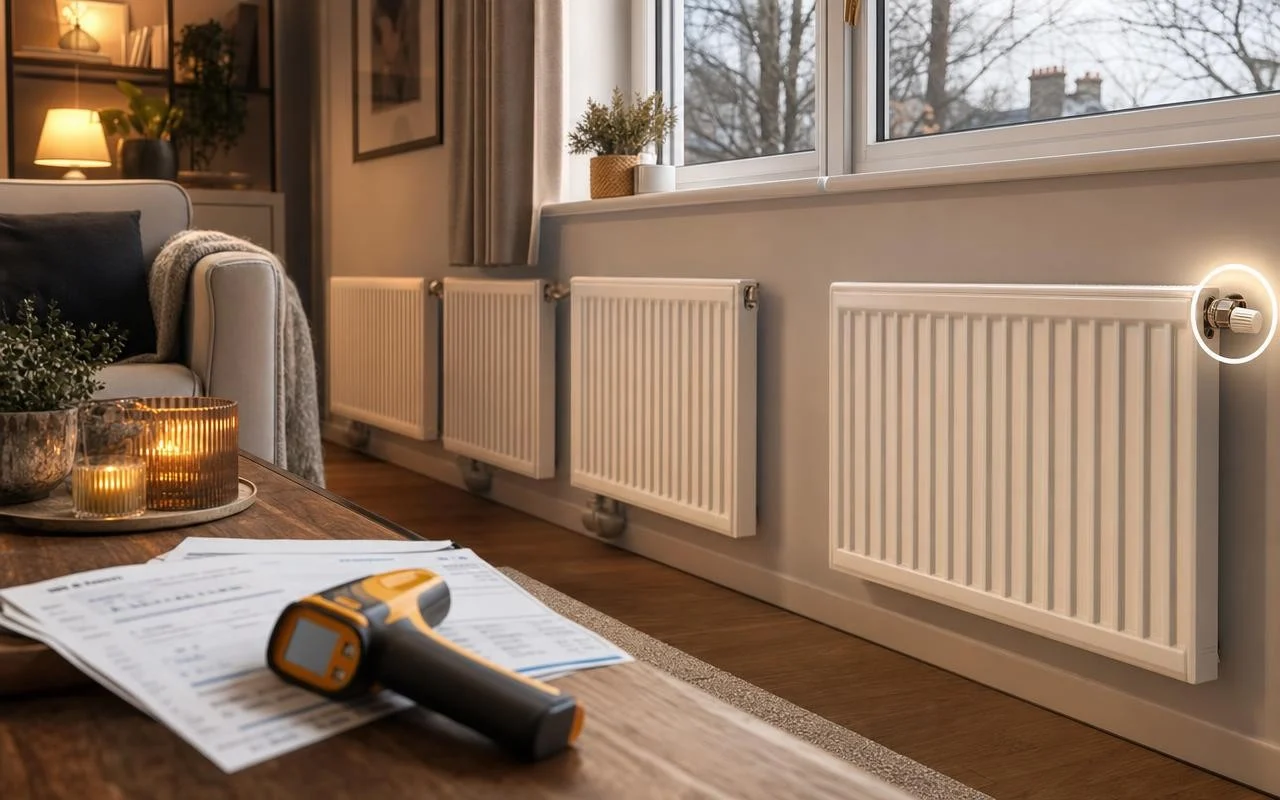
“I thought it was just the water heating up.” Many people identify with this sentence as, when the heating restarts, their radiators begin to make a strange gurgling sound. After several months of inactivity, these metallic noises and gargling intrude into the living room like an autumnal soundtrack, something we often end up tolerating.
The reflex is to tell oneself that it is normal, that the system is rebooting. Yet, a water-filled radiator in good condition remains almost silent. When it gargles, bangs, or whistles, this is not a minor detail, but a sign that water circulation is disrupted, with the consequence of reduced comfort and higher bills. It is not just background noise, but a signal to decode.
Gurgling from the Radiator: A Noise That Betrays a Malfunction
As the first cold snaps return, many relaunch the boiler and hear these characteristic sounds: gurgles, small knocks in the pipes, zones that heat unevenly. They reassure themselves by saying “it’s just the heating coming back on.” In reality, these noises show that water is not circulating smoothly through the heating circuit. The radiator may heat well at the bottom but remain tepid, or cold, at the top, giving the impression that the room never truly reaches temperature.
In the vast majority of cases, this gurgling comes from air bubbles trapped in the radiators and pipes. During the summer shutdown, air gradually infiltrated the circuit. When the heating restarts, the hot water pushes this air, which clusters into pockets and disrupts the flow. Result: less surface area actually hot, a boiler that must run longer to reach the same temperature, and a frequent temptation to raise the thermostat. Yet estimates of household energy consumption remind that raising the temperature by one degree increases the bill by about 7%.
Air in the Heating Circuit: Spotting Signs Before Overconsumption
A few clues recur in homes where the noise is audible. They help determine whether one is dealing with air in the circuit rather than simply aging of the installation:
- regular gurgling on restart or during temperature rises,
- the top of the radiator clearly colder than the bottom,
- an abnormally long heating time to reach the setpoint,
- a room that feels cold despite a thermostat already quite high.
In a well-insulated home, these air bubbles are enough to spoil the efforts to retain heat. The heating runs more, the bill climbs, even though the walls and windows limit losses. In a less well-insulated dwelling, the phenomenon compounds thermal losses: we compensate by pushing the thermostat, and consumption soars, sometimes simply due to a lack of bleeding for several seasons.
Bleeding a Noisy Radiator: The Right Move to Make the Gurgle Disappear
The solution remains accessible to nearly everyone. It suffices to perform a bleeding of the radiators, ideally once a year, at the start of the heating season. Start by turning off the boiler and letting the radiators cool to avoid burns. Then gather a bleed key, a tray, and a cloth, locate the little bleed valve at the top of the radiator, opposite the thermostatic valve, and slowly open it. The air escapes with a hiss before a steady stream of water appears; at that moment, close it. Repeat the operation on each radiator, from the lowest to the highest in the dwelling.
Once the bleeding is finished, one more point is often overlooked: the boiler pressure. The expelled air slightly lowers the circuit’s water level. A quick look at the pressure gauge should show around 1 to 1.5 bar when cold, a commonly recommended range. If needed, reopen the filling valve to gently raise the pressure. If, despite bleeding, the gurgling returns quickly, or if some radiators stay cold after several bleeds, the problem may originate from a persistent air ingress or sludge in the system, which justifies a complete flush-out and descaling every 5 to 7 years and the advice of a professional. A few minutes of these simple steps are often enough to restore silent radiators and a more efficient heating system.
Sources
- Maison & Travaux
“Prime big deal days these portable radiators on Amazon flirt with liquidation—those to grab before the return of the cold”
