
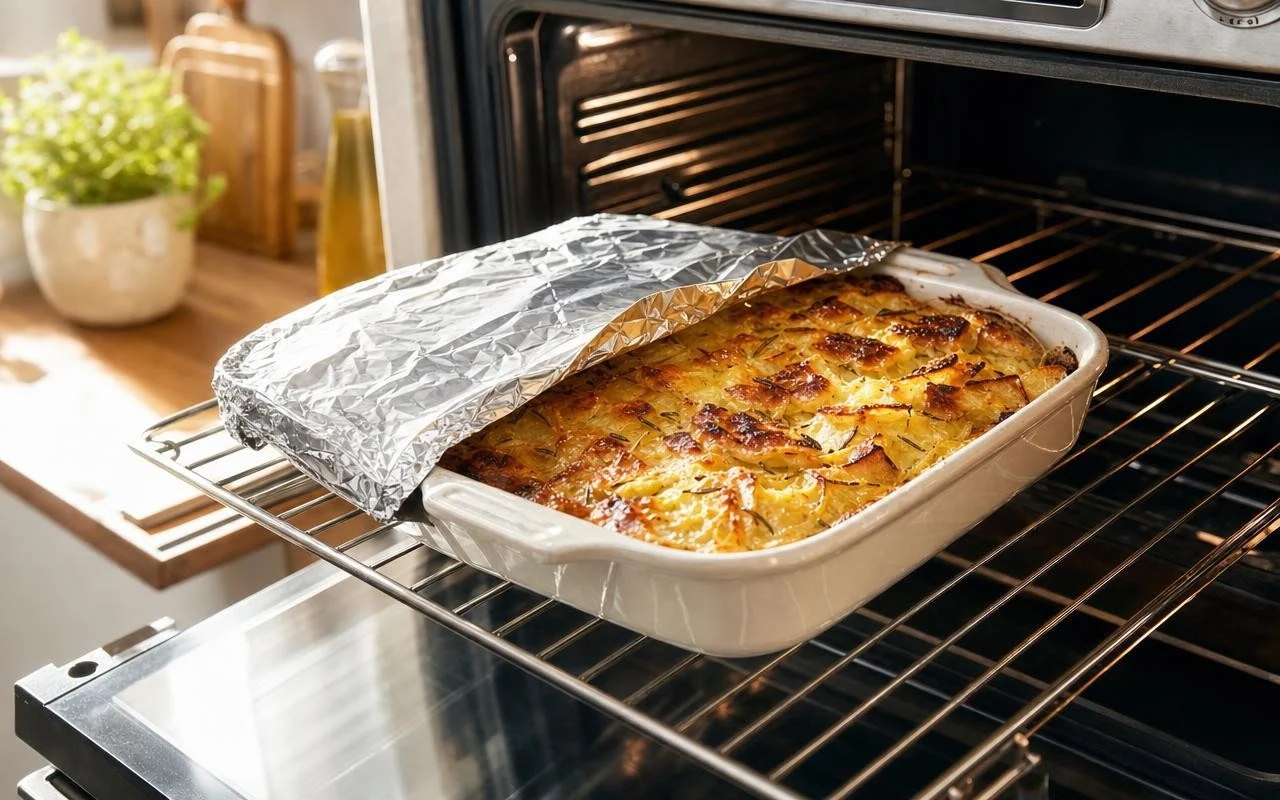
A gratin that browns on top while the center is still raw, a roast that turns out completely dry when plated… Many cooks end up tucking a sheet of aluminum foil over the dish, almost as a reflex to save the day. They do it because recipes say so, or because they’ve seen their parents do it, without always knowing what it actually changes.
Manufacturers of appliances explain that aluminum foil, thin and highly conductive, can withstand the usual oven temperatures when it is used to wrap or cover foods. It reflects heat, traps juices, and often makes cleaning easier. But its effect on texture, browning, and moistness depends a lot on how it is used: that is where it all hinges.
Covering a dish with aluminum foil in the oven: what it really changes
First role, rarely detailed in recipes: keeping moisture inside the dish. When you cover a gratin, a roast, or poultry, the steam escaping from the foods remains trapped. The air around the dish becomes more humid, which limits the drying out of the flesh and of the sauce. The kitchen guides from major brands note that this type of covering helps keep preparations tender, especially during long cooks.
Another highly sought effect, especially on gratins or lasagna: slowing the browning of the surface. By placing a sheet of aluminum foil on top, you protect the surface from direct heat in the oven. The cheese does not burn, the meatloaf does not darken, while the interior continues cooking calmly. You obtain a more even cooking, at the expense of a crust that is a little less crispy as long as the dish remains covered.
Two techniques: foil tent or sealed dish, to choose according to the recipe
You do not cover quite in the same way a gratin and a roast. For a dish that browns too quickly but that you want to keep at least a bit crunchy, specialist sites recommend a “foil tent”: you form a light roof with the sheet, simply laid on or pinched at the edges, without sealing airtight. The hot air still circulates, the steam can escape partly, but the surface is protected from direct contact with the heat.
For a softer and moister cooking, you can instead cover a dish in an almost hermetic manner. You fold the foil around the entire rim of the dish to press it down as much as possible. The interior then behaves a little like a cocotte: more steam, pieces that melt more easily, a crust that is very tender. Several cooking guides indicate that, in this case, removing the foil during the last 15 to 20 minutes allows the top to dry slightly and brown without the interior drying out.
Quand couvrir, quand retirer… et les erreurs à éviter avec le papier aluminium
In practice, aluminum foil is mainly used whenever the top browns too quickly, or for any long cooking that risks drying out: roast, whole poultry, generous gratin. You can cover from the start and uncover at the end, or conversely add the foil only when the surface begins to darken too much. For very short cooks, like a small thin tart, the benefit is often limited, or even useless.
Manufacturers remind, however, that aluminum should not be used haphazardly. Technical articles from brands like Whirlpool note that lining the bottom of the oven or covering the racks with a large sheet disrupts air circulation, reflects too much heat toward the elements, and can damage the enamel. The right reflex is therefore to reserve the foil for the dish itself, avoiding any direct contact with the heating elements and ventilation openings, to enjoy its benefits without upsetting the oven.
