
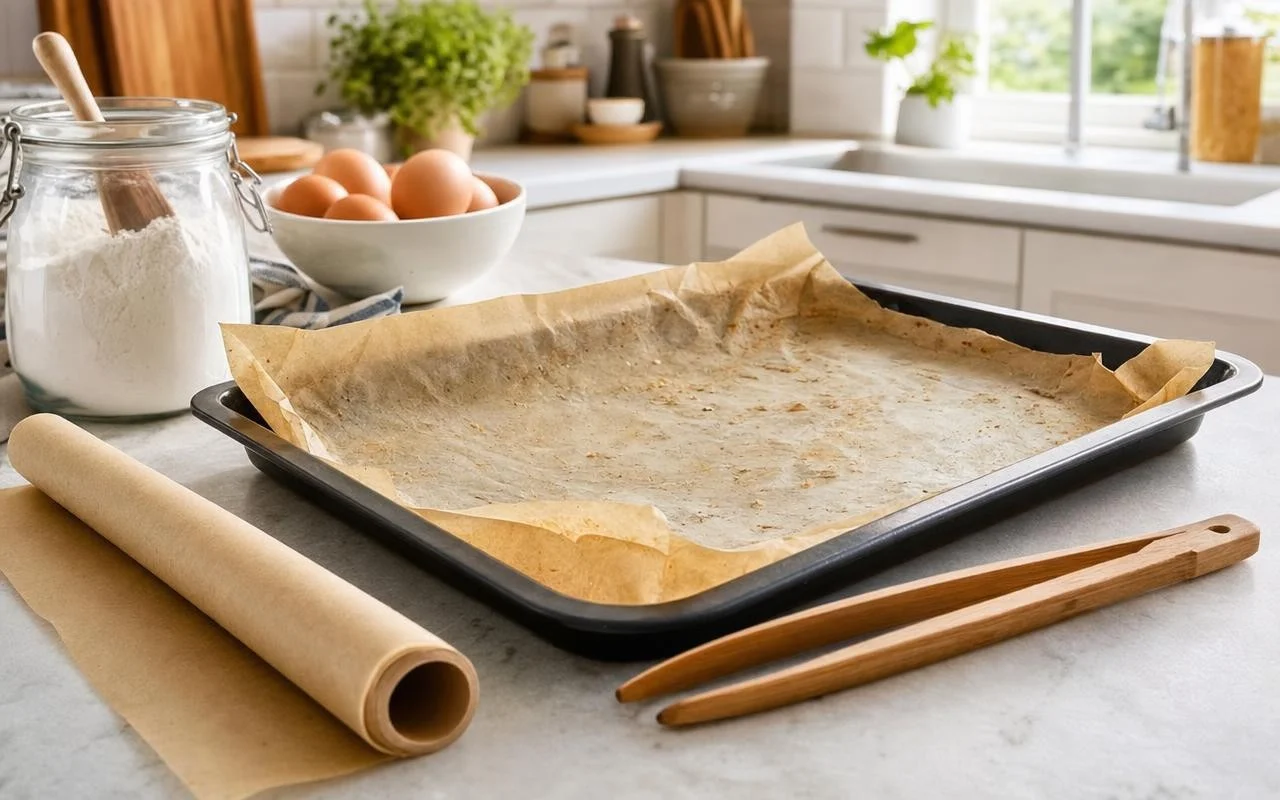
You take a tray of golden-brown cookies out of the oven, remove the parchment paper… and you throw it straight into the trash. This gesture seems obvious, especially when you cook frequently. Yet many home cooks today wonder whether this sheet, barely stained, could be reused for the next batch, without any health risk.
To answer, you first need to know what this parchment paper is made of, also called baking paper or parchment sheet. This support is cellulose, coated with a thin layer of silicone that makes it non-stick, water- and heat-resistant, but impossible to recycle or compost. “Neither recyclable nor compostable, that’s why you should use each baking sheet as many times as possible before discarding it,” explains PJ Hamel from the King Arthur Baking site. The question remains how far to go.
Reusing parchment paper: when is it really possible?
Experts agree: you can reuse parchment paper in certain precise cases. According to the tests from King Arthur Baking, a sheet that has been used for cookies, brioche, scones, or low-fat breads can be reused as long as it remains intact. “Fortunately, baking at more than 250 degrees Fahrenheit, about 120 degrees Celsius, destroys potential bacteria originating from fresh ingredients,” notes PJ Hamel.
The same author sums up the basic rule: “you should reuse parchment paper only if it has already been used for baking, and not for the simple preparation of raw dough.” A sheet used to roll dough, knead bread, or collect drips from a glaze, then left at room temperature for more than a few hours, should not go back into the oven, even if it looks clean.
How many times should you reuse a single parchment sheet?
In terms of quantity, cooking sites like Marmiton generally advise not to exceed 2 or 3 uses for the same sheet if it has been used for light, not-fatty cooking. On Martha Stewart’s site, food-safety experts also consider it reasonable to keep it for up to three oven passages, provided it remains visibly clean and not soggy. For very hot cooking, such as a pizza around 450 degrees Fahrenheit, or about 230 degrees Celsius, the sheet naturally degrades more quickly.
Some parchment papers sold in organic stores even indicate on the packaging 3 or 4 possible uses, with a maximum temperature around 220 degrees Celsius. It really depends on usage: a sheet placed under bagels or plain bread can be reused “until it becomes brittle and starts to tear,” whereas a very greasy preparation will saturate it much faster.
The right practices to reuse parchment paper without risk
To extend a sheet’s life, King Arthur Baking advises letting it cool on the tray, then removing the food, shaking off the crumbs, and wiping it with a damp cloth. It should then be dried and stored in the open air, laid on top of the stack of baking sheets, to avoid any stale or musty odors.
On hygiene, vigilance remains essential. “The first rule is to stay reasonable: food safety matters, and you should not reuse paper that has been used for meat or fish, even if it seems clean,” insists PJ Hamel, who cites bacon as an example. It’s also best to discard any sheet drenched in sauce, coated with sugar or burnt caramel, perforated, or whose edges are darkened and crumbling.
