
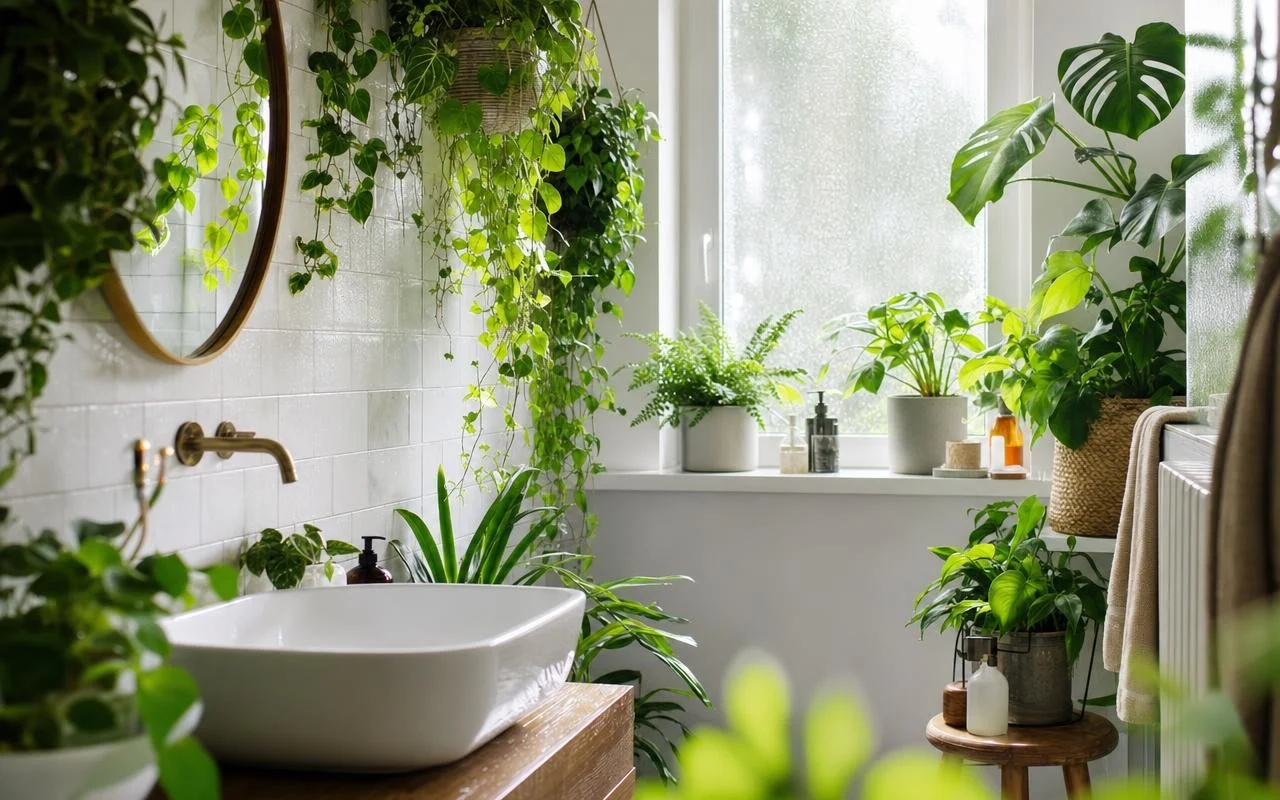
In many homes, the bathroom remains a functional space, somewhat cold, where one doesn’t necessarily imagine placing plants. Yet, between the heat of the shower and the steam, this compact cocoon nearly meets all the conditions of a mini domestic jungle. Gardeners who have tried indoor plants there report the same observation: some species thrive, while others wither away quite rapidly.
The Royal Horticultural Society notes that the natural humidity of a bathroom can benefit several bathroom houseplants, provided they receive enough light. It reminds us that “the natural humidity of a bathroom can benefit certain indoor plants, but light remains essential to their health,” a message confirmed by many amateur gardeners. The task is to choose the right green allies to transform the room without complicating life.
Bathroom houseplants: light and humidity under close supervision
Before even selecting a species, you should observe the room. An ideal bathroom for plants offers soft natural light, filtered by frosted glass or blinds, without hours of direct sunlight. The Royal Horticultural Society considers a completely dark bathroom unsuitable for living plants, even tropical ones, because they need light to carry out photosynthesis and generate energy.
Humidity, on the other hand, becomes an asset. Repeated showers create a warm, humid atmosphere that many tropical species appreciate. To prevent roots from rotting, specialists recommend pots with drainage holes, aerated potting mix, and the absence of standing water in the cachepot. Ventilating the bathroom after a shower and checking that the soil has slightly dried before watering again are part of the fundamental habits.
The 3 indoor plants that gardeners love in the bathroom
For gardeners, three reliable choices repeatedly come up when talking about bathroom houseplants: the pothos (or Epipremnum aureum), the spider plant (Chlorophytum comosum, often called “air plant” in some regions), and the Boston fern (Nephrolepis exaltata bostoniensis). An article from the Argentine channel TN sums up their common strength by mentioning “three plants that bring green and color without demanding overly complex care.” All tolerate high humidity well, as long as they enjoy indirect light and some airflow.
Each plays a different role in the room.
The pothos, with its trailing stems, enjoys being high near a window without direct sun. The spider plant, with its graphic green-and-cream foliage, tolerates humid spaces well and helps to filter the air. The Boston fern prefers gentle warmth, between 15 and 20 °C, and consistently humid air; a NASA study cited by Elle magazine places it at the top for formaldehyde absorption in laboratory conditions.
To keep them in good shape:
- pothos: let the top layer of soil dry between two waterings;
- spider plant: water moderately and empty the saucer;
- Boston fern: keep the potting mix moist and mist the foliage.
Bathroom houseplants for a windowless bathroom: what to do really
Many readers dream of a green corner even in a dark bathroom. Specialists remind us, however, that a room with no windows does not sustain plant life over the long term. The authors of TN note that “one of the most common mistakes is to believe that humidity alone keeps a plant alive.”
If the bathroom is dark, it’s wiser to opt for beautiful artificial plants, or to regularly move a pothos or a spider plant from a brighter room. Some enthusiasts also install a grow light, run for a few hours each day, while keeping the same rules: well-drained soil, infrequent watering, and ventilation after the shower.
