
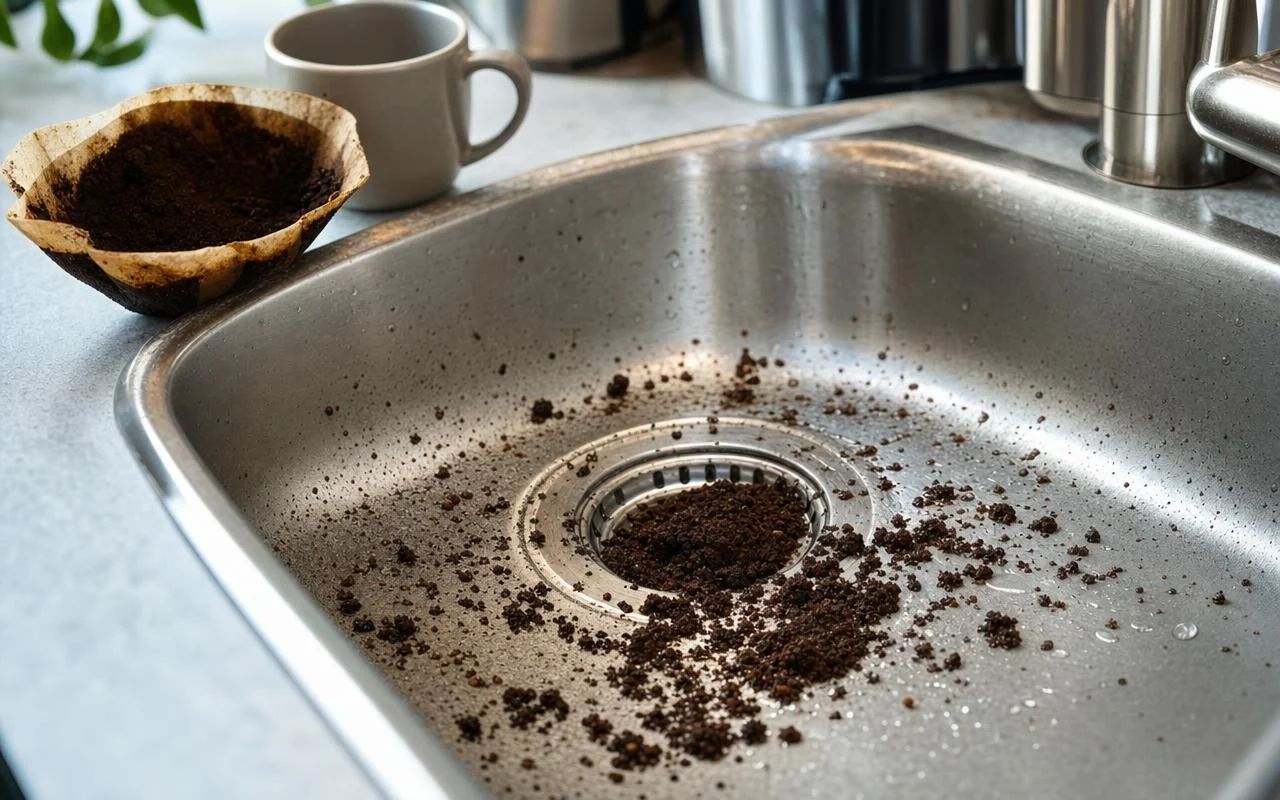
After the morning coffee, many people mechanically dump the filter directly into the sink. On TikTok or near the coffee machine at the office, the idea is even shared that the coffee grounds would rub along the walls and act like a “gommage” for the pipes. The gesture looks clever, natural, almost eco-friendly.
In contrast, plumbing experts are sounding the alarm. In several articles published in September 2026, they describe a habit that clogs the drains, causes odors, and can even weaken the pipes. Some even talk about a gesture that “should be banned.”
Coffee grounds in the sink: a false good idea according to plumbers
The popularity of putting coffee grounds in the sink mainly stems from a myth. Marmiton notes that “the coffee grounds are sometimes presented as a home trick to maintain the pipes, but this idea is misleading.” Its grainy texture led people to believe it could dislodge residues stuck in the pipes, a bit like an abrasive product.
In reality, these grains remain solid matter. Marmiton reports that “experts explain that over time, coffee can form little clumps that join the grease already present in the conduits and strengthen an existing blockage.” Dropping a little by accident isn’t catastrophic, but repeating the gesture after every coffee eventually becomes problematic.
How coffee grounds accumulate in the drains and damage the pipes
Plumbing experts cited by OkDiario summarize the danger: “these solid particles cannot dissolve in water and stick to the grease that accumulates in the pipes.” They note that the grounds join the grease deposits fixed on the PVC, mix with soap residues, and get stuck in bends and vertical sections where the water flow slows. We end up with a compact clog that is difficult to dislodge with a simple plunger.
Over time, the flow slows further, the trap gurgles, and water backs up into the sink. Experts mention plumber interventions, or in extreme cases, “the deterioration of this area and the rupture of an essential everyday element.” Marmiton adds that the persistent humidity in the pipes “can favor the appearance of mold on these deposits” of grounds, grease, and food scraps, which helps explain the foul odors that linger even after cleaning the drain.
What to do with coffee grounds instead to protect your drains
The rule professionals keep repeating is simple: no coffee grounds in the sink or basin. Marmiton advises treating it as organic waste, to be disposed of in the designated bin or in compost. OkDiario also notes that it is better to carry it to the organic container or, even better, to use it as fertilizer for plants, as it enriches the soil and helps to deter insects. In other words, the grounds have a place in the garden, not in the siphon.
- In the compost or in the biowaste bin, once well drained.
- As homemade fertilizer at the base of plants, in a thin layer.
- As a repellent against ants and some insects, around pots or flower beds.
A small routine is enough: let the grounds dry, store them in a jar, then regularly empty them into the compost or at the base of the plants. For those who also use it in toilets to combat odors, Pleine Vie reminds to stay very moderate: 1 to 2 tablespoons in the bowl, at most once a week, let it act overnight, then flush with a generous amount of water, possibly aided by a bucket of hot water (not boiling). “Plumbers also warn that too frequent or excessive use can promote the buildup of residues in the pipes,” notes the magazine, even for toilets.
Sources
- Marmiton
“Plumbers are clear: coffee grounds should never be poured into your sink; do this instead.” - Pleine Vie
“To pour coffee grounds down the toilet: what it’s for and why it’s recommended?”
