
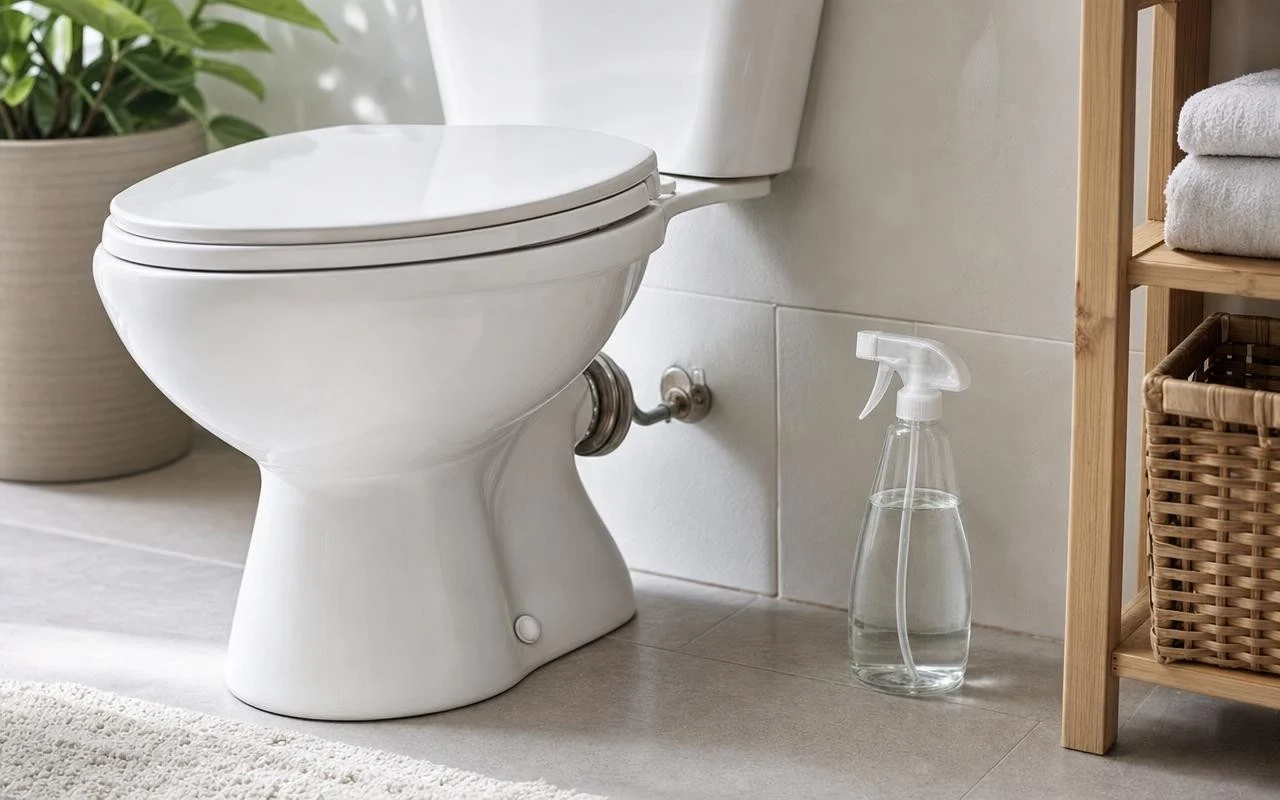
Toilets can look spotless right after cleaning, only for odors to return seemingly out of nowhere. The hidden area behind the bowl, hard to reach, nevertheless concentrates moisture, dust, and splashes, creating an ideal mix for stains and smells. Several cleaning experts now highlight a very simple action, based on an acidic ingredient that almost everyone has in their kitchen.
Recent articles, published in late July and mid-September 2026, remind us that the rear and surrounding areas of the toilet are often neglected while humidity accumulates quickly there. To limit deposits and soften certain unpleasant odors, experts advise simply spraying vinegar behind the toilet, then wiping it away. A gesture that takes only a few minutes but makes a big difference.
Why spraying vinegar behind the toilet really helps the hidden area
The white vinegar contains acetic acid, a compound responsible for its sharpness and cleaning properties. The sources explain that this acidity helps to loosen some mineral residues, mild limescale, and small stains left by hard water. On the wall, at the base of the bowl, or the floor just behind, this film clings very quickly and traps dirt.
Another touted advantage: its effect on odors. Vinegar does not perfume the room; it tends to temporarily neutralize certain relents rather than masking them. Yet the rear area of the WC often concentrates microscopic splashes, dust, and moisture traces, which eventually give off odors. By regularly cleaning this sector with vinegar, one limits this unpleasant cocktail.
How to spray vinegar behind the toilet step by step, without making mistakes
This gesture can be incorporated into the weekly bathroom cleaning, just after mopping or cleaning the bowl. Specialists recommend using undiluted white vinegar in a small spray bottle, without trying to flood the surfaces: a light application is enough to facilitate cleaning, especially if the soils are recent.
- Remove visible dust and dirt behind and around the toilet with a dry cloth.
- Spray a moderate amount of white vinegar on the wall, the base of the toilet, and the floor.
- Allow it to sit for a few minutes so the acid begins to loosen the residues.
- Wipe with a clean, slightly damp cloth to remove vinegar and dirt.
- Finish by thoroughly drying with a dry cloth or absorbent paper to prevent moisture from stagnating.
For hard-to-reach corners, a small brush or a fine cleaning nozzle can help, for example around the tile joints. Sanitation professionals note that they prefer this simple method, based on white vinegar and regular brushing, over viral tricks that involve slipping objects into the tank, which are deemed riskier for plumbing.
Vinegar behind the toilet: frequency, limits and precautions to know
This vinegar cleaning remains safe if a few simple rules are followed. The articles particularly emphasize never to mix white vinegar with bleach or any chlorinated product, as this combination can release irritating gases. Apply the vinegar alone, let it act for a short while, then wipe in a well-ventilated room.
Experts also point out that vinegar is not a universal disinfectant and does not resolve issues of established mold, leaks, or poor ventilation. If odors persist despite weekly spraying behind the toilet, or if dark stains return quickly, it is necessary to switch to a more thorough cleaning and check the plumbing condition. For the inside of the bowl, sources recommend a combination of white vinegar, sometimes warmed, with brushing, or even occasional use of dedicated tablets.
Sources
- Maison & Travaux
“This weekly aluminum foil trick in the toilets: what experts approve… and dread”
