
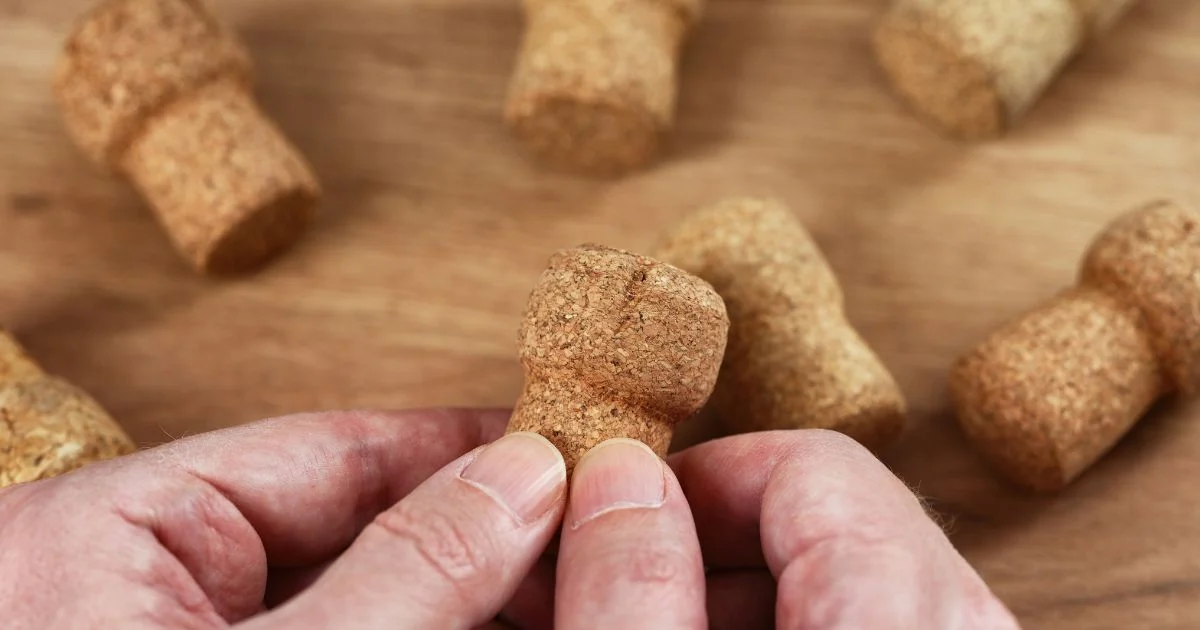
After opening a bottle of wine, the cork often ends up in the trash. Yet this small piece of cork can have a second life in the home. Among the tips that are regularly shared, one is to bring it into contact with white vinegar before reusing it. The gesture may seem odd, but it serves a simple purpose: to clean a cork that still bears wine traces, an odor, or dirt before transforming it or finding a new use for it. Cork is a porous material, so it’s wise to avoid letting it soak unnecessarily and to ensure it dries completely afterward.
White vinegar, a useful step before reusing cork stoppers
In practice, white vinegar can be used sparingly, for example by lightly dampening the cork or by spraying its surface. After this cleaning, the cork should dry completely in the open air, in a well-ventilated area. This step is especially useful if the corks have been stored for a long time in a drawer or container before being collected for a home project. Thorough drying remains essential, because keeping corks damp could otherwise encourage stains or mold growth.
A common use circulates widely: turning corks into small fire starters for the fireplace, the insert, or the barbecue. The site Oé thus recommends soaking them “in white vinegar or 90-proof alcohol.” A distinction must be made between these two products. 90° alcohol is highly flammable and can indeed soak into the cork before burning. Household vinegar, on the other hand, is mainly water and usually contains around 5% acetic acid. It does not have the same combustible properties as a highly concentrated alcohol.
Cork stoppers transformed into fire starters
To prepare a genuine fire starter from recovered corks, the effectiveness of the trick lies in using a suitable flammable liquid, not vinegar alone. Some people use 90° alcohol, in which natural cork stoppers are left for several days so they can absorb it. This method obviously requires numerous precautions: the container must stay closed, kept away from any heat source and out of reach of children, and the alcohol must never be poured near a flame. The cork must also be placed in the hearth before it is lit.
The real value of vinegar, therefore, lies more upstream, when one wishes to prepare the corks for other uses. Once clean and perfectly dry, they can, for example, be cut into thin slices and placed under furniture legs to prevent floor scratches. Several corks bound together can also become a trivet or a coaster. They can still be repurposed as drawer knobs, place cards, or small labels to identify garden plantings. All of these solutions provide ways to reuse an object that might otherwise seem destined for disposal.
Cork stoppers to keep in order to reduce household waste
The cork can also find its place in the kitchen without going through a DIY route. Cut in two, it is sometimes placed in a fruit basket to absorb part of the ambient moisture and to limit the conditions favored by fruit flies. Some people also use it in the refrigerator to combat odors. However, these home tricks do not replace the need to promptly discard spoiled foods or to regularly clean the refrigerator: a few pieces of cork cannot substitute for basic maintenance and storage rules.
Before simply discarding corks, keeping them can be a good habit. White vinegar is mainly useful for cleaning them before reuse, provided you do not saturate the cork and let it dry well. To make a fire starter, however, it is better not to confuse vinegar with alcohol, whose properties are very different. If none of these tips seems helpful, there is an even simpler option: return the corks to a specialized collection program so that the cork can be valorized rather than ending up as household waste.
