
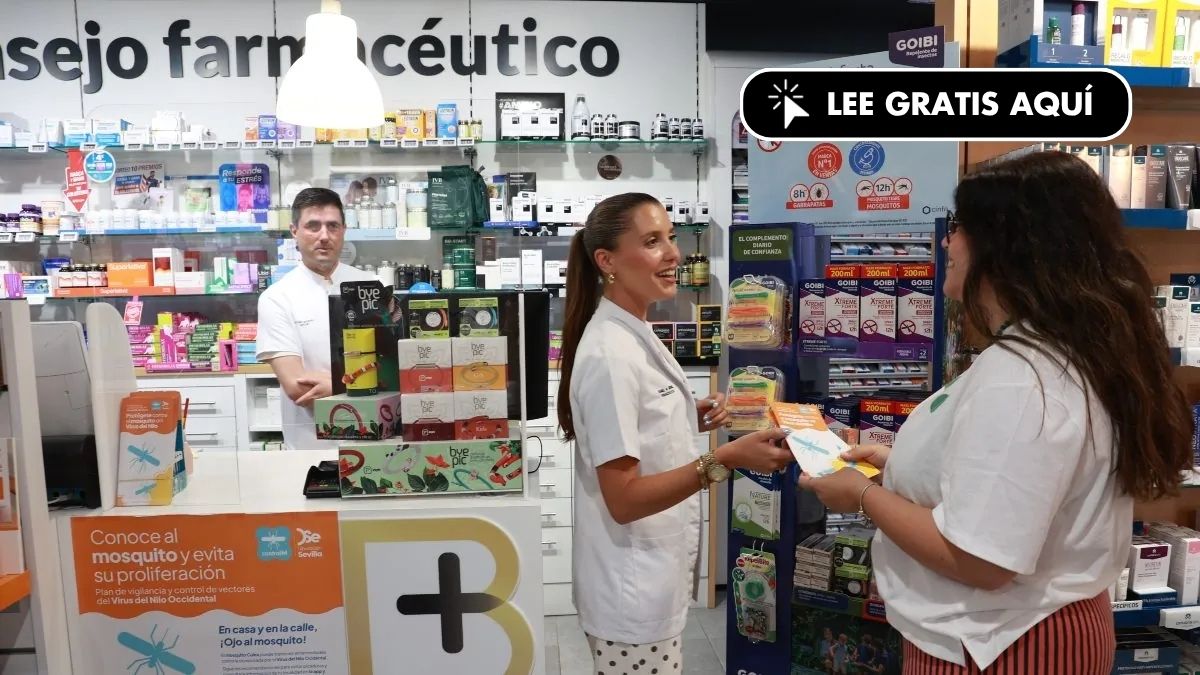
Spanish pharmacies have room to increase their self-care–linked revenues by up to 11% over the next three years if they receive greater backing from manufacturers. This is one of the main conclusions of the Better Health Report 2026, prepared by the consulting firm Simon-Kucher in collaboration with the European Self-Care Industry Association (AESGP), based on a survey of more than 500 pharmacists in Spain, France, Germany, Italy and Poland.
The study, consulted by THE OBJECTIVE, places pharmacies at a moment of transformation of their role within the health system. Self-care is gaining weight in their business as professionals assume new duties and face greater pressure on their margins and on the traditional dispensing model.
In Spain, the opportunity is especially tied to prevention and to alleviating the burden on primary care. 61% of Spanish pharmacists believe that prevention will be one of the areas where their activity will grow the most in the coming years. Additionally, 49% say that the pharmacy can contribute to relieving work for primary care.
The advance of self-care does not, however, mean that the pharmacy ceases to be linked to dispensing medications. The report notes that self-care products already represent a substantial portion of pharmacy revenues. In Spain they account for 30% of income, compared with an average of 31% across the five markets analyzed.
The consulting firm identifies precisely in this segment one of the main growth avenues for pharmacies. While the economics of prescription medicines remains under pressure, margins on self-care can prove more attractive for pharmacies, turning this category into a strategic area to protect profitability.
The training, the main gap
The problem is that pharmacies have not yet fully harnessed all of their potential. Only 35% of Spanish pharmacists say they interact proactively with consumers to address self-care-related issues. Moreover, lack of training appears as the main obstacle: 53% of Spanish professionals identify it as a barrier to improving counseling.
Training is not the only shortcoming. Pharmacists also point to difficulties such as low consumer demand, lack of trust in certain products, fear of giving incorrect advice, and lack of knowledge. The report suggests that manufacturers have room to intervene precisely at these points through training, recommendation tools, and campaigns aimed at generating demand.
The relationship between pharmacists and consumers remains, in any case, an asset for the channel. In Spain, 47% of the occasions when a consumer turns to the pharmaceutical channel end with a pharmacist’s recommendation, and 66% of those who receive that recommendation follow it. Across the five countries analyzed, 54% of interactions include a concrete recommendation and consumers follow it in 69% of cases.
The advance of AI
Joining this transformation is the advance of artificial intelligence. Spain is the market where pharmacists perceive the greatest impact of digital tools on their activity: 33% say that artificial intelligence and other digital solutions are increasing the demand for professional advice, compared with 30% in Germany, 27% in Poland, 19% in Italy, and 13% in France.
The report does not interpret this phenomenon as a substitution of the pharmacy by technology. On the contrary, it suggests that the proliferation of tools such as symptom checkers, health apps, or AI assistants can raise the need for a professional capable of validating and contextualizing the information that the consumer receives.
Competitive pressure, however, is increasing. Pharmacies face the rise of online platforms, distribution chains, and other channels competing for the same self-care purchases. 21% of the surveyed pharmacists identify chain competition as one of the main risks for their future in this segment, while 18% point to growth in online sales.
The study thus presents an opportunity for pharmacies, but also a condition: improve counseling and turn it into a tool to generate value. To this end, professionals mainly demand clearly differentiated products, training aimed at selling and advising, tools to facilitate recommendations, and campaigns that attract consumers to pharmacies. In Spain, demand-activation campaigns are precisely one of the measures most valued by pharmacists.
The potential result is significant. Spain sits behind Poland, where pharmacists estimate a potential of 15%, and Germany, with 13%, but ahead of Italy, with 10%, and France, with 9%. The 11% figure for Spain represents, according to Simon-Kucher, the additional growth that could be unlocked in self-care revenues over the next three years with the proper support from manufacturers.
