
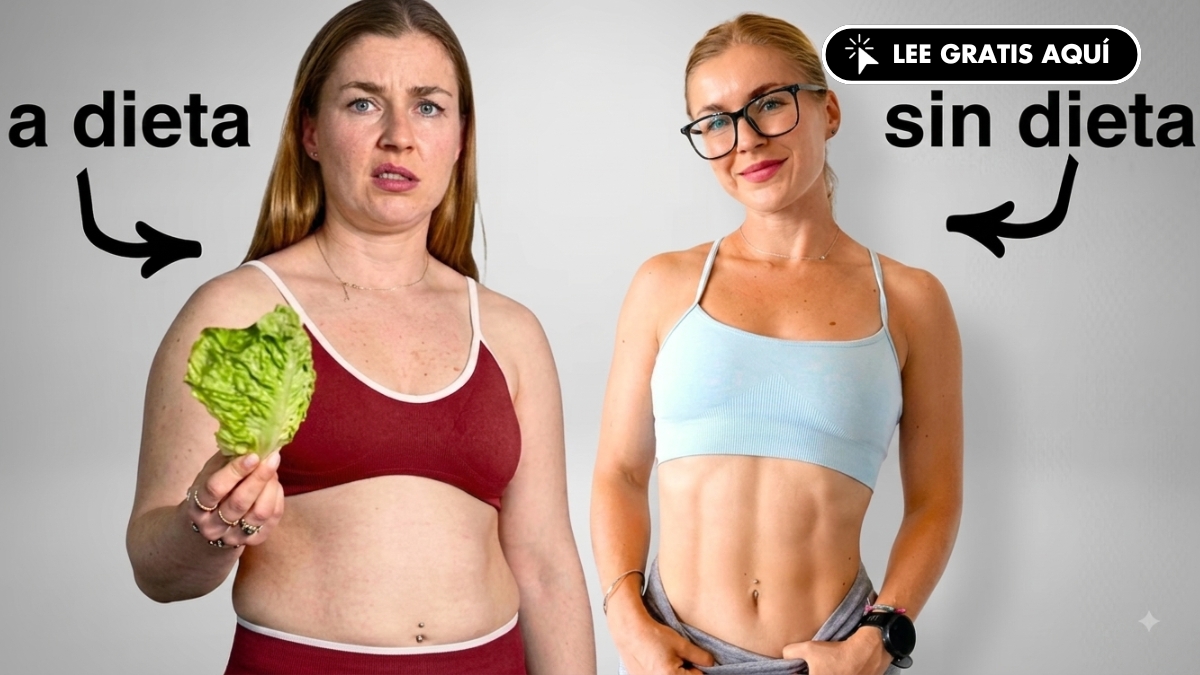
One of the biggest mistakes people make when trying to lose fat and shed pounds is to start weighing everything, counting calories to the gram, and even skip going out with friends for fear of eating something that isn’t allowed; which almost always ends the same way: with a quick relapse after the tremendous frustration it causes. However, according to dietitian Lara Ibarra, the problem isn’t a lack of willpower, but being too restrictive with oneself. That’s why, to make things a little easier, the dietitian has published a video on her social networks in which she explains that the key isn’t to obsession over food, but five key habits and strategies.
1. Do Not Improvise
To eat better without hassle, dietitian Lara Ibarra explains that strict diets that tell you exactly what to eat each day tend to fail because they don’t fit your real routine. Instead, she suggests using what she calls “anchors”, which are nothing more than very simple decisions that you repeat daily so that eating healthy becomes almost automatic. This way, you avoid having to improvise or brainstorm what to cook when you arrive home tired or stressed. Putting it into practice is as easy as choosing one or two breakfasts that fill you up and you enjoy, having four or five quick and quality recipes on hand that provide good nutrients, and making sure to always buy healthy foods like vegetables, fruits, and proteins so you never run short.
2. Build meals with protein, fiber, and low calories
So that you don’t feel hungry soon after eating and to avoid grazing between meals or arriving at dinner extremely hungry, it’s essential that your meals leave you feeling well satisfied. Lara Ibarra explains that the key is to combine three very simple things on your plate. First, you need proteins, which keep you very full, protect your muscles, and also make your body burn quite a few calories simply by the effort of digesting them. Second, you should add natural fiber through fruits, vegetables, or legumes; this fiber slows down tummy emptying, supports digestion, and helps you eat less throughout the day without realizing it. Finally, it’s very important to choose foods that, despite all of the above, do not contain too many calories, such as vegetables, so you can see a full plate and feel satisfied without worrying about overeating.
3. Think Things Through and Don’t Push Your Body
Lara Ibarra explains in the video that prohibition is useless and only creates problems, noting that forbidding yourself a particular food only makes you think about it more often, i.e., the exact opposite of what you want to achieve. The key isn’t to classify food as morally “good or bad,” but to apply smart flexibility: «One meal alone does not define my progress. The people who adhere to a healthy diet the best aren’t those who do it perfectly, but those who know how to slip up, stray from the plan, and return to it without drama.»
4. Prioritize Strength Training and Daily Movement
Cutting calories to the extreme and spending hours on cardio machines is a common mistake, especially among women. To accelerate fat loss, it’s essential to also work the muscles. So you shouldn’t stay with cardio alone; adding strength exercises to your routine is also necessary. Likewise, the expert emphasizes the need to move in daily life and not fall into a sedentary pattern, so a good balance of both types of activity is required. That means the key isn’t about eating less, but about keeping your body in shape.
5. You Should Listen to Your Body
To eat well without the need to weigh every gram of food, the dietitian recommends using the Harvard plate trick: half the plate should be vegetables, a quarter of high-quality proteins, and the other quarter of carbohydrates or potatoes, allowing you to add a little more protein if your goal is fat loss.
On the other hand, it’s key to learn to distinguish between real hunger and the hunger that comes from stress, boredom or simple habit. While having a routine helps organize oneself, you don’t have to force yourself to eat just because it’s the time. Small habits as simple as eating slowly, putting the fork down between bites, and turning off screens will help you learn to recognize the signals your body sends when it is finally satisfied.
