
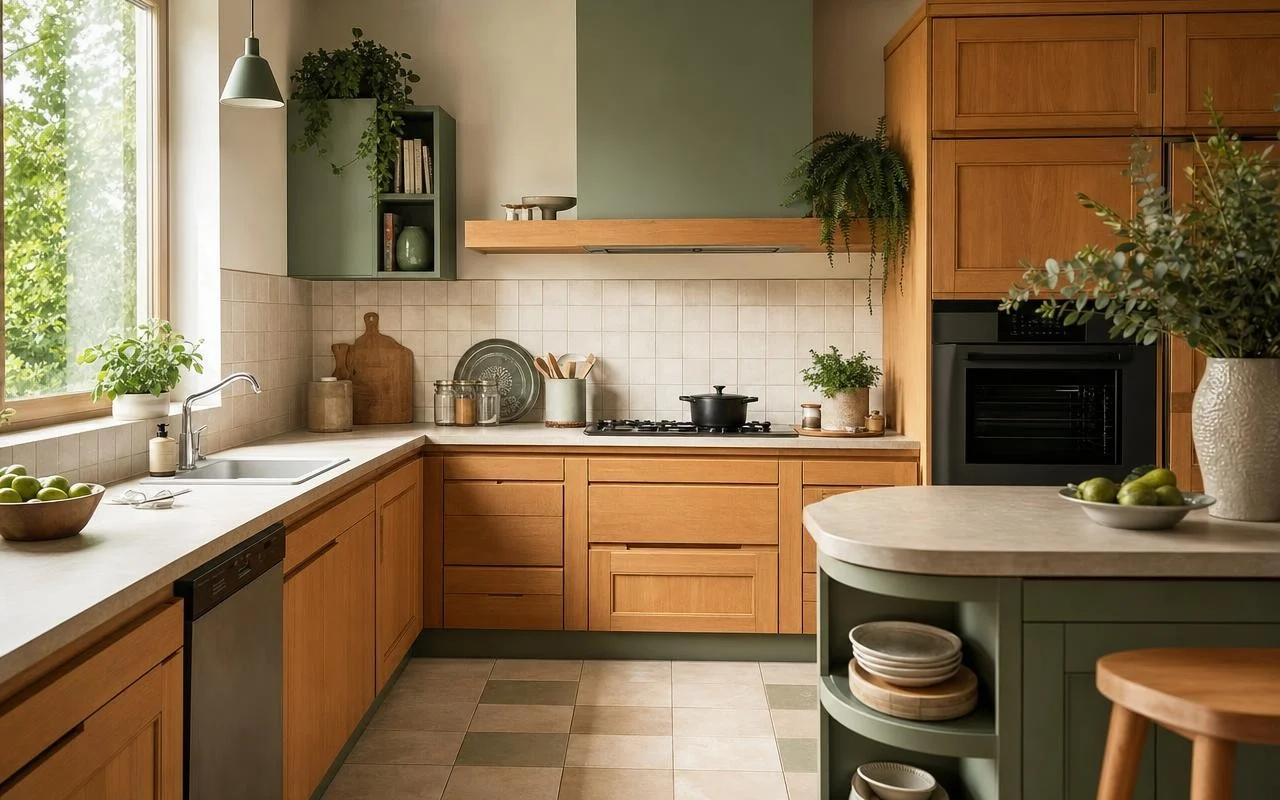
For years, many people sought to erase the kitchens of the 1990s: oak cabinets repainted white, tiled surfaces concealed, warm colors banished in favor of cool grays. Yet this aesthetic that was once shunned is making a comeback in designers’ projects today, driven by a desire to reclaim pieces that feel warmer.
The site House Digest, picked up by AOL, notes that this style once deemed “dated” is gaining favor with professionals. They see a kitchen that is less clinical and more sociable, a space where you cook but also chat, help with homework, and share a drink. The real surprise lies in the details they decide to keep.
Why the 1990s kitchen trend is appealing again to designers
At the end of the 2000s, the prevailing trend was an all-white kitchen paired with cool neutrals. According to House Digest, it was during this period that the oak cabinets typical of the 1990s were massively repainted, as if light wood belonged to the past.
That cycle is beginning to reverse. Designers are once again seeking visible materials, wood grains, earth-inspired colors, with a lot of greens. These more organic palettes make the space feel more welcoming than a monochrome white block, especially in family homes where the kitchen remains the heart of daily life.
What designers love about the 1990s kitchen
First obvious favorite: the all-wood kitchen. Oak cabinets, long regarded as outdated, are returning alongside maple and cherry. House Digest explains that these woods bring immediate warmth, especially when they surround a large island with a generous overhang designed to accommodate seating and informal meals.
Another strong sign of this 1990s kitchen trend: earthy tones, with many muted greens, and square tiling. The 1990s often presented it in uniform beige; modern designers prefer tiles with patterns or subtly nuanced tones. In the same spirit, Tuscan-inspired kitchens are coming back, with warm walls and textured materials.
How to adopt the 1990s kitchen trend without freezing it in the past
To render this aesthetic current, designers play with details. House Digest sums it up: “Overall, a 1990s kitchen aims above all to foster a warm sense of community.” In practical terms, this means an island used as a high table, a few comfortable stools, a pendant light that truly illuminates the center of the room. A few targeted gestures are enough to refresh this style:
- Lighten the existing wood with a light sanding and a more matte finish.
- Replace part of the tiling with square tiles in a discreet pattern.
- Add warm textiles, such as green or rust-colored chair cushions.
- Focus on warmer fixtures and a few contrasting handles.
Another simple path: replace finishes that are too cold with mixed metals, such as a brushed-brass faucet paired with stainless steel handles, or add a low cabinet dressed with a curtain. These nods evoke the 1990s without demanding major work or turning the kitchen into a film-set of a bygone era.
Sources
- Maison & Travaux
“If your home resembles a catalog, these 6 designer gestures transform it into a real living space without buying everything anew” - JLM
“Living Room 2026: these trend-setting pieces that designers are adopting in droves will change everything in your living room”
