
Regular watering, good exposure, enriched soil… and yet, some flower beds remain disappointing, with blossoms that open only halfway. Many gardeners immediately blame soil or fertilizer. Yet sometimes the real shortcoming lies elsewhere: there simply aren’t enough tiny wings to ensure pollination.
In gardens that are increasingly clean and mineralized, natural refuges disappear and bees, like other beneficial insects, become scarce. To bring life back to the plant beds without breaking the bank, a insect hotel kit sold for around 34 € at Nature et Découvertes offers a ready-to-assemble solution. This compact shelter can transform the mood of an entire bed or border.
Why a 34 € insect hotel kit can boost your flowers
Pollinating insects carry pollen from one flower to another as they forage. Without these visits, many ornamental and vegetable plants bloom poorly or yield little fruit. Solitary bees, bumblebees, but also ladybugs, lacewings, and earwigs play a key role, both for flowering and for natural control of aphids and other pests.
Yet these small allies are finding fewer hollows in dead wood, hollow stems, or piles of leaves to nest. An insect hotel recreates these micro-shelters in a compact version. By installing this type of refuge near your borders, you increase the chances that insects settle permanently, return daily to your flowers, and revitalize the whole garden.
Nature et Découvertes kit: an insect hotel easy to assemble and fill
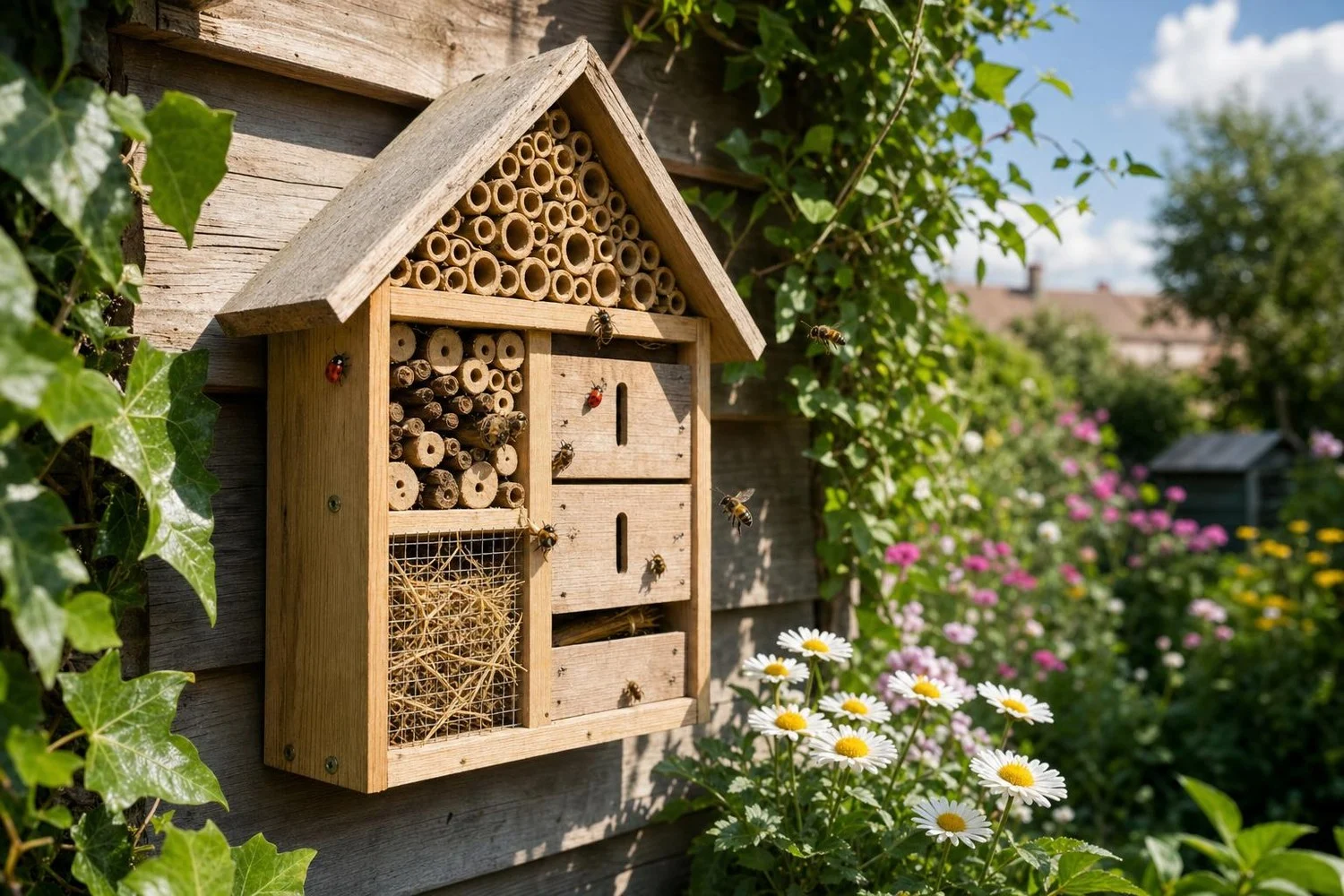
The Nature et Découvertes model, advertised at 33.95 € (about 34 €), was designed as a simple and playful project. The kit includes 11 wooden pieces, 20 metal screws, and a clear manual to guide you step by step. Once assembled, you obtain a sturdy structure composed of seven distinct compartments, ready to become an educational tool for the whole family.
Each compartment can welcome a category of insects. The central, closed housing holds a perforated piece and small wooden slats for wood-loving insects that favor wood. The lower compartment is filled with straw, moss, or hay to shelter ladybugs, lacewings, and earwigs. The five remaining spaces are filled with bamboo stalks or other hollow stems that particularly attract solitary bees and some bumblebees.
Where to install and how to maintain your insect hotel to attract bees
So that this refuge does not remain merely a decorative object, its placement matters a lot. Ideally, place it facing due south or southeast, sheltered from prevailing winds, and elevated at least 30 cm above the ground. A house wall, a shed, or a tall stake works perfectly, as long as the whole unit stays stable and dry. Placing it near a neglected corner or a very flowery border ensures a ready-made pantry for its future occupants.
Maintenance is limited but essential. Prolonged exposure to heavy rain can cause the wood and filling materials to rot. At the end of autumn or the beginning of winter, it is better to move the hotel to a sheltered spot, under a lean-to for example, while leaving it in the cold to respect the insects’ hibernation period. In spring, it returns to its sunny position in the garden. By checking annually the condition of the straw and bamboo stems, replacing them as soon as they are damaged, you maintain a welcoming refuge that sustainably promotes both bees and flowering.
