
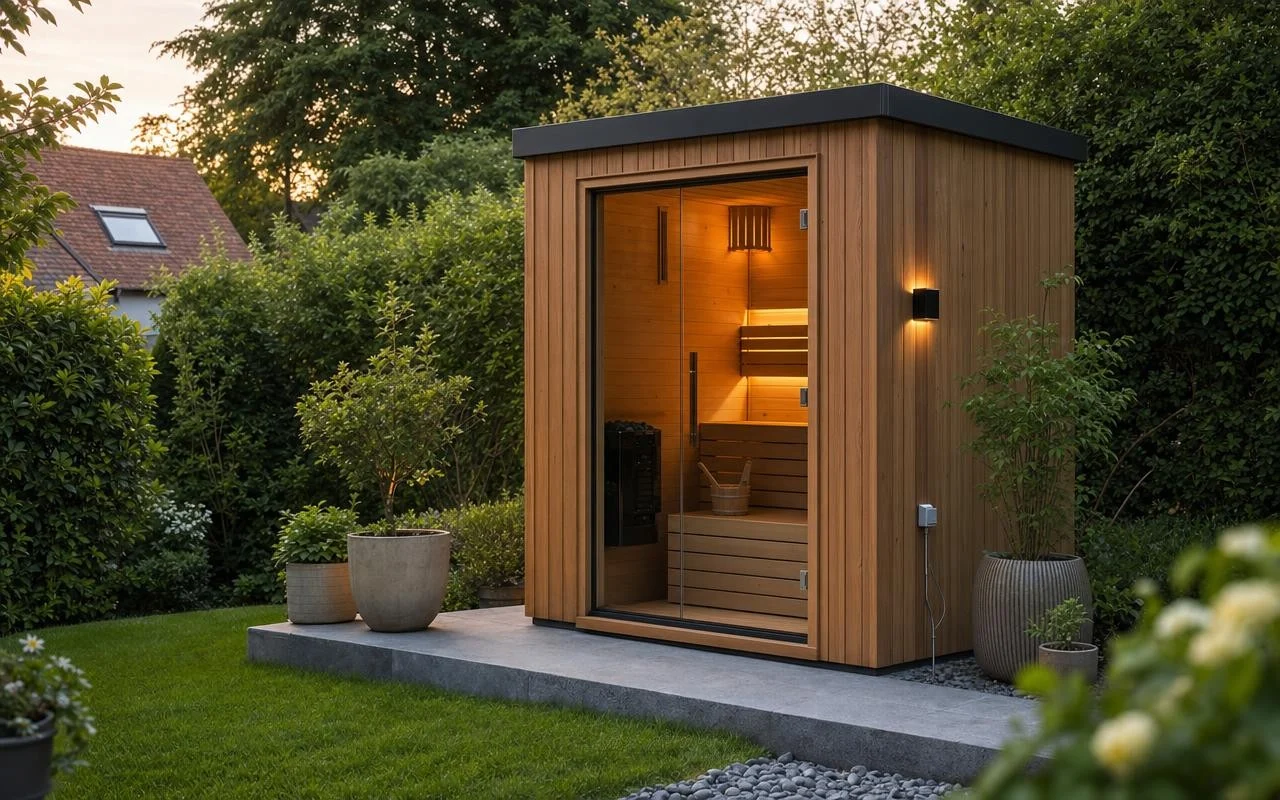
A slightly neglected patch of lawn, two trees, a fence shielding from view: many gardens hide an area with remarkable potential. When the temperatures rise, we crave more than a simple sun lounger. Some people imagine a true wellness cocoon there, able to replace the trip to the spa center.
In this everyday backdrop, a piece of equipment really changes the game: the outdoor sauna, sometimes called the garden sauna. Installed outdoors, this dry-heat cabin lets you enjoy a relaxation ritual in the open air, summer and winter, without touching the home bathroom. The idea is appealing, as it turns a simple corner into a private spa. The question remains how to go about it without ruining the yard or running afoul of urban planning regulations.
Outdoor Sauna: choosing the relaxation equipment that truly makes it feel like a spa
Before imagining cocooning evenings, you must decide between a wood-fired sauna and an . The former attracts with its visible flame, the scent of wood and a very natural ambiance, provided you have a good stock of logs and can tolerate the smoke near neighbors. The latter offers programmable heat-up, a simple button to turn it on, and more precise control of session duration, welcome after a busy day.
The choice also depends on the cabin size. Models advertised for four people actually offer optimal comfort for two, especially if you enjoy lying down. On a small plot, a compact and well-insulated garden sauna is preferable to a structure that is too imposing. Many overlook a very concrete detail at the moment of ordering: the delivery. You must plan for sufficient access to pass a cabin weighing between 800 and 1,500 kilograms.
Garden Sauna: planning rules, ground and foundations to anticipate
Installing an outdoor sauna is not simply a spontaneous purchase. Depending on the municipality and the local urban plan, a prior works declaration may become mandatory as soon as the footprint exceeds about 5 m² or in a classified area. A visit to the town hall’s planning department saves many unpleasant surprises. It’s also an opportunity to check the distances to be respected from the fence, the street, or the neighbors, useful when aiming for a truly discreet corner.
The support for the sauna deserves the same attention. Placing a cabin weighing nearly a ton on a damp lawn or loose soil often ends in settling, doors sticking, and damage to surrounding flowerbeds. Specialists recommend a concrete slab of 10 to 15 cm thickness, with a slight slope of 1 to 2% to drain rainwater. On a very planted plot or near the roots of fruit trees, a foundation on piles limits earthworks and preserves the garden.
Outdoor sauna installation: electricity, safety and a practical checklist
For an electric model, a compliant electrical supply is non-negotiable. The safest approach remains to create a dedicated line from the panel, protected by a 30 mA residual-current device, in accordance with NF C 15-100. Cables run in a buried conduit, shielded from moisture and shovel blows, away from automatic irrigation. In almost all cases, hiring a qualified electrician reassures, especially to verify the actual power needed by the chosen heater.
Before finalizing the order, a quick review prevents costly mistakes. Check the actual use to choose between wood and electric, have the necessity of a declaration confirmed by the town hall, sketch the exact placement with delivery access, plan the slab and drainage, and only then schedule the electrician. Once these steps are checked, the garden corner truly becomes a private spa at home.
