
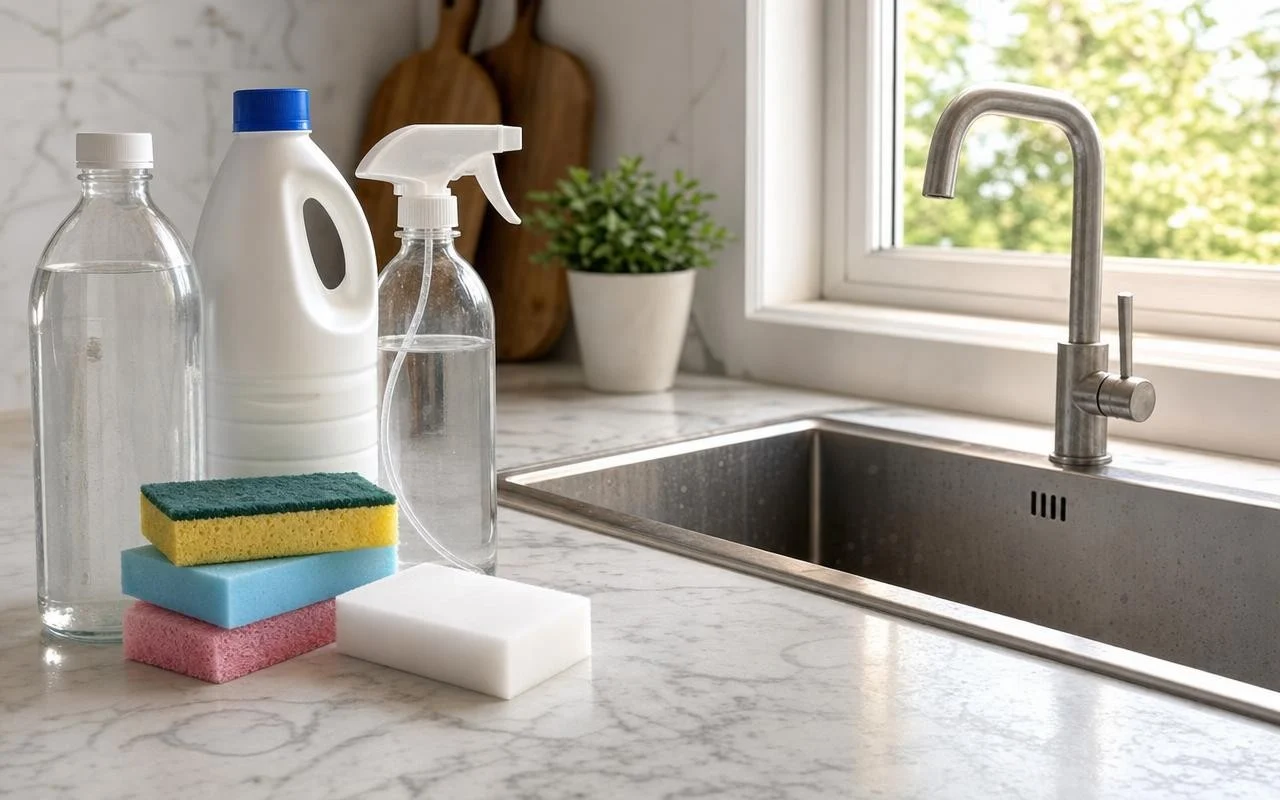
A shining kitchen gives the impression of a well-kept home and protects the health of the whole family. People therefore readily scrub with whatever is at hand, especially these “magical” bottles believed to clean anything. The problem is that some of these products end up scratching, dulling, or corroding surfaces… and sometimes endanger the air we breathe.
Countertops in stone, stainless steel, wood,
ceramic glass hobs, nonstick pans: each material responds differently. Misuse of these items can damage the kitchen or jeopardize hygiene, while there are simple alternatives. The surprise often comes from products reputed as natural or reassuring.
Why some household products damage your kitchen
Within the same room, surfaces are very delicate: marble, untreated natural stone, solid wood, tile joints, nonstick coatings. A product that is too acidic or too alkaline assaults these materials, removes their protective layer, and leaves dull marks, light stains or scratches that cannot be repaired. Repeated weekly actions end up costing a lot.
Metals also react strongly. Stainless steel does not tolerate steel wool and certain chlorinated products that promote corrosion. The worst practice is mixing products: combining bleach and vinegar releases irritant chlorine, while bleach and ammonia unleash other gases harmful to the airways. It is better to know the faux amis before bringing out the cleaning arsenal.
The 7 household products to absolutely avoid in the kitchen
Several products highly present in cupboards pose problems when used in the wrong place or too frequently. Here they are, with their main risks.
- White vinegar pure on marble and natural stone: the acid attacks and dulls the surface, and can sting knives and metal tools.
- All-purpose cleaner on stainless steel, stone or wood: some formulas containing ammonia, acids or bleach leave a dull film or damage finishes.
- Melamine sponge (“magic eraser”): micro-abrasive, it can scratch stone, glass surfaces, stainless steel, painted furniture and nonstick pans.
- Hydrogen peroxide (oxygenated water): it weakens the protective layer of stainless steel and dries out or discolors untreated woods and stones.
- Steel wool and very hard scouring pads: they permanently scratch stainless steel and create areas where rust forms more quickly.
- Concentrated bleach or ammonia on stainless steel: over time, these products discolor and corrode appliances and pots.
- Kitchen sponge kept for too long: damp and full of crumbs, it can transfer up to eight million bacteria from one surface to another.
Each time, the danger comes either from abrasion, from oxidizing or acidic power, or from cross-contamination. A kitchen sponge used on the sink, then on the countertop and the fridge handle deposits the same microbes everywhere, especially if it is not washed after use and replaced at least every two weeks.
What alternatives to use for a clean and protected kitchen
In most cases, a simple mix of hot water and dishwashing liquid with a microfiber cloth is enough to degrease without harming surfaces. On a marble or natural stone countertop, manufacturers recommend a neutral-pH cleaner applied with a soft cloth, followed by thorough drying to avoid halos. For stainless steel, a slightly damp microfiber cloth followed by drying in the direction of the grain reduces marks and the risk of scratches.
Glass-ceramic hobs clean well with a dedicated scraper and a special cream rather than with a melamine sponge. Nonstick pans respond to a soft sponge and soapy water, never steel wool. For hygiene, rotate several sponges, rinse them in very hot water, disinfect them regularly and dispose of them as soon as they have a strong odor to avoid bacterial growth. A final useful reflex: read labels, never mix products, and always test on a small discreet area before treating the entire kitchen.
Sources
- Mon Jardin Ma Maison
“these two kitchen products removed the weeds from my terrace, I will never buy a weed killer again”
