
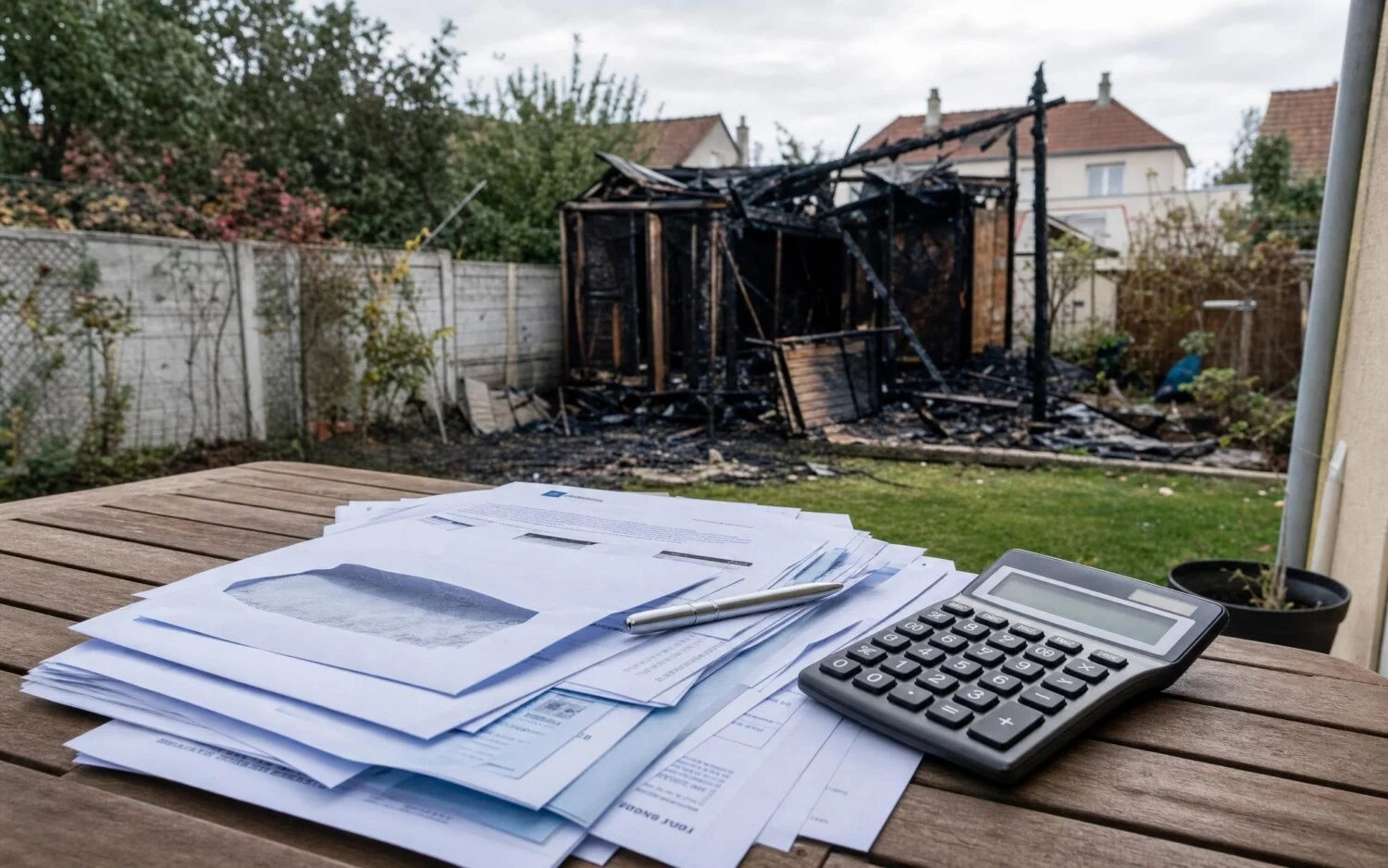
One morning, the shock: your garden shed is nothing more than a pile of ashes after an accidental or deliberate fire. The firefighters have come and gone, the insurance has been notified, and the debris is beginning to be cleared. Then the property tax notice arrives, and, to your surprise, the garden shelter still appears in the calculation. Many homeowners wonder whether this tax remains due for a structure that no longer exists, and especially how to permanently remove this shed from the tax records. Because fiscally speaking, everything revolves around the cadastral rental value, the January 1 date, and a 90-day deadline.
Property tax and destroyed garden shed: why January 1st is decisive
The property tax on built properties is based on the situation of the property as of January 1st of the year, a principle reiterated by the guidance published in the BOFiP. If your garden shed still physically existed on that date, it would be included in the cadastral rental value used as the basis for the tax for the entire year. Even if the fire occurs in February or June, the tax assessment for the year reflects the situation observed on January 1.
The opposite scenario illustrates the importance of this date: a shed destroyed by fire in December no longer exists on January 1 of the following year. On paper, it should therefore no longer be included in the taxable base. In practice, the DGFiP does not automatically notice the disappearance; for the administration, the structure continues to exist in the cadastre until any change declaration has been filed.
Garden shed and property tax: was your shed really taxable?
Before even discussing a fire, it is necessary to verify whether the destroyed shed really fell under property tax. Tax doctrine specifies that small, lightweight constructions are generally outside the taxable scope, except when they possess the characteristics of true constructions: enclosed and covered, durable use, own value, and permanent fixation to the ground. A jurisprudence cited in official commentary mentions the case of a chalet simply placed on 20 cm concrete blocks; judges held that, once moving it would require dismantling it, it must be considered fixed to the ground.
Another common source of confusion: the thresholds of 5 m² of footprint and 1.80 m in height. These values mainly apply to the aménagement tax (development tax), as explained in the administration’s notes on construction taxation, and are not, by themselves, sufficient to render a shed subject to the property tax. A simple, dismantlable shed, installed without a durable anchor, could therefore have been wrongly included in the cadastral rental value.
Fire at the shed: tax steps to stop paying property tax
Once the fire is over, the shed has no physical existence, but it remains in the cadastre databases. Article 1406 of the Code général des impôts requires declaring any change in the structure, such as a total or partial demolition, within 90 days. This declaration is made via the form 6704 (Cerfa No. 10517*02, model IL 6704), addressed to the service des impôts fonciers or to the cadastre office. It is useful to attach a solid file:
- attestation of intervention by the firefighters or a bailiff’s report;
- Form 6704 completed noting the demolition of the outbuilding;
- a letter detailing the date and circumstances of the incident, with copies of the property tax notice.
If the property tax notice has already been issued or paid, a claim remains possible. Article R*196-2 of the Livre des procédures fiscales normally sets the deadline as December 31 of the year following the year of recouvrement. The request must lay out the situation as of January 1 and the fact that the outbuilding no longer exists, relying on the demolition declaration. Many victims think that reporting to the insurer suffices, while the insurers’ databases and the tax administration’s databases do not communicate: without updating the cadastre, the property tax continues to target a building that was, in fact, reduced to ashes.
