
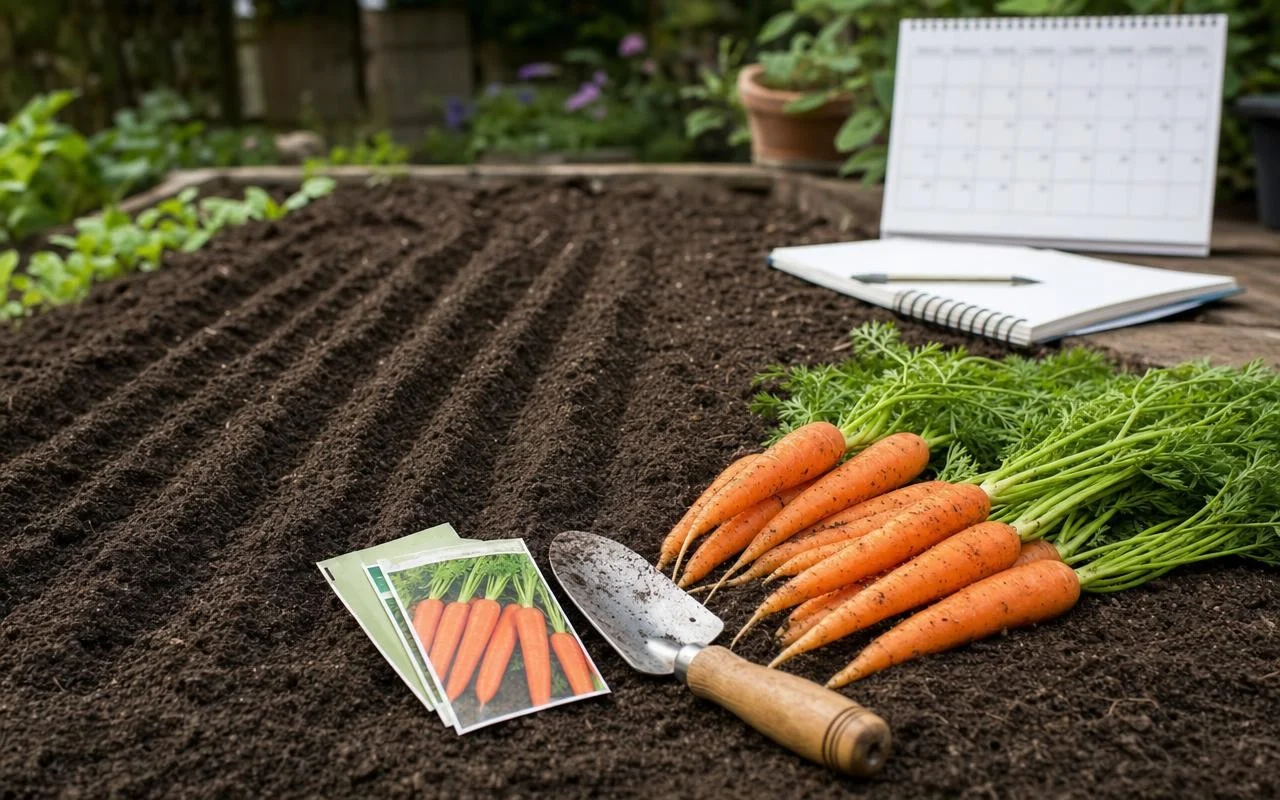
Biting into a carrot from the vegetable garden, both sweet and pleasantly crunchy, often hinges on a detail that’s easy to overlook: the timing of the sowing. For this hardy root, a few weeks’ difference can alter the texture, the size, and even the flavor on the palate.
The carrot, Daucus carota, is sown directly in place and does not tolerate transplanting. Among early-season, seasonal, or storage carrots, the calendars overlap from February to July. So the question isn’t merely “when to sow,” but most of all when to sow to obtain sweet and crunchy carrots rather than fibrous or bland ones. It often all comes down to a few weeks’ difference.
Soil Temperature and Season: The Key to Sowing Carrots
Experts remind us that the true trigger for the best time to sow carrots isn’t the date on the calendar, but the soil temperature. Growing guides indicate it’s wiser to wait until the soil reaches at least 7 or 8 °C, with a comfortable threshold around 10 °C. Below this, germination slows dramatically and losses rise, even though germination may still occur in 14 to 21 days.
Once this threshold is passed, seasonal timing takes over. The National Society of Horticulture of France (SNHF) places direct sowings in the ground from March to July depending on the region, aligning with the guidance of many manuals. Under frames or tunnels, one can start as early as late February for early carrots, while most gardeners with bare soil wait until mid-March to secure germination.
The Right Sowing Windows for a Sweet and Crunchy Harvest
The sowing calendars distinguish three main periods, each with an effect on taste and texture:
- Early-season carrots : sowing under shelter from late February to April, harvest about two months later, roots tender for fresh, crunchy eating.
- Peak-season carrots: sow from mid-March to the end of April, for summer harvests on well-formed roots.
- Storage carrots: sow from June to early July, a longer cycle (100 to 120 days) with dense flesh, ideal for autumn and winter.
Several sources note that carrots harvested late in the season, after the first cool spells or frosts, often develop a sweeter flavor. Cold encourages the root to concentrate its sugars, especially for storage varieties. Hence the advantage of sowing in late June or early July to harvest in autumn. In regions with very mild climates, some guides even mention two possible crops: very early in spring and then again at the end of summer.
Cultural Adjustments: Water, Soil, and Density to Boost Flavor
Calendar alone doesn’t do the job. For truly crunchy carrots, the soil should be light, loamy or sandy, well loosened and stone-free, as noted by SNHF and technical sheets. Sow in rows, about 1 cm deep, in full sun. Carrots do not require fresh fertilizer right before sowing, and an excess of amendments can even deform the roots.
Water directly influences flavor. The guidance agrees: keep the soil regularly moist, especially during germination and root enlargement. Under-watering makes carrots more bitter, while too much water promotes rot. Then come thinning and maintenance. When seedlings have 4 or 5 leaves, space the carrots 3 to 10 cm apart depending on the variety’s length, which ensures uniform size and crunch. Light mulching, regular weeding, and sowing avoidance during periods of heat lessen bolting, which yields hard, less tasty roots. In practice, aim for sowing in already warmed soil, away from extreme heat, with steady watering, to maximize the chances of producing crisp, naturally sweet carrots in rows.
Sources
- Mon Jardin Ma Maison
“Carrot”
