
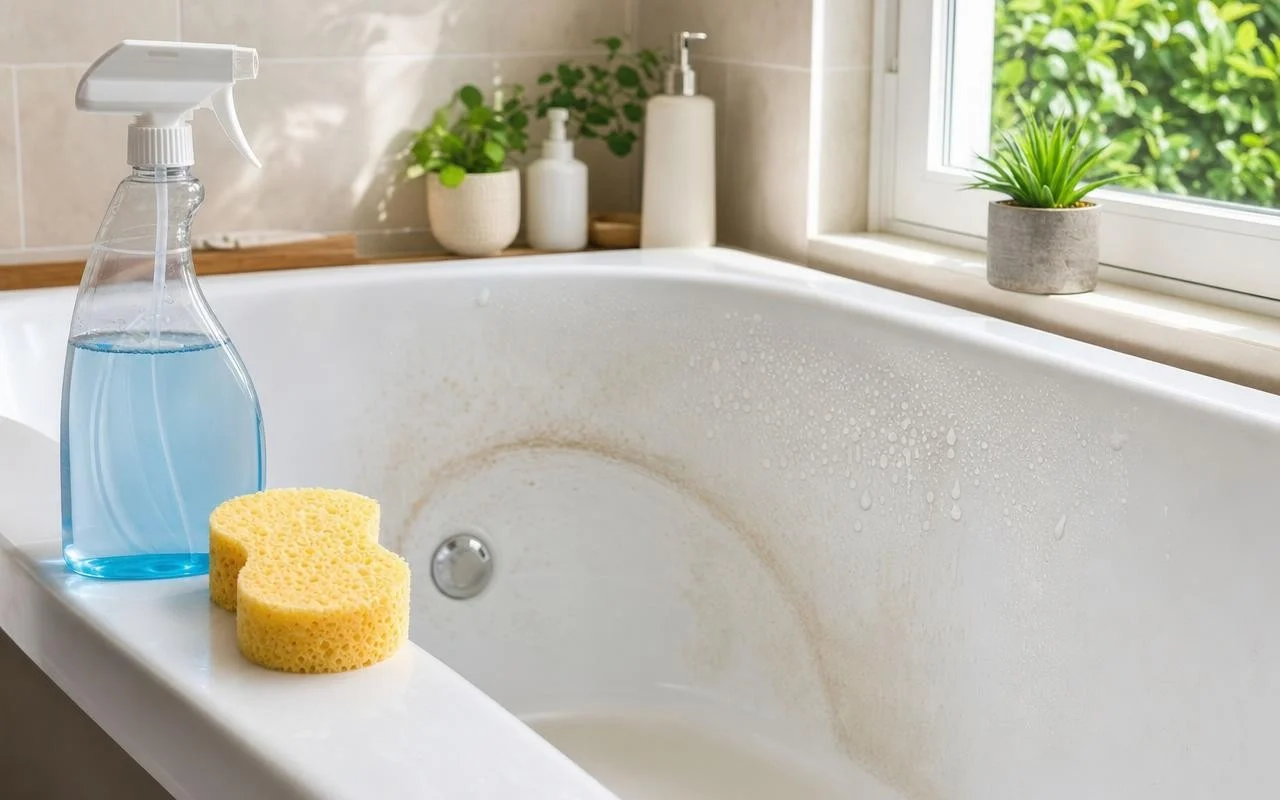
You’ve just stepped out of a relaxing bubble bath, and after you drain the tub, a dull gray ring encircles the basin. This “soap ring” forms from body oils, product residues, and minerals in the water that settle where the water level stops. It isn’t dangerous, but it’s unsightly and, if you wait too long, it can harden. Many people assume you’ll have to scrub until you’re exhausted to remove it.
In fact, there are methods to eliminate a bath ring by letting the products do the work, rather than your arms. Cleaning experts recommend first identifying the material of the tub, then selecting a suitable product to leave on for 15 to 30 minutes. A few precautions are enough to turn this chore into a simple routine. It all hinges on the dwell time.
Identify the Material Before Removing a Bath Ring
First of all, you need to know what material your tub is made from. Modern basins are often made of acrylic or fiberglass, the older ones of enamel or porcelain, sometimes resin or stone. Experts warn that choosing the wrong product can cause scratches, stains, or small chips that weaken the surface. It’s best not to turn a simple soap ring into an expensive repair.
Acrylic tubs require the most care. ClubTidy stresses: “On an acrylic tub, no abrasive powder or scrubbing pad,” to avoid micro-scratches that can be irreversible. Highly chlorinated products or mixing ammonia with bicarbonate are also not recommended for this material. For acrylic tubs, opt for a non-abrasive bathroom cleaner, a soft sponge, and, above all, a generous dwell time rather than prolonged scrubbing.
Methods to Remove a Bath Ring Without Scrubbing for Hours
For an acrylic or delicate tub, American authors recommend non-abrasive cleaners such as bathroom spray formulas. Generously spray the product onto the ring, let it sit for at least 15 minutes, then rinse thoroughly. If the mark persists, reapply and wipe with only a soft sponge, without pressing hard. The product has already dissolved most of the grease and residue, which really limits the effort.
For tougher surfaces like enamel or porcelain, there are somewhat stronger solutions, still with minimal scrubbing. A 1:1 mix of water and household bleach sprayed on the ring and left for 15 minutes helps oxidize soap stains before a simple rinse. Another option, outside of acrylic: a half-bucket of water with a quarter cup of ammonia and a quarter cup of baking soda, applied with a non-abrasive sponge.
- Household gloves to protect the skin from cleaners.
- A window slightly open or an active ventilation system to air out the room.
- Thorough rinsing to remove any chemical residue.
Last Resort and Prevention Against the Bath Ring
If the ring stubbornly lingers on an enamel or hard resin tub, a paste made from Ajax powder can help. American guidelines suggest mixing a little water with the powder to form a paste, applying it to the stain, and letting it sit for about 30 minutes before carefully rinsing. This method should be avoided on fiberglass, which is more delicate and more prone to marking the surface.
To avoid needing these products too often, it’s better to prevent the ring from reforming. ClubTidy recommends a quick wipe with a squeegee or a quick towel-dry after the bath to chase away lime scale and residues before they dry. A weekly or biweekly cleaning, with a touch of baking soda and white vinegar to deodorize, is enough to keep the tub clean without long scrubbing sessions.
