
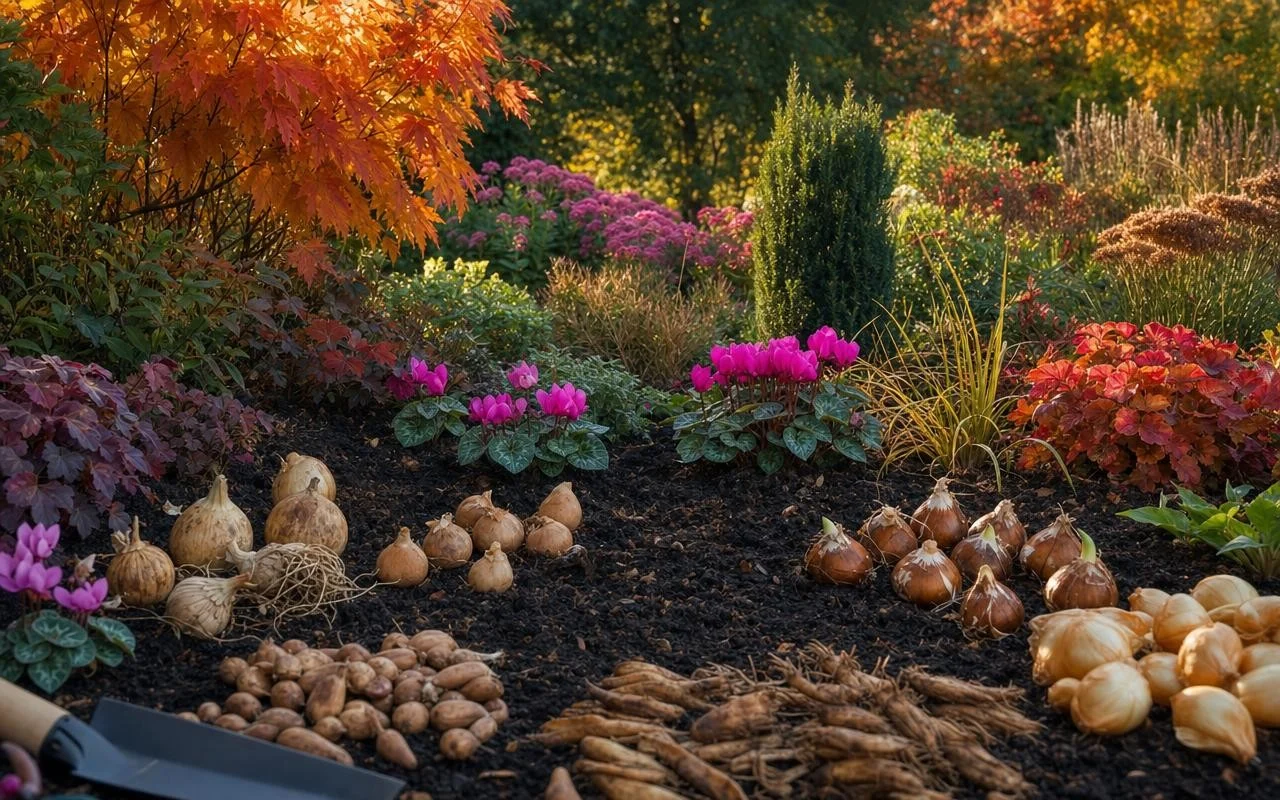
Early August, the summer beds slowly fade in intensity, the flowers wither and colors become rarer. Many gardeners then think that the season is ending, while another begins: the autumn garden, capable of staying brilliant until the first frosts arrive.
The period is ideal for deciding what to plant: late-blooming varieties, very colorful foliage, graphic grasses, but also a little-known tuber that is planted precisely now. Everything hinges on the days to come, with a few targeted plantings.
Early August, the right window to prepare a colorful autumn garden
Experts emphasize this point: around the turn of July and August, the surface soil remains quite warm, while the first late-summer rains are not far off. This duo of heat plus gentle humidity offers ideal conditions for the roots of perennials, bulbs and tubers to settle in before autumn, without a brutal shock.
Planted too early, in the heat peak, young plants or tubers risk drying out before they’ve even taken root. Planted too late, once the soil is saturated, they struggle to establish themselves and the autumn bloom is delayed. For plants like the Naples cyclamen, this early-August window truly changes the success of the September flowering.
Cyclamen of Naples and late-blooming highlights: the stars to plant now
The Naples cyclamen (Cyclamen hederifolium) is the season’s gem. This tuber, discreet in garden centers, should be planted in soil that is still warm in early August. Its small pink or white flowers push through the soil from early September, often before the foliage, and instantly revive a tired bed. The variegated leaves that follow remain decorative throughout autumn and winter, until the next spring. It prefers partial shade, at the base of a tree, along a border or at the edge of a hedge, in light, well-drained soil.
Planting is done without rushing: loosen the soil, remove roots and old grass, add a bit of compost and, if the soil is heavy, some sand. The tubers are placed in holes 3 to 5 cm deep, spaced 15 to 20 cm apart, with the convex side downward and the bud facing upward, then cover with a thin layer of soil and gently firm. A single watering at planting is enough; afterward, the plant lives almost autonomously and tolerates summer drought well once established.
Foliage, grasses and perennials: crafting an autumn display that shines
For a truly rich autumn garden, it isn’t just about flowers. Colorful foliage provides long-lasting presence. Heucheras offer leaves in purple, orange or lime green, perfect for borders or pots. Coleus fill the gaps left by spent annuals. In the decorative vegetable plot, rainbow Swiss chard, multicolored lettuces, or purple-leaved basil combine harvests with bright colors.
- Shaded corner: Naples cyclamen and heucheras with contrasting foliage.
- Sunny bed: asters, chrysanthemums, dahlias and sedums for flowers right up to frosts.
- Containers and balcony: coleus, ornamental cabbage, pansies and violas to bloom for several months.
Ornamental grasses complete the scene. Panicum, Molinia, Pennisetum or Miscanthus rise their light panicles in autumn, adding movement and transparency. Large sedums like ‘Autumn Joy’ shift from pink to copper with the cool weather, while hydrangeas keep their seed heads for a long time, turning beige, pink or burgundy. By leaving the seed heads of clematis, asclepias or echinaceas in place, you add a graphic texture and, in passing, a valuable pantry for garden birds.
