
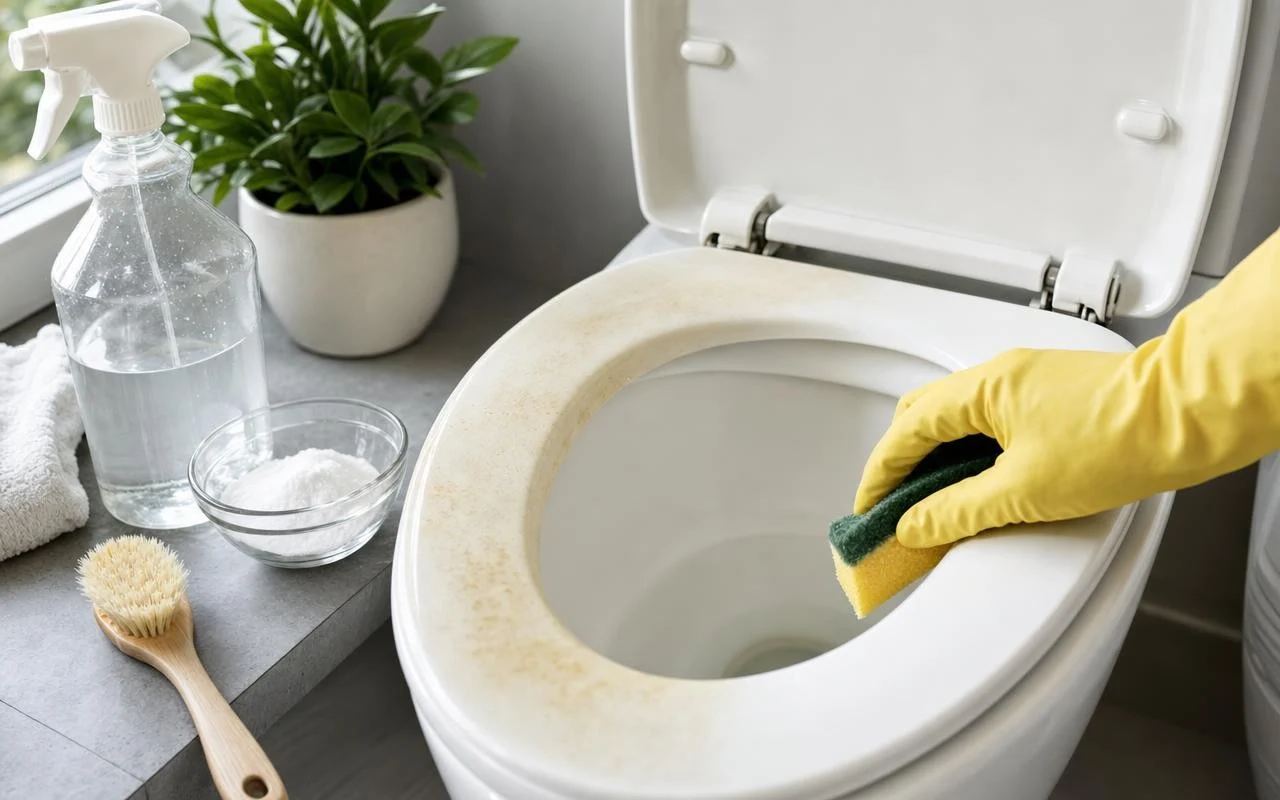
A yellowing toilet seat, even on impeccably clean toilets, instantly conveys a sense of neglect. You scrub, you reapply cleaning product, nothing works: these yellow-to-orange streaks cling to the plastic, especially on the inner surface. This very common problem frustrates many households, as it often affects seats still in good condition.
Behind this yellowing lie mainly dried urine deposits, calcium deposits and the wear of plastic exposed to UV rays. Conventional cleaners remove surface dirt, but not these ingrained layers. Good news: several proven tricks can make a yellowed toilet seat noticeably whiter without buying a new one. Some require a bit of time, others work in just a few minutes.
Why a toilet seat yellows and when whitening really works
Cleaning experts explain that yellow stains mainly come from dried urine deposits, sometimes referred to as urine scales, mixed with the minerals in the water. This blend gradually settles into the pores of the plastic. Over time, light, particularly UV rays, also alters the color of the material. The seat then looks dirty, even if it was scrubbed just beforehand: the coloration comes from inside the plastic.
Before resorting to drastic measures, a small test helps determine whether a toilet seat can still be whitened. By running a fingernail over the yellow area, if the surface remains smooth and shiny, the deposits are mostly surface-level: a good treatment has a solid chance of working. If the plastic is dulled, nicked, or rough, the yellowing is often permanent and replacement may be more sensible. Some highly acidic powders, such as concentrated citric acid, can strongly attack the plastic and the fittings; experts therefore advise avoiding them on a toilet seat.
Four effective methods to whiten a yellowed toilet seat
The quickest method for localized stains is often to use an oven cleaner spray. Protect the floor, wear gloves, then spray the product on the inner face of the seat, whether detached or flipped up. The product acts for about fifteen minutes before being wiped with a damp cloth and then rinsed with plenty of water. For small yellow areas around the fasteners, a whitening toothpaste applied to a damp cloth and left on for a few hours also yields good results.
When the whole seat is yellowed, especially underneath, a hot bath with dishwashing tablets cleans deeply. Remove the seat, place it in the bathtub or a large bucket and cover with hot water, then dissolve several tablets in it. The seat remains submerged for several hours. Another homemade option: a paste of white vinegar and baking soda left for three hours before rinsing, which dissolves both lime scale and urine deposits.
Precautions and tips to keep a toilet seat white for a long time
For all these methods, a few safety habits remain essential. Cleaning guidelines remind that a yellowed toilet seat should always be treated gently.
- wear gloves and, for sprays, ventilate the room well;
- test each product on a small, inconspicuous area;
- thoroughly rinse with clear water after the indicated contact time.
To prevent the yellowing from returning too quickly, regular maintenance matters a lot. A quick wipe in case of urine splashes, a weekly pass with a soft cloth and a little white vinegar, before the stains set in, markedly slows down deposits. Keeping the seat down also limits UV exposure. If, despite everything, the plastic remains dull, buying a new seat becomes the simplest solution.
