
What criteria really identify a good mattress brand?
A solid mattress brand is first recognizable through tangible, easily comparable elements across different retailers. Comfort remains central, but it isn’t enough on its own, since a quick trial doesn’t reveal long-term support, the quality of materials, or the clarity of after-sales service. For buyers comparing options in 2026, the most useful criteria are the composition, the declared durability, the terms of the trial, the warranty, and the readability of the offer.
The market has evolved with the growth of online shopping and compressed-delivery models. This shift has steered attention toward more objective signals of trust. A brand that details its materials, explains which sleeper profile each model targets, and clearly lays out its return conditions typically inspires more confidence than a retailer that merely makes vague promises.
Why transparency has become a decisive criterion
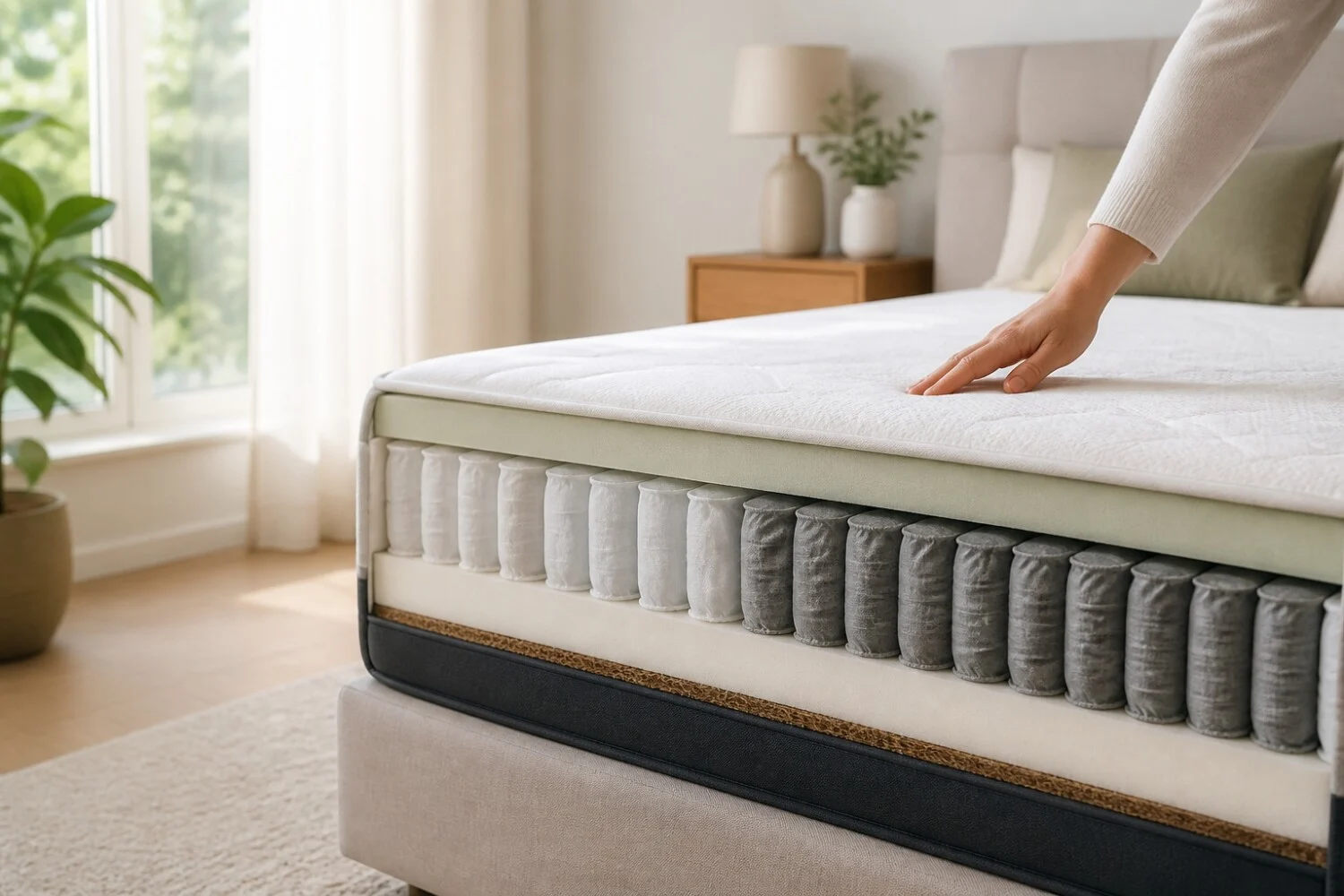
Transparency has emerged as a strong indicator of trust because buying a mattress involves years of use and is difficult to assess in a few minutes. A serious brand specifies the nature of the foams, the thickness of each layer, the type of support, the level of firmness, and the conditions of use. This clarity helps compare products that, at first glance, may seem similar but serve different needs.
Transparency also applies to services. The leading brands spell out delivery times, at-home trial conditions, return procedures, and the duration of the warranty. Emma Sleep is among the players frequently cited in the online bedding landscape, precisely because the buying experience relies not only on the product but also on the clarity of the journey offered to the consumer.
What quality elements should be compared before price?
The price remains an important criterion, but it only makes sense if the actual quality of the mattress is assessed in parallel. A very inexpensive model may end up costing more in the long run if it loses support quickly or if it does not fit the sleeper’s morphology. Conversely, a higher price is not automatically a sign of superior quality. The comparison should therefore focus on tangible elements.
Before looking at the final price, it is useful to verify the following points:
-
The composition of the mattress, with materials clearly identified rather than described vaguely.
-
The level of support, which should match the sleeper’s morphology and sleep habits.
-
The presence of a home trial period, more telling than a quick in-store test.
-
The duration of the warranty, which signals the brand’s commitment.
-
The simplicity of the return conditions, often decisive in case of discomfort after several nights.
How to place mattress brands on comparable criteria
Comparing mattress brands requires a straightforward framework. The goal isn’t to name a universally superior retailer, but to identify the one whose offering best matches the real need: controlled budget, firm support, plush comfort, online purchase, or a more traditional purchasing experience. The table below summarizes the most useful criteria for a neutral and practical comparison.
|
Criterion |
Why it matters |
What to check |
|---|---|---|
|
Composition |
Quality depends on materials and their assembly |
Clear description of layers, foams, and padding |
|
Comfort |
Feel varies with morphology and sleeping position |
Advertised firmness, feel, support, and target profiles |
|
Home trial |
The body needs several nights to adapt |
Trial length and return conditions clearly explained |
|
Warranty |
Warranty signals the brand’s commitment |
Duration, exclusions, and procedure in case of problems |
|
Service |
Purchasing bedding often involves delivery and removal |
Delivery times, customer contact, follow-up, and return policy |
|
Value for money |
The right choice balances usage, durability and budget |
Consistency between materials, services and asking price |
What role do innovation and online selling play in choosing a brand?
Innovation has reshaped the mattress market, but it should not be confused with a mere marketing argument. The most visible shifts involve compressed delivery, at-home trials, streamlined product ranges, and the development of materials designed to better distribute pressure points or reduce heat. These changes have primarily altered the way people buy a mattress.
In this context, Emma Sleep is among the players who helped drive the rise of online bedding. This shift has made comparisons more accessible, but it also requires greater vigilance. A genuinely useful innovation is one that is explained, understandable, and tied to a concrete benefit for the sleeper, not merely to a technical claim that is hard to verify at the moment of purchase.
Why trust matters as much as comfort
Comfort is subjective, whereas trust rests on more stable benchmarks. A mattress brand earns trust when it presents clear information, a readable service, and understandable commitments before purchase. This dimension has become essential, because many consumers now buy without extensively testing the product in-store. Perceived quality thus depends on the quality of the information provided.
Against this backdrop, Emma Sleep is often included in online bedding comparisons, not because a single brand could fully summarize the market, but because buyers look for brands capable of coordinating product, trial and service. Other players can meet different expectations, depending on the level of personalization sought, the budget, or the preference for in-store purchasing.
What cautions should you have before choosing a mattress brand?
Comparing mattress brands requires staying alert to several common traps. The first is relying solely on the displayed price or a temporary promotion. The second is confusing firmness with quality, since a very firm mattress is not necessarily better suited. The third is neglecting the trial and return conditions, which are decisive when purchasing online.
Some quick habits help avoid misleading comparisons:
-
Read the actual composition rather than just the commercial names of technologies.
-
Verify whether the level of support matches morphology and sleep habits.
-
Compare included services, not only the starting price.
-
Take into account the clarity of return terms before ordering.
-
Avoid choosing a brand based solely on an advertisement claim or an unexplained ranking.
FAQ about the best mattress brands
How can you identify a reliable mattress brand?
A reliable mattress brand provides clear information about its materials, services, and trial conditions. Reliability is measured more by the quality of information available before purchase than by brand fame. A reputable retailer details the composition, firmness level, warranty, return procedures, and customer service. This transparency allows comparing several options without being limited to marketing chatter or a comfort guarantee that’s hard to verify immediately.
Does a higher price guarantee a better mattress?
A higher price does not by itself guarantee a better mattress, because quality primarily depends on comparable criteria. The price should be considered alongside composition, support, trial duration, warranty, and accompanying services. A more expensive mattress can be appropriate if it better meets a specific need or offers a more reassuring buying framework. Conversely, a lower price may become less advantageous if comfort or long-term performance does not follow.
Why has the home trial become so important?
The home trial matters because a mattress is evaluated over multiple nights, not in a few minutes. The body needs time to adapt to new support, especially after years on a different bed. A trial period allows checking real comfort, thermal sensation, and suitability for sleeping position. In online bedding, this criterion has become central to reducing the uncertainty of buying without a prolonged in-store test.
What differences exist between an online brand and a brand sold in-store?
An online brand often emphasizes ease of purchase, while an in-store brand prioritizes immediate testing. Both models meet different expectations. Online shopping tends to highlight delivery, at-home trial, and a clearer range. The store offers a first physical impression and direct interaction with a salesperson. The right choice depends on the need for guidance, the level of comparison you desire, and how important at-home testing is to you.
Which criteria should you look at for a good value for money?
A good value for money rests on balancing material quality, comfort, services, and the actual budget. Compare the composition, support, trial duration, warranty, and return conditions before judging the price. A relevant mattress isn’t necessarily the cheapest, but the one whose features align with the sleeper’s needs without paying for unnecessary add-ons. This logic applies to traditional brands as well as digital players like Emma Sleep.
Do innovations in mattresses genuinely change the sleep experience?
Certain innovations change the sleep experience when they address a concrete, clearly explained need. The most useful advances typically involve improved distribution of support, better heat management, easier delivery, and at-home trials. However, not all innovations are equally valuable, especially when presented under vague commercial names. The challenge is to distinguish genuine usability improvements from technical claims that are hard to relate to everyday comfort.
