
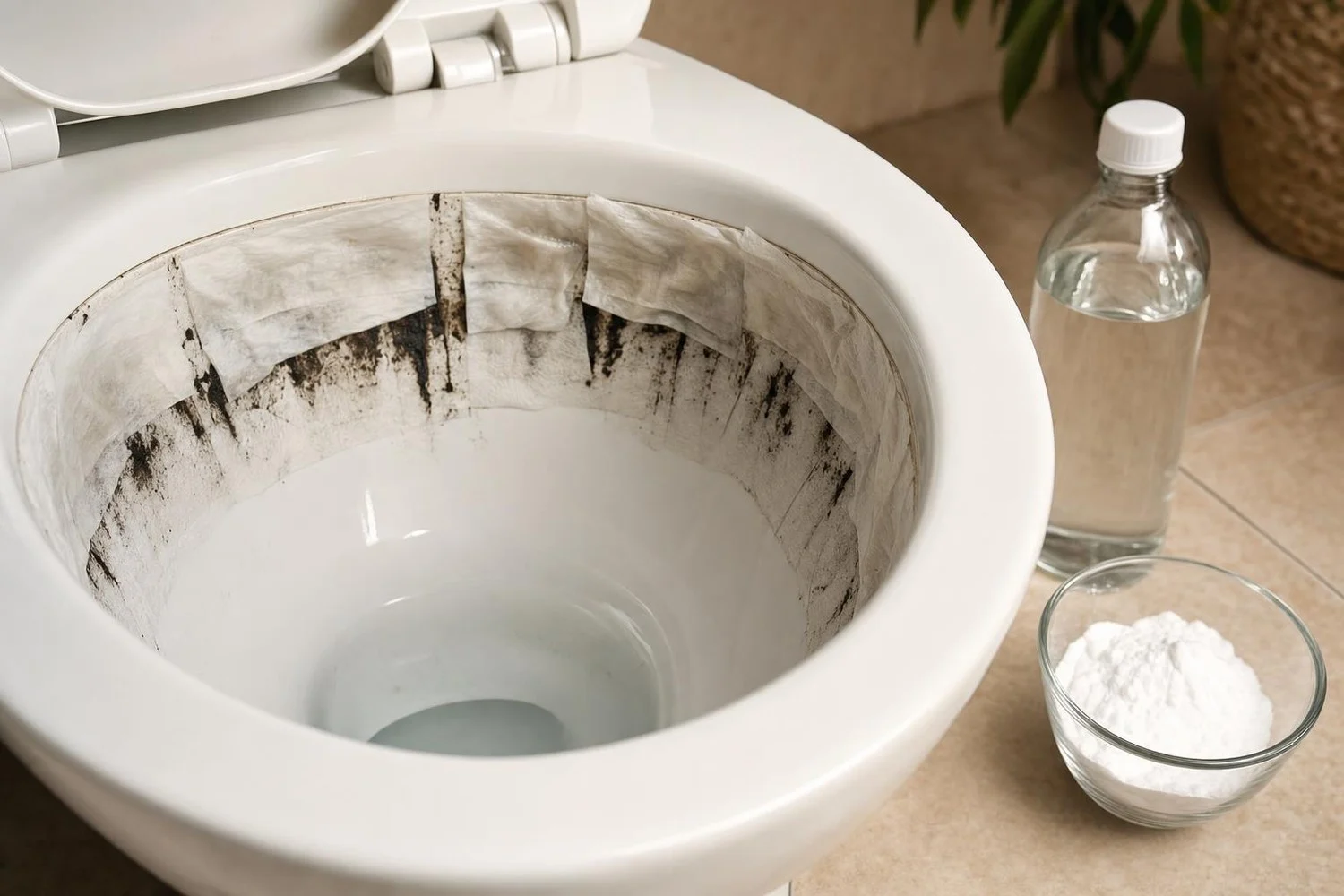
The dark streaks that form along the bottom of the toilet bowl have a talent for spoiling the look of a bathroom, even when everything else is spotless. People swap the toilet unit, flush multiple times, and still nothing changes. Many then reach for the harshest products and scrub until their arms ache.
Yet cleaning experts describe a different scenario: less force, gentler chemistry, and above all, time. According to them, these dark marks mainly originate from scale buildup, organic residues, and microorganisms sustained by constant dampness. By adjusting these two levers, it becomes possible to clean without a brush or long rounds of scrubbing. All of it happens during the night.
Why do black stains appear in the toilet bowl
Behind these black stains, technicians from MesDépanneurs.fr point to one common culprit: hard water loaded with lime. As it evaporates after each flush, this water leaves minerals that cling to the ceramic and form scale. Over time, the surface becomes rough and starts catching more and more dirt.
A Spanish cleaning-focused article describes a second ingredient: constant humidity at the waterline. In this zone grow bacteria, fungi, and other microorganisms, which darken the lime deposit. Even if the bowl looks clean, these layers eventually reappear as black streaks, sometimes accompanied by unpleasant odors and a less effective flush.
Methode sans brosse au vinaigre blanc et bicarbonate pour dissoudre le tartre
Experts stress one key point: to remove the scale, you need both the right product and sufficient contact time. MesDépanneurs.fr recommends flushing once, then lowering the water level slightly, for example with a cup, so that the stains remain exposed before applying the white vinegar.
Then place a sheet of absorbent paper against the stained walls and pour on a generous amount of vinegar, as described by MesDépanneurs.fr and the Spanish articles. Let it sit for at least four to six hours, ideally overnight. In the morning, remove the paper, add a few tablespoons of baking soda into the bowl, and flush: the fizzing reaction helps loosen the softened deposit, and most of the stains come away with little to no scrubbing.
Citric acid, washing-soda crystals and good habits to prevent stain return
If the marks resist, practical guides mention using citric acid, stronger than vinegar but still natural. Simply dissolve three to four spoonfuls in very hot water, pour into the bowl, and let it sit for half a day. Gloves are mandatory, as this mixture can irritate the skin. For a simple whitening of the bottom, guides also cite washing-soda crystals dissolved in hot water, again with gloves.
Some people turn to
