
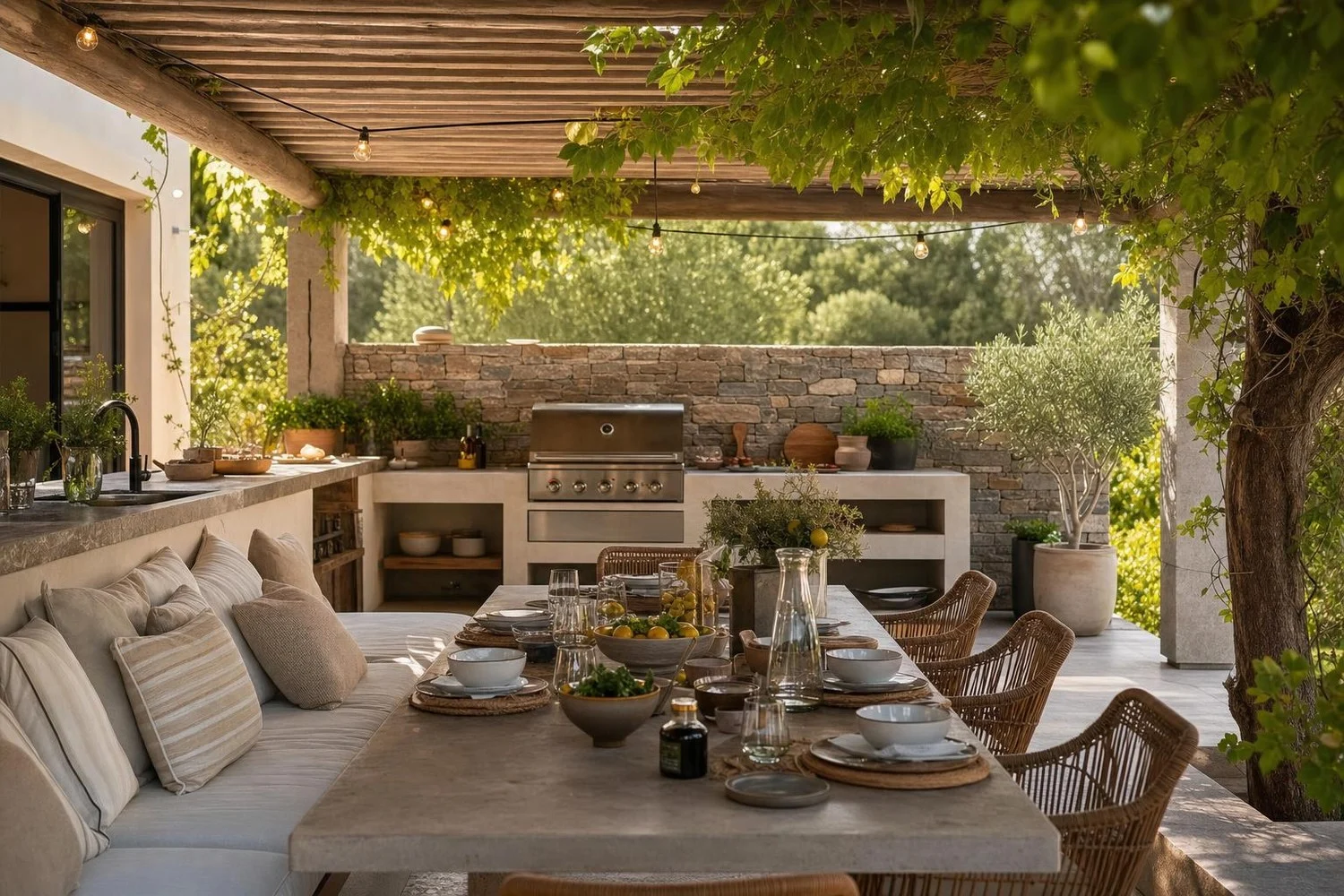
In 2026, with heatwaves following one another and evenings that never seem to end, French houses are changing pace. The walls swing open, the large bay windows stay wide open, and daily life glides gently toward the garden. The living room, long the centerpiece, becomes almost deserted at the first signs of heat, in favor of a life much more oriented toward the outdoors, around a specific area of the garden.
In many households, people no longer settle for two sun loungers and a small coffee table. The garden ceases to be merely decorative and becomes a room where we cook, eat, and chat for hours. Brands such as Botanic or Leroy Merlin have understood this well and are multiplying solutions to structure these spaces. The question remains: which part of the garden truly asserts itself as the new heart of the home?
Why the garden dethrones the living room in summer
This shift begins with a very simple observation: when the sun shines, no one wants to stay indoors while the meal simmers inside. The French look for places to share daily life without breaking the link between those who cook and those who relax. The garden offers this possibility to live together—children, friends, neighbors—in a single space. It still requires that this space be conceived as a true room, functional and comfortable.
Over the summers, one area has taken the lead over the others: the space dedicated to meal preparation. The old barbecue tucked away at the far end of the lawn makes way for a structured corner that brings you closer to a summer kitchen. There you’ll find a safe cooking zone to limit flame risks, a sturdy work surface to prepare vegetables from the garden without running back and forth, and integrated storage that keeps utensils dry and reduces disposable accessories.
Transform the barbecue corner into a true summer kitchen, the new living room of sunny days
Designed this way, the cooking area becomes the nerve center of outdoor living. The objective is clear: have everything at hand, from the plancha to the aromatic herbs, so that the meal is prepared outside from start to finish. Every square meter of the garden is then optimized, and the preparation becomes a moment of conviviality rather than a chore isolated in the indoor kitchen.
Around this area, the furniture does the rest. The fragile plastic garden lounge is replaced by built-in benches padded with removable cushions, corner sofas crafted from recycled pallets, or large tables in certified solid wood. Comfort clearly approaches that of an indoor living room, while adopting durable and weather-resistant materials. We sit, we stretch out, we stay for hours chatting after lunch, with no wall to cut off the conversation.
Shade and light: making the summer kitchen a true heart of the home
To keep this new living space pleasant all summer long, managing shade becomes decisive. Permeable shade sails stretched above the table, vegetated pergolas covered with local climbing plants, or large offset parasols maintain a pleasant cool even in the heat of the afternoon. We protect guests from the strongest rays while allowing air to circulate. This simple equipment choice already determines how long we want to spend in this space.
When night falls, the atmosphere changes without needing to return to the living room. Portable solar lighting placed on the ground or on steps, combined with low-energy LED string lights, creates a warm refuge around the table. Between breakfast in the gentle sun, family lunches, and long evenings under the stars, this garden kitchen corner ends up beating to the pace of the entire house.
