
For a long time, growing endives was synonymous with trips to the cellar and crates lined up in total darkness. To obtain pale, tender leaves, people pulled out the roots, pressed them into a cool corner, constantly monitoring the moisture. Today, in the family garden, many gardeners no longer want that heavy undertaking reserved for those who have a real basement.
Another source of confusion is that the word “endive” designates both the cone-shaped Witloof chicory, produced by forcing roots in the dark, and the curly endives or escaroles that are harvested for salads. In both cases, the idea remains the same: to soften the bitterness. And in the garden, this step is increasingly being done directly in the soil.
Blanching Endives in the Garden: Why Forget the Cellar
Blanching endives, or a curly chicory, involves depriving them of light to halt photosynthesis. The plant then produces less chlorophyll, its leaves turn yellow, become more tender, and far less bitter. For the gardener, the objective is clear: to obtain a crunchy heart, mild on the palate, ideal for autumn and winter salads.
In the traditional method known as forcing, spring-sown roots are dug up at the end of the season, then packed into buckets or crates in a cellar, in a cool, dark, and slightly humid room. Watering must be measured to the millimeter to avoid rot, the temperature must be monitored, and one must endure the back-and-forth with often heavy containers.
Un Simple Pot opaque pour blanchir les endives sans cave
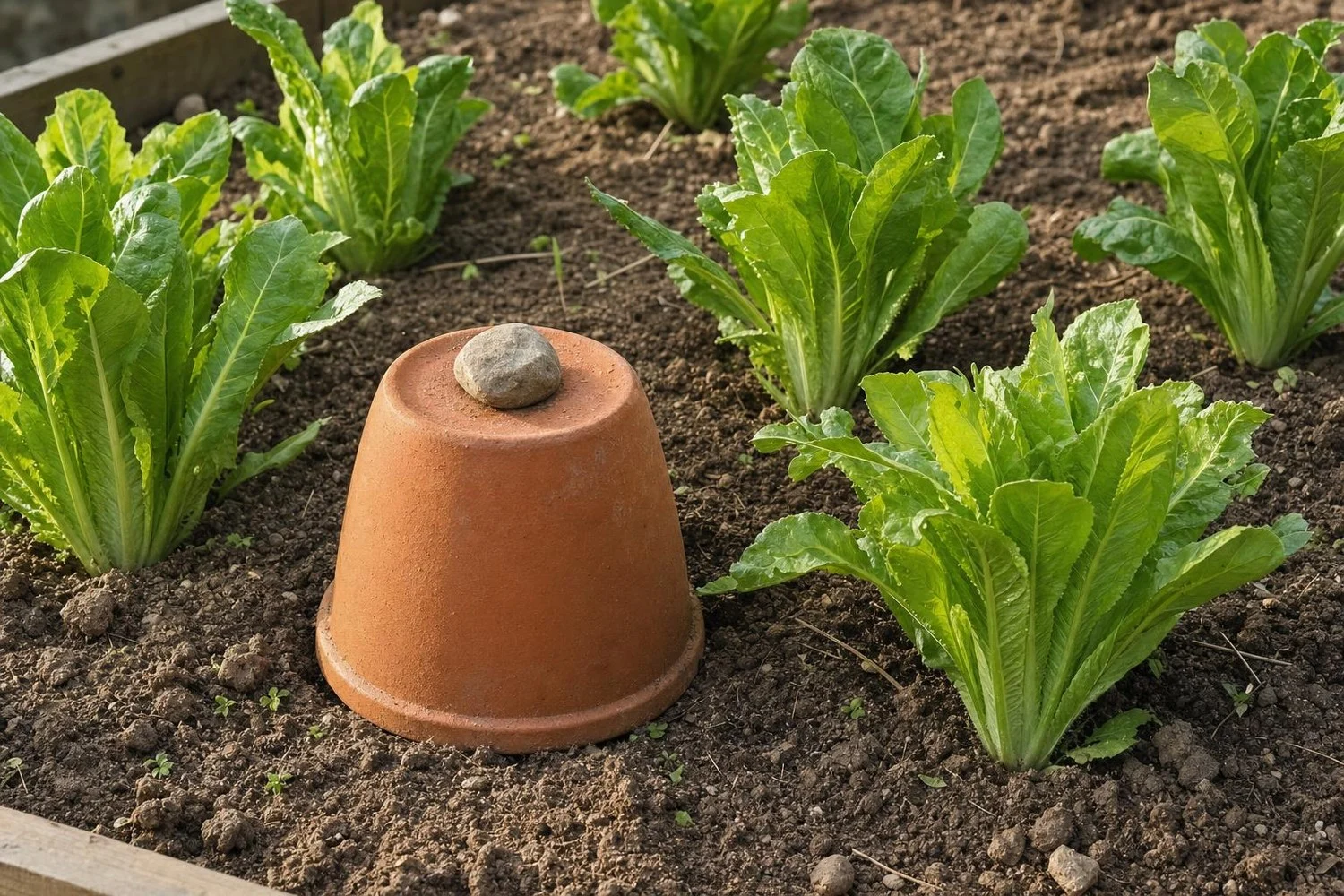
Gardeners who favor simplicity today keep the roots in place and simply hide the foliage from light. In midsummer, starting in July, it suffices to cover each endive or chicory with an opaque pot turned upside down, placed directly on the clump. The drainage hole is blocked with a stone or a piece of clay to completely block out light.
A terracotta pot, a black plastic bucket, or even an old recovery tub will do, provided they are opaque. One gently tucks the soil around to ensure the rim does not let light through. By lifting the pot every two or three days, one checks the condition of the leaves and whether rot or slugs are present:
- choose a dry day, with the leaves completely dry;
- place the opaque pot over the plant and secure it with a bit of soil;
- carefully seal the top opening with a stone or clay;
- leave it in place for about ten days, aerating if the interior seems too damp.
Calendar, vegetables involved and mistakes to avoid in the garden
To take advantage of this method, one must carefully align the schedule. Endives and chicories are sown in spring, as soon as the soil reaches about 10 °C, as gardening guides remind us. The rows are established in April, the heads form during the summer, then blanching under an opaque pot begins from July and continues into autumn.
This technique is especially suited to curly chicories and escaroles grown for their leaves, but it can also soften rows of endives grown in the open ground. It remains important not to blanch the entire square at once, because a pale heart stores poorly. For the large winter chicons, the forcing method of roots in total darkness still holds significant interest.
Sources
- Mon Jardin Ma Maison
“Potager en avril : ces légumes à planter sans attendre (et l’erreur qui peut ruiner vos premières récoltes)”
