
For years, metro tile has been the almost automatic reflex for a kitchen backsplash: a small bevelled white rectangle, evenly set grout, a flawless look on magazine photos. Many French kitchens were renovated using this reassuring model. Then, over time, this modern decor began to feel cold, almost clinical, especially when paired with white furniture and stainless steel throughout the space.
In 2026, designers and kitchen specialists were even talking about a telltale sign that dates the room, on par with an all-white kitchen or an overly industrial vibe. Terri Brien describes these standardized ensembles as developer-grade kitchens—clean but impersonal. She stresses that “Your kitchen must work for you and reflect your daily life.” In kitchen showrooms, the revolution is already visible on the walls.
Why Metro Tile Is Cooling Down the Kitchen Backsplash
The famous little white tile long held sway over interior decoration. According to Journaldesseniors, a genuine fatigue is settling in when confronted with a surface that’s become too predictable. Metro tile, inspired by underground corridors, brought a much-desired urban touch, but its perfectly smooth look ends up “cooling the warm atmosphere of living rooms.” Many homeowners therefore want to replace metro tile as a kitchen backsplash with a material that feels livelier and less standardized.
Terri Brien confirms this shift when she describes “developer kitchens” that rely on safe choices like metro tile, standard quartz, and stainless steel appliances—choices that “often lack personality.” In stores such as Leroy Merlin, shelves now showcase more organic materials, with imperfect textures that catch the light. Interiors are calling for materials that evoke terracotta, wood, and stone, far from the icy industrial style.
What Kitchen Designers Are Installing Instead of Metro Tile
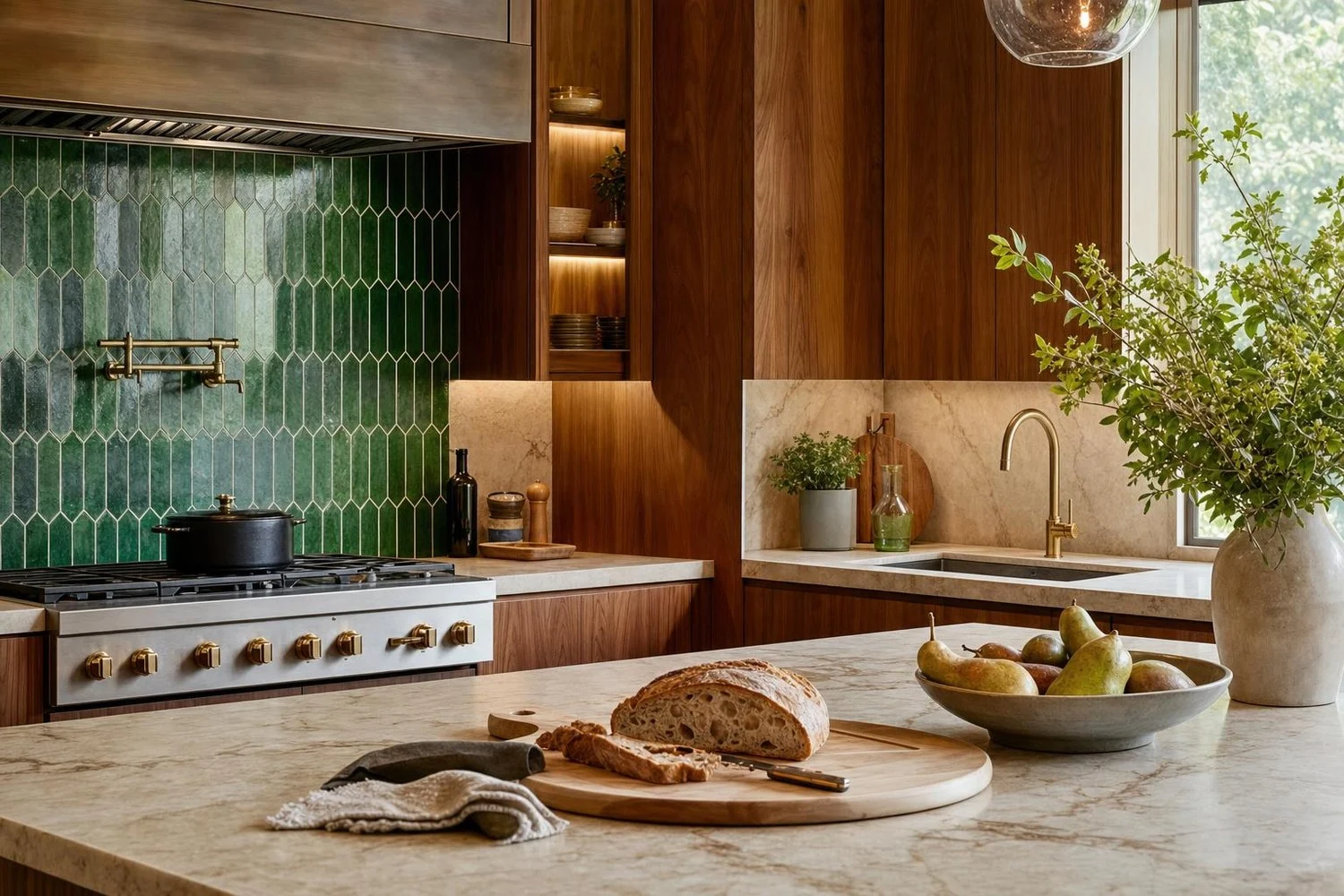
In this search for warmth, one material keeps appearing everywhere: Moroccan zellige. This small glazed terracotta mosaic dresses backsplashes with a depth not offered by standard tiles. Its handmade production means no two tiles are exactly alike, creating subtle, shifting reflections. The tones, often inspired by greenery, recall foliage or the gleam of fresh shoots. Laid edge-to-edge with very discreet joints, zellige instantly adds texture and real character to the kitchen.
Designers also propose extending the countertop up the wall with a stone, quartzite, or solid-surface slab backsplash. A single panel rises to the full usable height, nearly without joints: cleaning becomes a simple wipe, and the grain of the material becomes the main decorative feature. For tighter budgets or rental spaces, adhesive backsplashes imitating wood, brushed metal, or stone have their appeal. These panels stick over the old tile, cut easily, and can be swapped out without major renovations, letting you follow the trend without tearing everything apart.
How to Choose a Warmer Backsplash Without Getting It Wrong
Against these alternatives, the smart move is to prioritize your needs: ease of cleaning, desire for authentic texture, budget, and whether you can hire a craftsman. A family that cooks a lot will often appreciate a smooth, continuous surface behind the stove, in slab or panel form, reserving textured coverings for a wall less exposed. Zellige or terracotta will suit those who are open to patina, minor irregularities, and joints to monitor.
What about harmony with the rest of the room? Terri Brien advises moving away from total white: “Instead, add depth and interest by layering tones and textures,” explains the designer. She envisions “a white-oak cabinet paired with a soft beige or warm taupe island, a marble or gold-veined quartzite, and flooring in wood or stone with warm undertones.” Camia Brown contemplates a bolder minimalism, featuring deep colors and assertive hardware. In this richer setting, the textured or slab-backed backsplash becomes the finishing touch that truly warms the kitchen.
Sources
- Mon Jardin Ma Maison
“Five Kitchen Styles That Designers Are Banning in 2026 and How to Adjust Yours Without Replacing Everything”
