
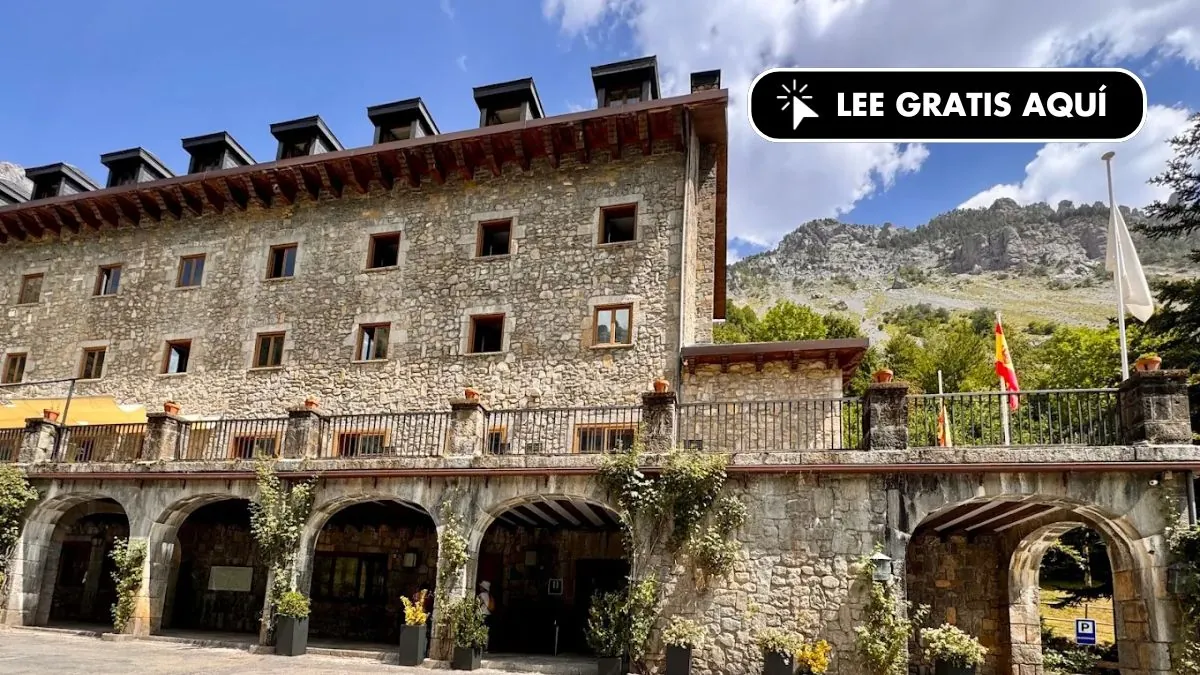
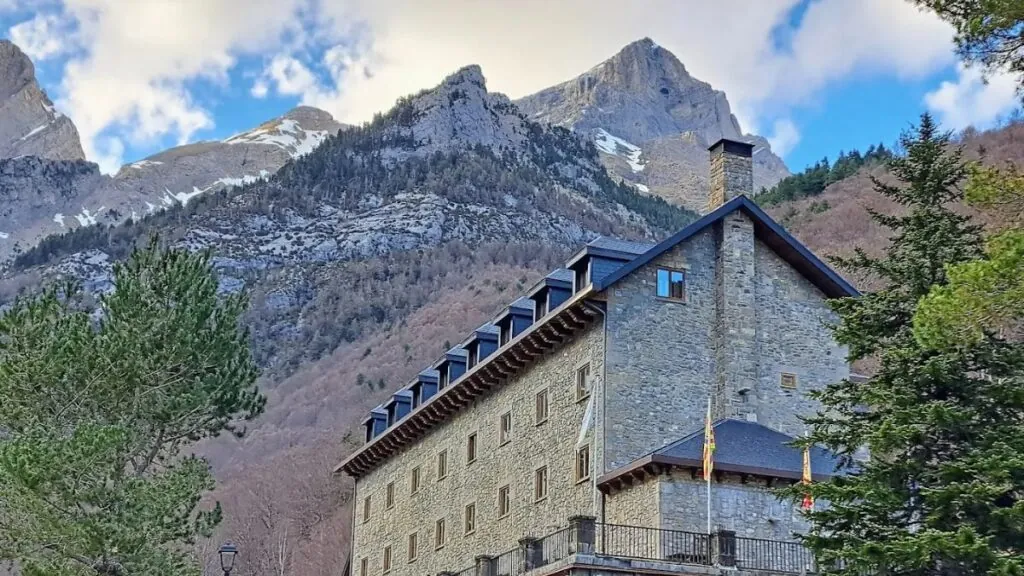
In the heart of the Aragonese Pyrenees, at the foot of the imposing Monte Perdido, lies a little-known refuge that preserves the spirit of its original construction of 1968: the Parador de Bielsa. Nestled in the Pineta Valley, this establishment blends the authenticity of a mountain shelter with the comforts of a modern hotel, surrounded by a landscape that impresses with its wild beauty and natural richness. The Parador de Bielsa is perceived, from its stone-and-wood architecture, as a place designed to merge with the surroundings. Its rooms, common areas and its restaurant reflect the aim of offering a warm and intimate experience, where nature becomes part of the lodging.
Moreover, the Parador’s recent renovation, completed this summer after an investment of more than 3.2 million euros, has boosted its comfort and energy efficiency without losing its original essence. Among the improvements are a biomass boiler, new windows, floors and bathrooms, as well as a complete redecorating. The project preserves the appearance of a mountain refuge and incorporates modern elements that increase comfort and accessibility. Thanks to these reforms, visitors can enjoy updated facilities without losing the sense of authenticity that characterizes the Parador de Bielsa.
Why visit this place?
The Pineta Valley, where the Parador is located, is a glacial cirque formed by the waters of the Cinca River. Waterfalls, beech forests and lush vegetation sketch a landscape of great grandeur, turning this area into a paradise for nature lovers. The Parador is also the gateway to Ordesa y Monte Perdido National Park, declared a UNESCO World Heritage Site. This protected space offers trails that let you explore everything from rugged peaks to green meadows, providing an ideal setting for hikes, mountain sports or simply for those seeking to disconnect in a calm and quiet environment.
Just a short distance from the Parador is the town of Bielsa, with its charming historic center and the Romanesque chapel of Our Lady of Pineta. Bielsa’s carnival, held at the end of winter, keeps alive centuries-old traditions with singular characters marching through its streets. Another worthwhile visit is the medieval village of Aínsa, which completes the region’s cultural and patrimonial offerings. Both destinations allow travelers to combine nature and culture, experiencing authentic moments away from mass tourism.
The Parador’s rooms offer direct views of the valley and the surrounding mountains, allowing guests to breathe in the scent of the forests and wake to the song of birds. Its décor, based on stone and wood, reinforces the sense of a traditional refuge that many seek when escaping to the mountains. The Parador’s cuisine focuses on local and seasonal products. Highlights include game meats, the Aragonese ternasco, and artisanal desserts such as Pasteras and Teresitas. Each dish seeks to reflect the territory’s identity and offer a culinary experience in harmony with the surrounding nature.
An intimate refuge amid nature
For those seeking to disconnect from routine and immerse themselves in an authentic and tranquil setting, the Parador de Bielsa presents itself as an intimate refuge amid wild nature. Walking through green meadows, admiring waterfalls and waking up to the image of snow-capped mountains from the window are just some of the experiences this place offers. With its balance of tradition, comfort and sustainability, the Parador de Bielsa emerges as a hidden treasure of the Pyrenees, ideal for those who wish to live nature fully and authentically, combining heritage, culture and landscape in a single experience.
