

Bending down to pick something up off the floor, standing up from a chair or maintaining balance when climbing stairs… These are everyday movements we don’t stop to think about until they stop being easy.
Squats, one of the body’s most natural and comprehensive movements, play a key role in our functional health, especially as we age.
HOW TO BUILD MUSCLE MASS
From about 30, we begin to lose muscle mass progressively. If this is not offset by physical activity, this can lead to weakness, increase the risk of falls and a loss of independence.
Added to this is a progressive loss of bone mass. Bone is a living tissue in constant renewal. Up to about 30, more bone is formed than is broken down, but from that age the balance gradually tilts in the opposite direction, resulting in less bone being formed than is destroyed.
Strong muscles are essential for maintaining good mobility as we age, which translates into greater independence, but they are also crucial for protecting bones.
Think that when muscles work, they pull on the bones and help keep them strong. If the muscles weaken, the bones receive less stimulation, lose density and become more fragile, increasing the risk of osteoporosis. Maintaining muscular strength helps slow this bone loss and reduces age-related deterioration. In addition, strong muscles improve balance and stability, reducing the risk of falls and fractures.
Squats are considered one of the best exercises for longevity because they work large muscle groups such as legs, glutes and the core, which helps to maintain strength, muscle mass and bone density with age.
THE MOST EFFECTIVE STRENGTH-BUILDING EXERCISE
Several studies link the ability to squat and rise again without support with a greater life expectancy. These are some of its main benefits:
- More strength for everyday life. Strengthening the legs and glutes allows you to move with ease, rise without effort and maintain stability with every step.
- Your posture will thank you. They improve the body’s natural alignment and reduce lower back discomfort.
- Less falls, more safety. They train balance and coordination, key for avoiding stumbles and maintaining confidence while walking.
- Bones sturdier. They help naturally prevent osteoporosis.
- Circulation on the move. They promote venous return, helping to reduce swelling in legs and ankles.
As you can see, including this simple exercise in your daily routine is an effective way to look after your body and lay the groundwork for active and healthy longevity.
PRACTICE THIS MINDFUL SQUAT
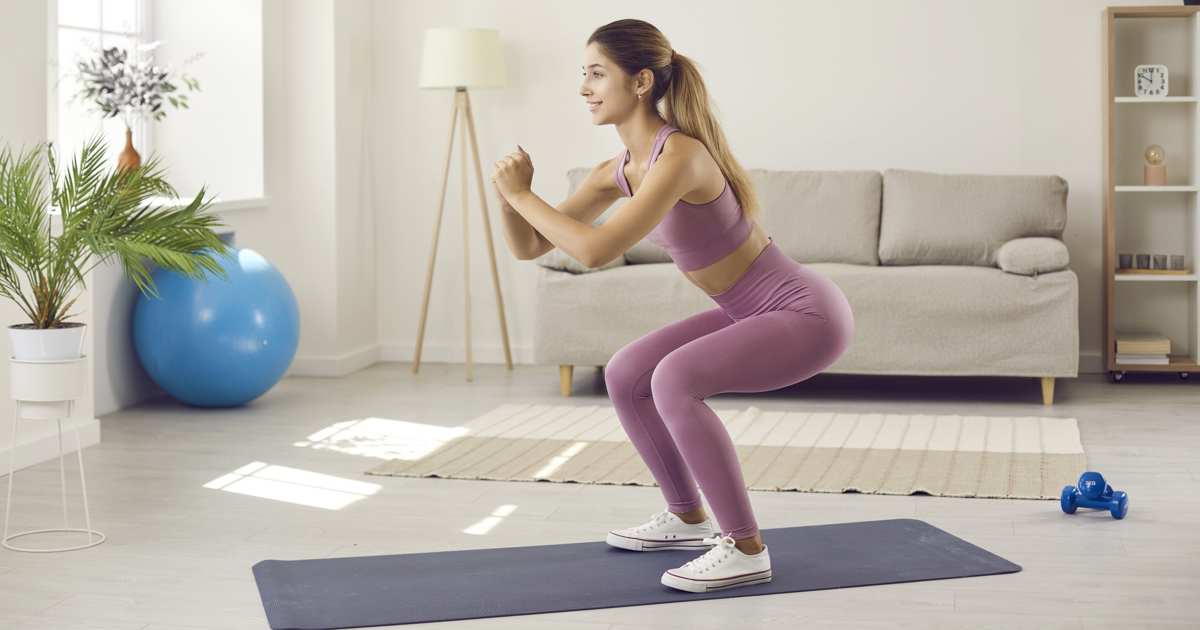
1. Start standing with your feet hip-width apart and bend the knees.
2. Now inhale, opening the chest and engaging the abdomen.
3. On exhale, slowly lower as if you were about to sit in an imaginary chair, to a depth that feels comfortable. Keep your back straight and your gaze forward.
4. Rise with control on a deep inhale, maintaining the abdominal engagement.
5. Perform between 5 and 10 repetitions, always breathing consciously.
6. You can do this each morning or as a short activity break during your day.
