
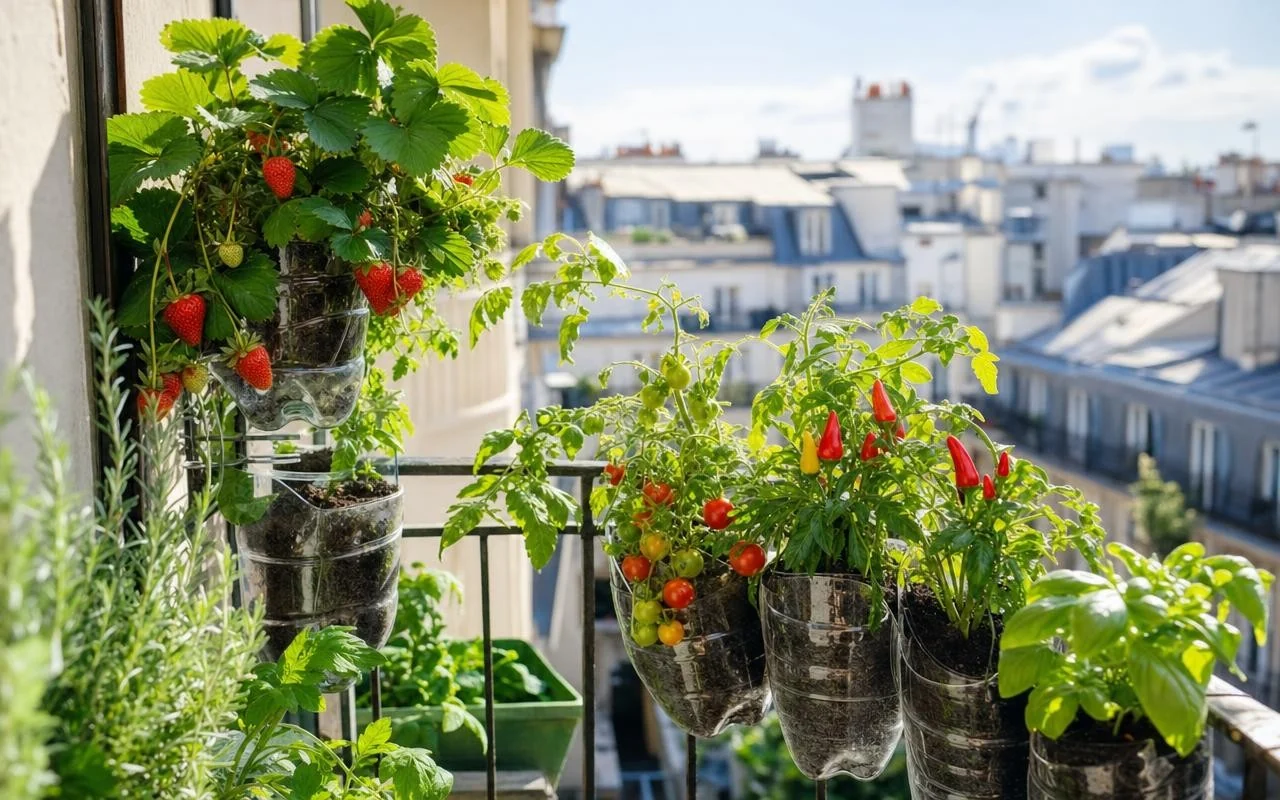
Want to grow something tasty to nibble, but you don’t have a garden—just a balcony or a windowsill? With recycled plastic bottles, a little soil, and a handful of seeds, you can turn a few square inches into a miniature garden. This approach appeals to both gardening enthusiasts and people who want to cut down on waste.
Water or soda bottles become real pots, perfect for fruits that grow in small spaces and require little soil. Some varieties are better suited than others, especially in urban settings where light and space are sometimes scarce. Three crops stand out for this clever growing approach, and the third may surprise you.
Preparing the recycled plastic bottles before planting the fruits
Before choosing your seeds, you need to prepare the container. A 1.5 to 2-liter bottle is suitable for small plants, while sturdier crops will require volumes closer to 20 liters. Start by rinsing the plastic well, then cut the bottle: either lengthwise to make a planter, or by keeping the bottom to use as a vertical pot. Holes at the bottom are essential for drainage, with a saucer or tray underneath.
The soil must stay light: a universal potting mix mixed with a little compost works well. To prevent the transparent plastic from overheating in the sun, many gardeners wrap the bottle in kraft paper, fabric, or place it in a decorative pot. To get started, you typically need:
- 2 or 3 clean bottles of different sizes repurposed as pots;
- light potting soil, compost, or another organic fertilizer;
- a bright spot that receives at least 6 hours of sun per day;
- seeds or small plants of the chosen fruits.
Strawberries and cherry tomatoes: stars of small spaces in bottles
Strawberries in bottles are often recommended for beginners. The ideal planting period is spring or autumn. Rather than starting from seeds, newcomers gain time by using a small plant or a runner. Plant the strawberry in the bottle filled with substrate, making sure the crown sits at the surface and is not buried. The soil should stay moist, avoid watering the fruits directly, with regular compost and a touch of potassium, and receive at least 6 hours of light per day.
The cherry tomatoes in a bottle require a bit more root space. Experts advise using a container of at least 20 liters and about 30 centimeters in depth for proper development. A large bottle or cut drum can work well. The plant enjoys regular, moderate watering and a very sunny location, around 8 hours of sun per day. A trellis attached to a railing or wall helps keep the stem upright.
Chili peppers in a bottle and mistakes to avoid for a successful mini-garden
Chili peppers, hot peppers, or small chiles adapt surprisingly well to growing in recycled plastic bottles. They need a fairly large container, a well-draining substrate, and a highly sunny exposure. The recommendations call for daily watering or at least very regular watering: the soil should dry slightly on the surface between waterings, but should not become as hard as rock. When thriving in full sun, these plants can produce a good harvest of spicy fruits on a balcony.
Common failures come from the same mistakes: a bottle that is too small for vigorous cherry tomatoes, a lack of drainage holes, too much water causing leaves to yellow, insufficient sunlight, or plastic walls that overheat. By selecting a volume appropriate to each fruit, offering a little protection to the bottle, and checking the moisture level of the growing medium with your fingers, this compact growing system quickly yields homegrown harvests, even in the tightest spaces.
