
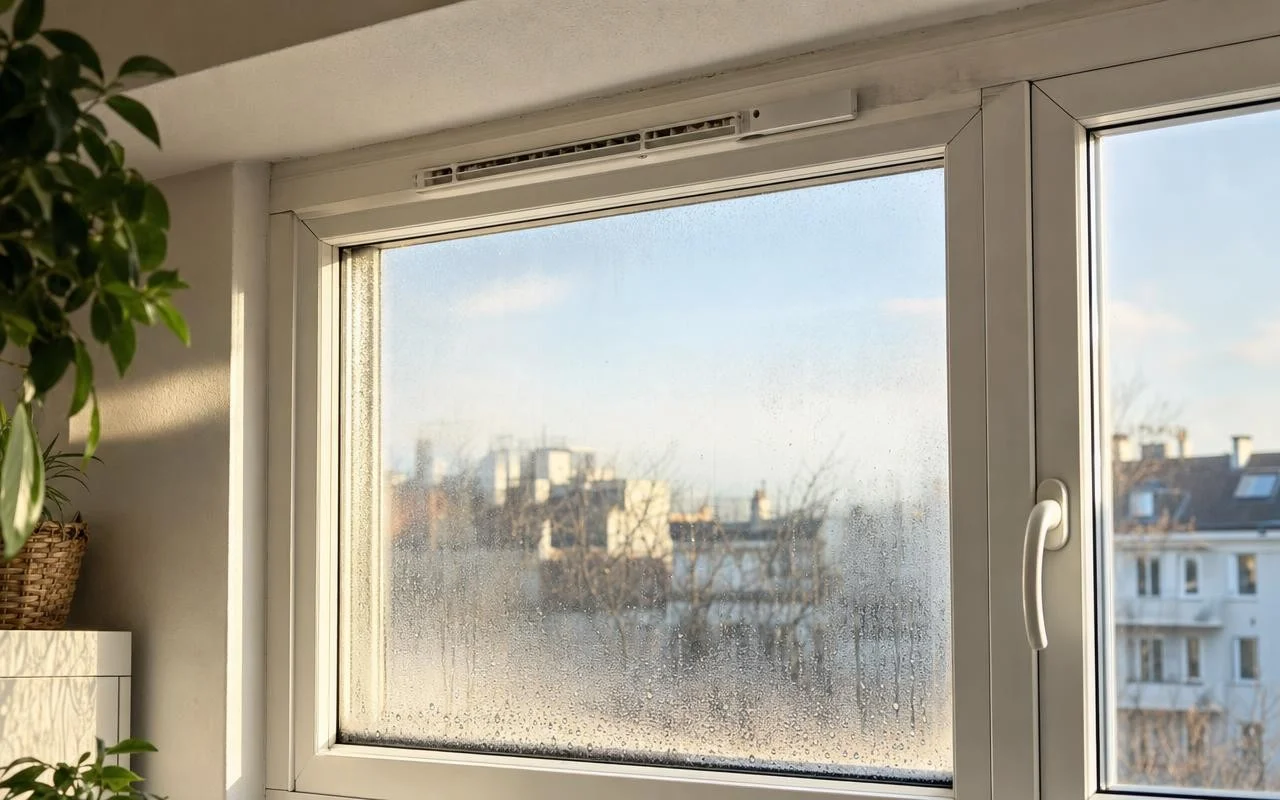
Every morning, it’s the same ritual: we throw the windows open wide for ten minutes, let in the fresh air, then close them, telling ourselves the house will be healthy for the day. Yet a few hours later, condensation returns on the glass, and the smell of stuffiness settles in the bedroom or the living room. Many households experience this gap between a good habit and a disappointing result.
The reason does not necessarily come from the duration of the opening nor from the weather, but often from a discreet detail at the top of the windows. A small component that we forget to clean, sometimes covered to prevent drafts, and which is enough to cancel almost all the effort of airing in the morning and in the evening.
Condensation on the glass despite ventilation: when the home stops breathing
With autumn, the windows stay closed, the heating runs, and the humidity produced by showers and cooking accumulates. Newer homes retain heat well, but also the water vapor. Result: glass surfaces fog up every morning, sheets that seem never to dry, a smell of a closed-in room, even with the 5 to 10 minutes of airing recommended by ADEME. If these signs persist even when you truly open wide, the ventilation is no longer keeping up.
Indoor air is often fuller of pollutants and humidity than outdoor air. Tobacco smoke, street particles, ingredients from household products, or even carbon monoxide emissions if the boiler is not well maintained—everything remains confined if the air does not circulate. Opening ten minutes in the morning refreshes the air, but if the supply of fresh air is cut off the rest of the time, the balance never reestablishes.
Window ventilation slat: a small element that disrupts the entire VMC
At the top of many windows lie the air inlets, or ventilation slats. These small grilles continuously admit a thin stream of outdoor air. In a home equipped with a single-flow VMC, fresh air enters through these openings into the living rooms, travels through the dwelling while picking up water vapor and odors, and is then drawn away by the extract vents in the kitchen and bathroom.
When these inlets are sealed with foam or tape, the circuit misbehaves. One reported case describes two neighbors who block their slats on the same day: a month later, the house that relies on these air intakes discovers behind its wardrobe a wall covered with dark stains and musty odors that appeared in barely four weeks. In the neighboring house, equipped with a double-flow VMC, the blockage hardly changed anything, since fresh air enters through another network.
Obstructed air inlets: the proper actions to restore real ventilation
When the grilles aren’t blocked but coated with grime, the outcome is similar. Dust, insects, kitchen grease eventually form an invisible clog and air circulation becomes poor. Typical signs: condensation remains on the windows even after airing, a sense of stagnant air or a slight odor of damp, small dark marks appearing on walls or around windows.
To correct the situation, the first step is to restore the function of the air inlets: open them and dust them off with a simple brush or vacuum cleaner. Also check that nothing hides them on the inside—no thick curtains or a bulky chest—and slightly pull large furniture away from exterior walls. In damp rooms, the kitchen hood and the bathroom fan should complement the removal of steam. In a home heated by gas or with another combustion appliance, these air inlets remain essential to limit the risk of carbon monoxide. And if drafts are bothersome, it is better to install hygro-regulating slats than to seal them.
