

La gastronomía española está considerada una de las mejores del mundo (si no la mejor). La combinación de una materia prima de calidad, la diversidad regional, la tradición mediterránea y la innovación en alta cocina hacen que aparezca en lo alto del pódium de la mayoría de ránkings de cocina.
Rice plays a central role in Spanish cuisine as the base for many iconic dishes, such as paella. And if there is a place that epitomises it, it is the Valencian Community. It is there that sits the town we are going to discuss today: a settlement with Arab and medieval roots where a delicious rice dish is cooked.
A town with a rich history
Situated in the inland part of Alicante province, in the Middle Vinalopó, Aspe is a municipality of over 22,000 inhabitants, about 20 kilometres from the city of Alicante and very close to other important towns such as Elche, Novelda and Monforte del Cid.
Thanks to its strategic location, between the Mediterranean coast and the first mountains inland, Aspe has been inhabited since ancient times and its history is deeply intertwined with the surrounding landscape. Archaeological remains evidence Iberian and Roman presence in the area.
During the Muslim era, Aspe gained importance as an agricultural alquería integrated into al-Ándalus. In this period irrigation systems were established and land exploitation flourished, shaping the growth of the settlement. After the Christian conquest in the 13th century, it became part of the Kingdom of Valencia and underwent urban and social reorganisation typical of the Middle Ages.
A stroll through Aspe
Over time, Aspe has evolved and expanded; yet its historic centre retains traces of its Arab and medieval heritage, integrated into a living urban fabric that continues to change.
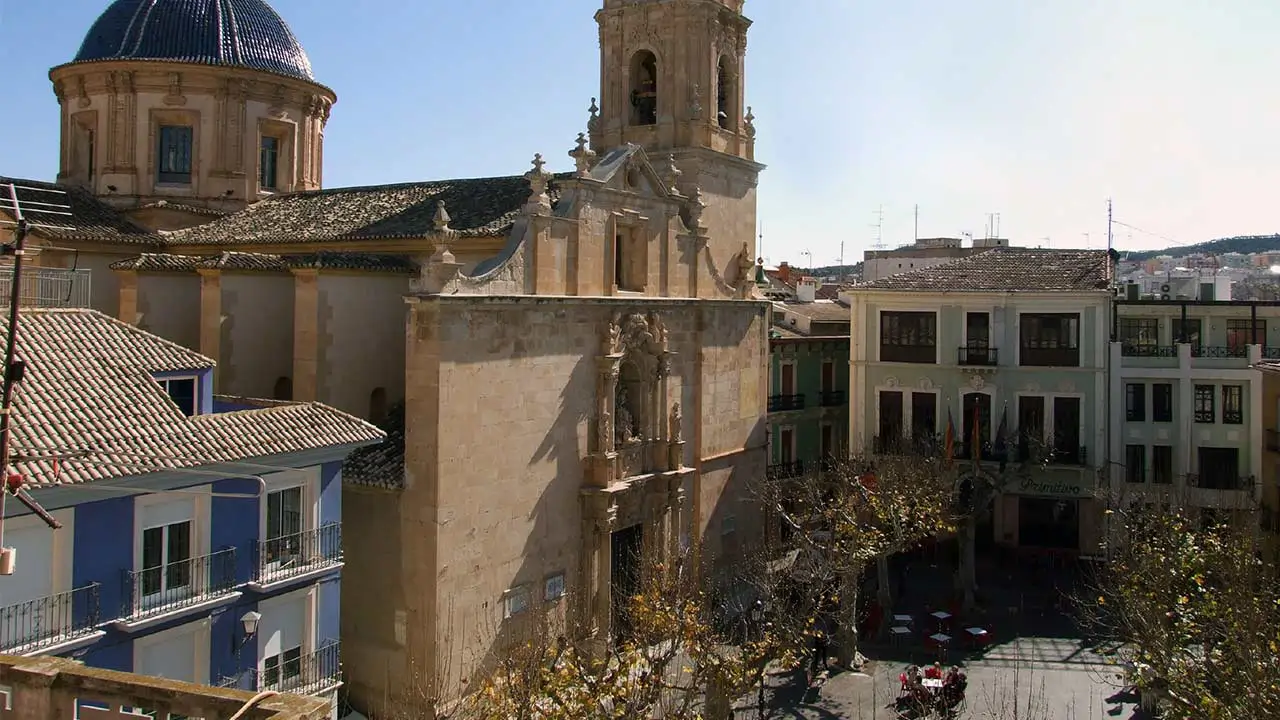
In the heart of Aspe lies the Plaza Mayor, the hub of the old town, where the imposing Basilica of Nuestra Señora del Socorro rises. Of Baroque origin, it stands as one of the municipality’s most emblematic buildings.
Wandering the old town reveals winding streets and irregular corners, reflective of the town’s historical development and its heritage.
Within the town centre you’ll find the 19th-century mills and the traditional washhouses, linked to the historic use of water. On the outskirts lies the Canal del Hierro, a water conduit built in the late 19th century, and the Castle of Aljau, a medieval fortification perched on a rise offering panoramic views of the surrounding countryside.
Other emblematic places include the Municipal Palace, a former noble building with traditional architectural elements, and the Aspe Historical Museum, which offers a journey through local history via archaeological remains, documents and traditional objects.
A very particular paella
Gastronomy is, without doubt, one of Aspe’s strong suits. Dishes such as cocido with meatballs, boiled broad beans, rabbit fritters, or gazpacho with rabbit are local favourites, but if there is one you must not miss, it is a very particular paella that has been made for generations: the Aspe-style rabbit and snail paella.
In the Alfonso Mira Restaurant, located on the Alicante road, kilometre 0.5, they prepare it in the traditional way, over sarmiento firewood (from vine pruning) to impart a very distinctive smoky flavour. According to many outlets and the restaurant itself on social media, Ferran Adrià himself reportedly called it the best rice in the world.
It should be noted that, although it shares many characteristics and ingredients (dry paella rice, socarrat, rabbit, sofrito…), the most “traditionalist” paella purists would not regard it as a paella but rather as a type of arroz.
A place to unwind
Being inland, Aspe is a far quieter municipality than coastal neighbours that fill up with tourists and holidaymakers, especially in the warm months.
Its dry, sunny climate for most of the year supports the cultivation of table grapes, fruit trees and vegetables. It also shapes a typically Mediterranean landscape of orchards, plains, gorges and low hills.
The Tarafa River passes through the municipality (though with a highly irregular flow) and has historically been crucial for farming and the people of Aspe. This water relationship is reflected in one of the region’s best-known hallmarks: the Elche Reservoir, built in the 17th century and regarded as one of Europe’s oldest reservoirs still in operation.
