

Press-ups, or push-ups, are among the most comprehensive exercises for developing upper-body strength, but also among the most challenging. For many beginners, and especially for women, the move can feel like a real hurdle and often leads to frustration. The difficulty lies in the need to bear a substantial portion of total body weight in a horizontal position, which demands considerable strength in the arms, chest and core—strength that is often not present at the start.
However, personal trainer Sergio Peinado has on social media offered a strategic solution to finally master press-ups: the regressions. Thus, Peinado explains that the key to progress when the exercise is very difficult is not to obsess over performing it exactly as prescribed, but to practise simplified versions. ‘The key to being able to do press-ups if you struggle a lot is to practise regressions’, he says.
The Regression Ladder for the Press-Up
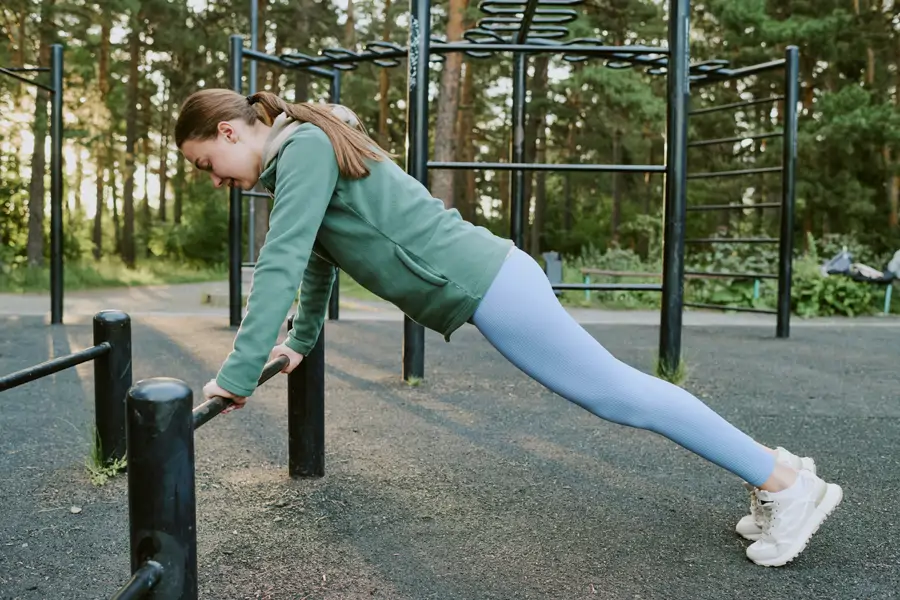
It is essential that this simpler version keeps the ‘same exercise pattern, because otherwise it won’t work’, the expert notes. In this case, the strategy for applying these regressions in the press-up is to adjust the incline, because by changing the body’s incline you achieve ‘taking weight off your arms and redistributing it to your legs’.
This has a direct effect on the difficulty, because ‘with less load on your arms, it becomes easier and you will be able to perform more repetitions to progress’. Hence, the trainer has defined several regression levels for the press-up that adapt to each individual’s capacity.
Level 1: Against the Wall

The first rung is designed as the starting point for the practitioner. Level 1 on the wall is ‘for people who can’t do a single push-up and have to start from scratch’. This regression is ideal for ‘people who are overweight and find it hard to maintain the floor push-up position or for very sedentary individuals’, as it offers the lightest load of bodyweight.
Level 2: Bench or Table

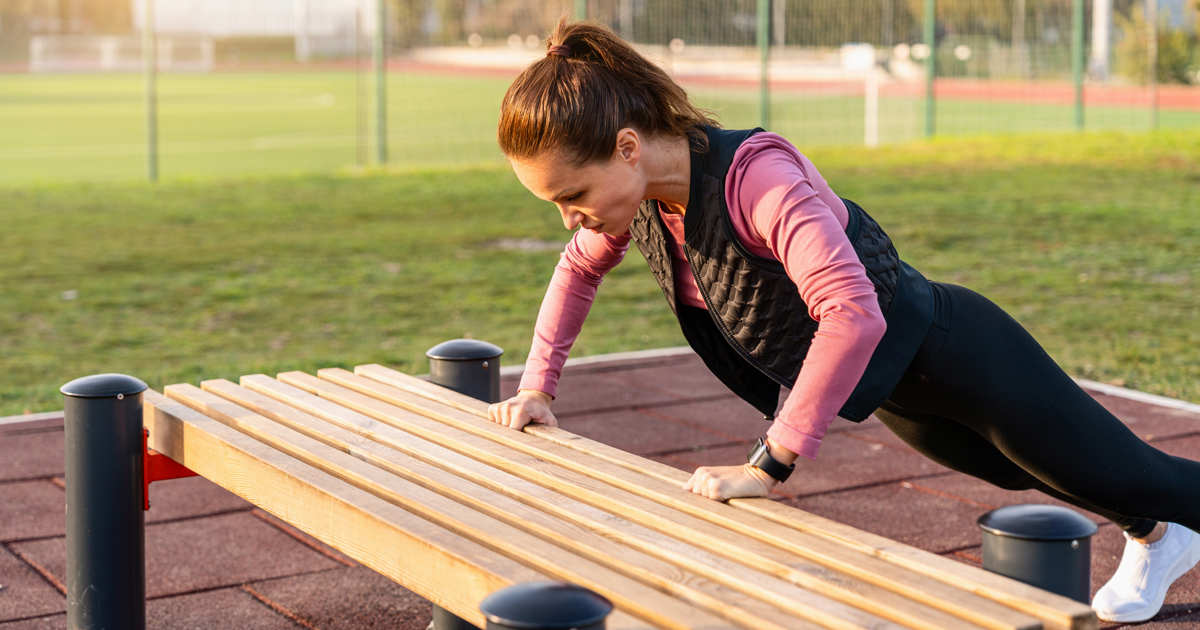
Once Level 1 becomes too easy, the next step is to move to the bench or a table. This level allows a greater challenge, being ideal for those who cannot perform press-ups on the floor, but have already overcome the wall difficulty.
Level 3: The Chair
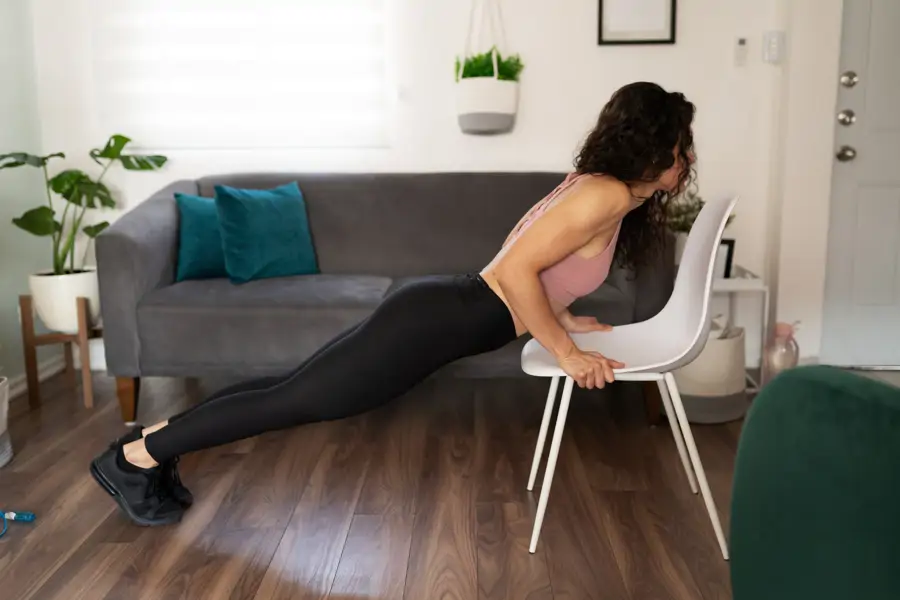
Level 3 involves performing the press-ups at chair height. This is the intermediate point for those who ‘can already do some press-ups, but not many, because it’s still tough’. The recommendation here is to use this incline to ‘put in more sets and repetitions’ and to gain more strength.
Level 4: The Full Press-Up
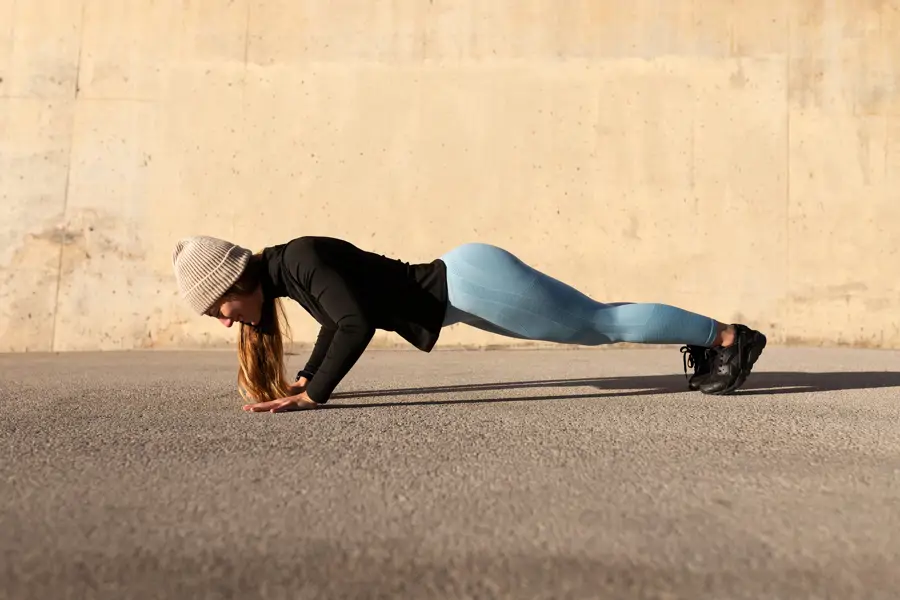
The final goal is to reach this level, which corresponds to ‘doing the full press-up’. Sergio Peinado emphasises the importance of practising this version, even ‘if you can only manage a few repetitions’, because ‘you must practise this level to build strength in this position’. Additionally, you can also practise this level with knee support to boost strength gains.
Strength-Building Strategy
To accelerate strength gains, Peinado proposes combining the most advanced level you can achieve with the easier regressions. Thus, if a person can perform ‘only 1–5 press-ups’, they should do those repetitions first. Then, to accumulate more work volume and increase endurance, the ideal is to move to Levels 3 and 2 to perform more repetitions and sets to keep building. This combined strategy ensures the body acclimatises to the final exercise, while continuing to build strength and muscular endurance.
