
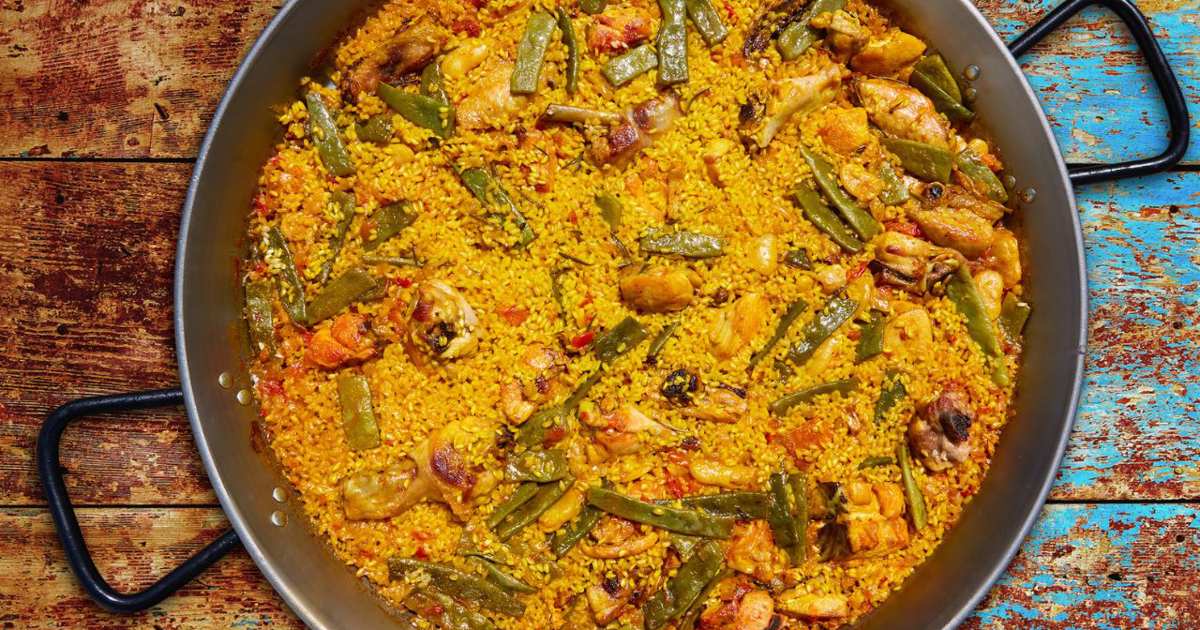

They call it the “Paco de Lucía” of paella, and my Cadiz roots wouldn’t let me miss the chance to taste the culinary equivalent of what I consider the finest music my ears have ever heard. So, with the maestro’s guitar in the background and the ingredients laid out on the worktop, I set out to try this very simple trick from Vicente Rioja’s traditional recipe, which he recently unveiled at Madrid Fusión 2025 and which has earned him the distinction of creating the world’s best paella.
Let me tell you the result: I have never tasted anything so delicious. And the paellas I’m used to (having grown up on the Costa de la Luz) are very different from this, so traditional and so Valencian. But I wouldn’t swap it for anything in the world! To help you make it at home too, here are the chef’s tips shared by Rioja. As soon as I can, I’ll pop over to Valencia to try it firsthand at his “cathedral of Valencian paella”, the Rioja restaurant.
The Paella Scholar
Under the title of “the Paella Scholar”, Vicente Rioja has become a genuine authority on this traditional dish that he prepares like no other. And curiously, to achieve this masterful result, he sticks strictly to the traditional recipe and the classic techniques, those that are scarce in the name of modernity. It may sound exaggerated, but the result certainly justifies it.
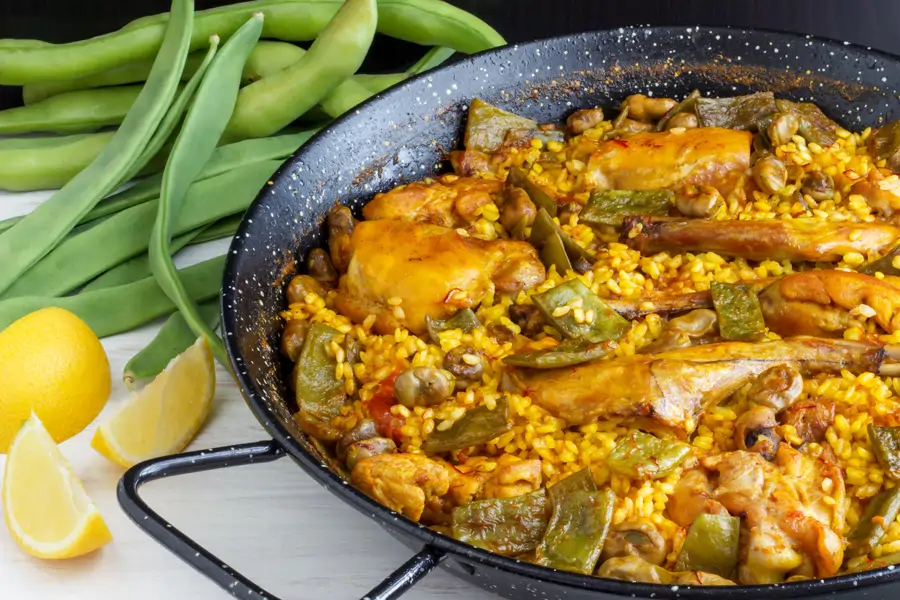
The chef has even collaborated with the Polytechnic University of Valencia to rescue native rice varieties and nearly extinct rabbit and chicken breeds (due to low profitability) that deliver that unique flavour.
At home we’ll have to make do with what we can, of course, but the chef provides a trick that changes everything. And, of course, the key is choosing the right rice.
“When we go to the supermarket,” Rioja explains, “look for rice with the D.O. Arròs de València seal.” For decades the Regulatory Council of this designation has worked to protect the quality of this rice, which is unique in the world. And honestly, you can tell when you taste it.
It’s no surprise, because more than 95% of rice covered by this designation is grown directly in the Albufera Natural Park, where the rice fields are a fundamental part of a complex ecosystem. People come to try it from all over the world, and we have it on supermarket shelves! While Spain has other DO rices that are equally excellent, such as those from the Delta del Ebro or Calasparra, which also boast impeccable quality.
Why rice is so important
You may be wondering, and, luckily, the chef explains what differentiates a good Valencian rice from other DOs, such as Italian or Chinese rice cultures. In the cuisine of the Levante, the rice must absorb all the flavour of the broth and the ingredients. That is why Valencia cultivates, especially, two varieties that are ideal for paella.
The first is Sénia, a rice with a high absorption capacity, perfect for transmitting all the flavour of the broth. Although the chef warns that this rice “can overcook easily”, so you must handle it with care when cooking.
On the other hand, there is the Albufera variety, a blend between Sénia and Bomba. It was developed by the Valencian Institute of Agricultural Research around 2007, and it’s Rioja’s favourite for home deliveries. It has great absorption but tolerates a touch more overcooking. If you’re not a seasoned cook, this is the one Rioja recommends.
The old-fashioned way
Besides using DO-certified rice, which is the fundamental trick for achieving this exquisite paella, Rioja explains that his recipe is the product of “precision, technique and a deep knowledge of each ingredient and cooking process.” While we can’t match his mastery, there are some tips we can apply at home. Or rather, in our shopping basket.
The expert takes care with every detail, from salt, sourced from the Santa Pola Natural Park, to the oil, Serrana variety, with that sweet, neutral touch that enhances flavours without overpowering them.
For the vegetables, he says, always choose them fresh. It’s time to return to the markets where we can enjoy produce gathered, often, the very same day. That way we avoid losing nutrients and flavour. They should feature in the ferraura paella (green beans), garrofón pintá and tomato. As Rioja puts it, “the paella begins in the kitchen garden.”
For the meats, the traditional selection: rabbit and chicken. He recommends them with a brown coat and reddish plumage, respectively, both reared semi‑ freerange and fed with organic fodder, if possible. If you head to the supermarket, look for the ECO label to guarantee the best possible flavour.
Finally we come to the spices, and it’s time to get cooking: paprika, saffron and rosemary. And beware of the trick, because the chef recommends infusing the saffron with the stock before adding it. Personally, I think this makes a difference. To give a scented hint of the countryside, the Paella Scholar also suggests adding barqueta snails.
If you have everything ready, it’s time to cook! Rioja’s recipe is the timeless one, so there’s no secret there. The important thing is to choose good ingredients, cook with care and enjoy a flavour you won’t find anywhere else in the world.
If you’ve found this article interesting and would like more on healthy living, join the Cuerpomente WhatsApp channel.
Download for free the eBook Cenas para dormir mejor from the Cuerpomente magazine. You’ll discover the best foods, tips and recipes to sleep soundly and wake up feeling renewed.
