
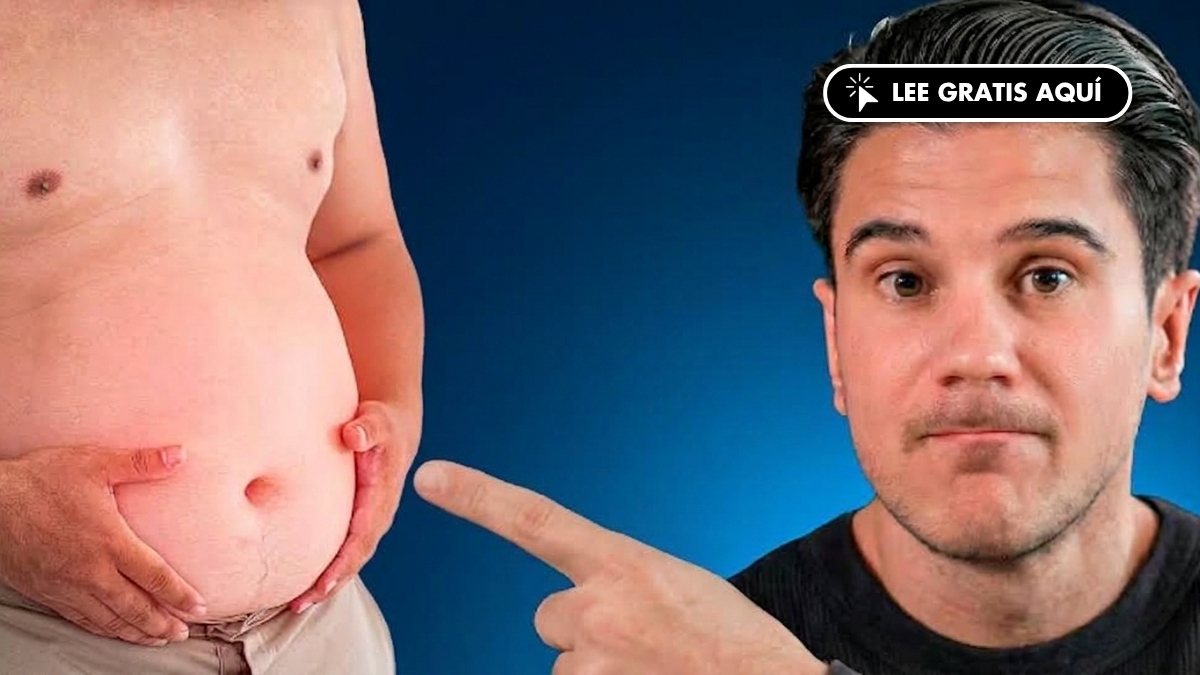
Exercising and staying healthy is something that should start when you are young, yet most people tend to put it off. This can make things much more complicated when trying to improve your health and achieve changes, because once you pass 30, it’s likely your body begins to change or you notice it becomes much harder to achieve the changes you’re aiming for in the gym, both physically and internally.
That’s why the endocrinology and nutrition specialist Borja Bandera revealed in one of his YouTube videos that what truly slows you down from lowering body fat is sympathetic hypertonia (a state of constant stress). In the doctor’s own words: “Your metabolism doesn’t work the same in threat mode as in safety mode. When your body feels secure, it dares to release the excess energy.” If we live in a perpetual state of alert, the body interprets fat as a “life insurance” and refuses to let it go.
The “Invisible Movement” and Rest
To prevent your body from entering this alert mode and to enable fat burning, the doctor explains there are two essential things. The first is the so-called invisible movement, which refers to all the energy you expend almost without noticing during daily life, such as walking while you work, climbing stairs, moving your hands when you talk, or even moving your feet or legs when you’re seated. Although at first glance these seem like simple actions, all these daily movements burn a lot more energy than an hour in the gym, often without you noticing.
On the other hand, the second key mentioned by the expert is deep rest, which goes far beyond merely sleeping at night. This involves getting your body into a calm state that allows you to rest genuinely. In this way, your body can repair tissues, reduce inflammation, and properly regulate the hormones that control hunger and blood sugar.
Five-Step Plan to Lose Fat
In order to lose body fat in a simple and effective way, the expert proposes the following steps:
1. Regulate Your Breathing
Engage in three minutes (one or two times a day) of “guided breathing”: a double deep inhale followed by a very slow and controlled exhale lasting eight seconds.
2. Create an “End-of-Day” Closure
Establish a nighttime routine that shifts you from stress to calm (dim the lights, turn off screens, take a silent walk, enjoy a warm shower, or read).
3. Train Smarter, Not More
Avoid excessive high-intensity training to failure, because “pushing yourself to the limit doesn’t advance you; it sets you back.” It’s preferable to replace very intense sessions with gentle aerobic exercise or low-intensity recovery walks.
4. Prioritize Your Mental Health
Prioritize quality time with friends or loved ones.
5. Use Nature as a “Medicine”
Walking through natural settings such as the beach or the mountains generates a relaxing effect and interacts positively with the brain.
