
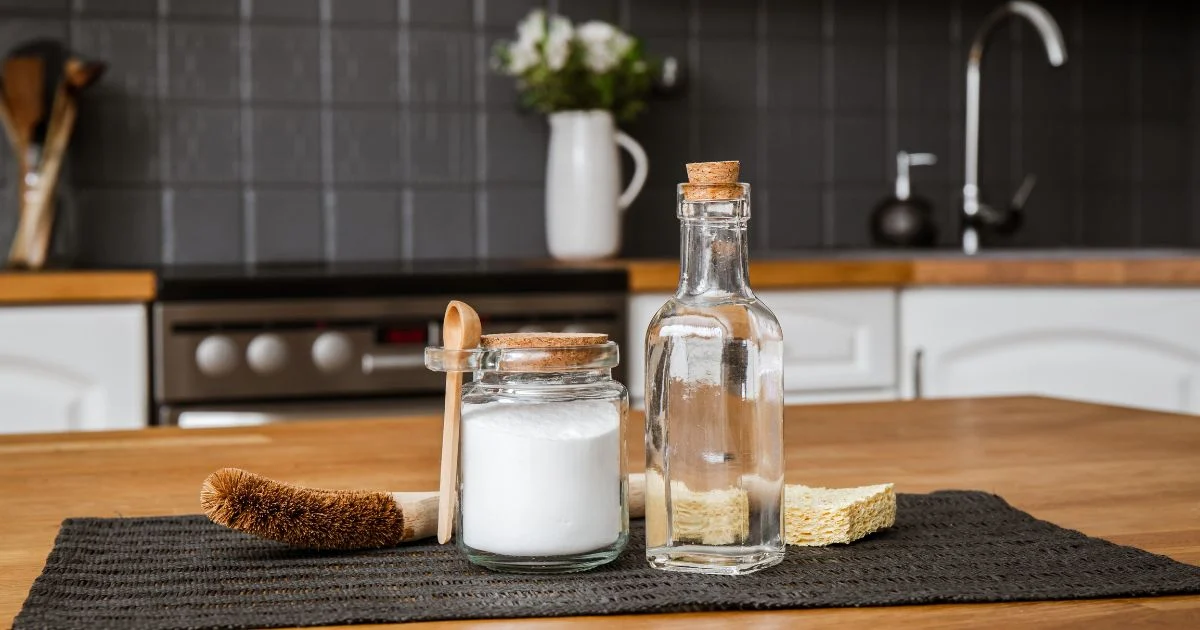
The microwave is a daily helper, but keeping it clean often takes a back seat. Between hastily reheated meals and sauces that splatter the walls, marks tend to accumulate. The issue becomes noticeable when a lingering odor remains after use or a dried stain resists coming off. Before reaching for household cleaners, a simple trick deserves to be tried. It requires only two ingredients that you almost always have in your kitchen: water and baking soda.
Baking soda, an ally in keeping your microwave clean
The appeal of this combination lies in what happens when water heats up. As it turns to steam, it humidifies the interior of the appliance and helps soften food deposits stuck to the walls. Result: the residues become easier to remove, without lengthy scrubbing. Baking soda, for its part, is particularly used to dampen certain unpleasant odors. The method thus tackles two everyday nuisances: the stains and the smells that remain trapped inside the microwave.
This technique is among the cleaning tips shared by Cornell Cooperative Extension, a public outreach organization affiliated with Cornell University. Its recommendation is simple: place a few tablespoons of baking soda in a microwave-safe cup, then add water. There is no need to seek a complicated dosage or to combine multiple ingredients. The goal isn’t to prepare a powerful detergent, but to produce enough steam to facilitate wiping. It is also important to use a container large enough to prevent the liquid from boiling over during heating.
The method to use baking soda in the microwave
Once the cup is in place, you simply heat the mixture for a few minutes, until steam forms, reports the site El Cronista. The duration depends on the appliance’s power and the amount of water used. It’s better to monitor it rather than letting the liquid boil for a long time. After the microwave stops, wait a little, with the door closed, to allow the moisture to continue to act on the dirt. Then be careful with the cup and the water, which can be very hot: it’s best to let them cool down before handling.
That is the step that changes the appearance of the appliance. With a soft cloth or paper towels, wipe the walls, the ceiling, and the door, paying particular attention to the areas where splashes have dried. The turntable can be removed and cleaned separately, according to the manufacturer’s recommendations. If some marks resist, it is better to resume cleaning gently rather than using an abrasive sponge that could damage the surfaces. It’s also advisable to avoid letting water seep into the ventilation openings.
A microwave free of odors thanks to baking soda
The method can also be handy when the microwave retains the scent of a spicy dish, fish, or an overly heated item. Baking soda is known for its deodorizing power, even if a stubborn odor may require a second pass or a deeper cleaning. This trick does not automatically disinfect the appliance and does not replace cleaning of heavily soiled components. Its value lies rather in its simplicity: it limits the number of products used for light cleaning, without added fragrance.
To prevent the same traces from reappearing too quickly, a few habits are enough. Covering dishes with a compatible lid limits splashes, while a quick wipe with a cloth as soon as a spill cools helps prevent the grime from drying. It remains useful to regularly check the seal and to follow the maintenance instructions for your model. Reserved for everyday light deposits, the water-and-baking-soda trick does not promise miracles. It mainly provides an accessible way to regain a cleaner microwave with less effort.
