
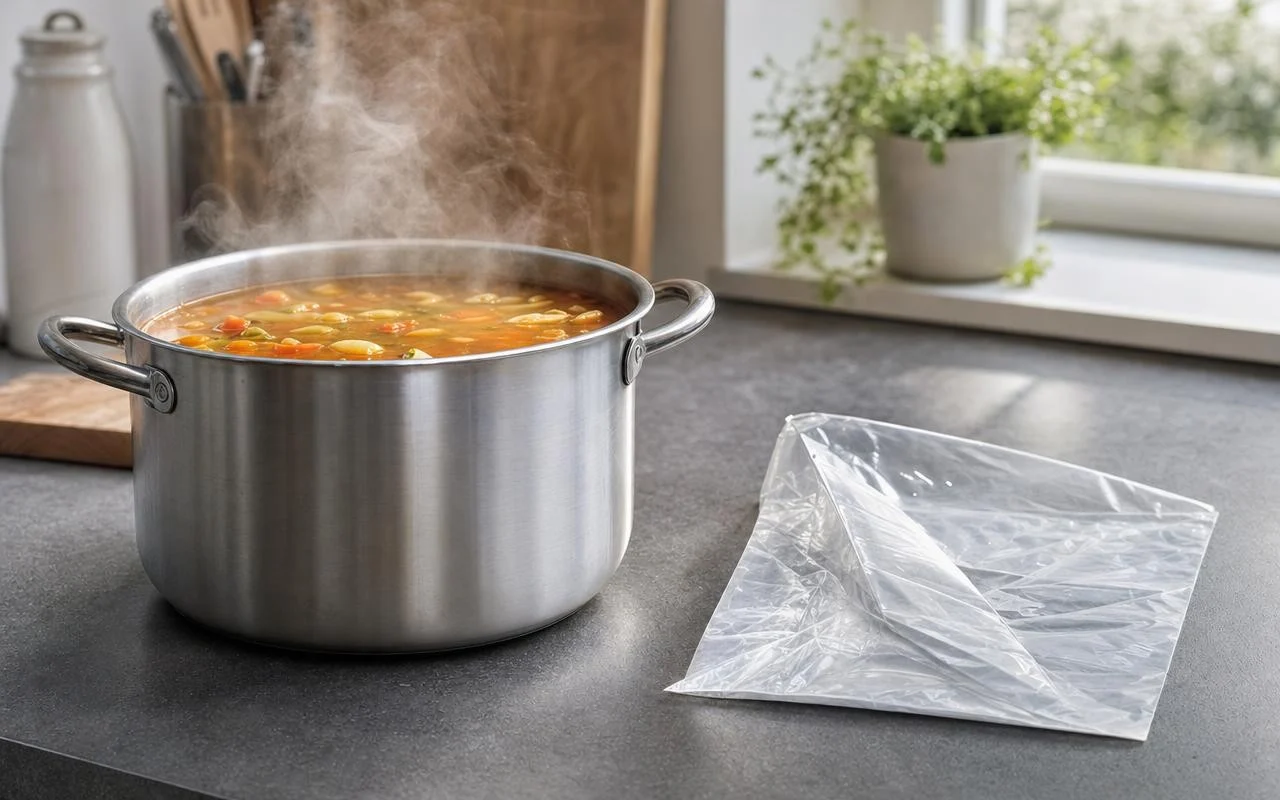
Pouring a boiling soup into a plastic bag to transport or freeze it may seem practical when the pot overflows and containers are already full. This quick gesture, sometimes seen in family kitchens, appears all the more harmless since the bag displays a “food contact” pictogram.
From a regulatory standpoint, however, this scenario is far from neutral. Materials that come into contact with foods are designed for specific “normal or reasonably predictable conditions of use,” particularly regarding temperature and duration. A soup at 95 or 100 °C in a bag intended for cold or lukewarm use completely changes the situation.
Boiling soup and plastic bag: what food rules provide
The DGCCRF Regulation (EU) No 10/2011 governs the composition of polymers and sets limits on the transfer of substances into foods. Materials must notably respect a global migration maximum of 10 mg/dm² of surface in contact. For products intended for infants and young children, the limit is 60 mg/kg of food simulant.
More importantly, the regulation specifies that compliance is verified under the worst reasonably predictable time and temperature conditions for the declared use of the material. The DGCCRF summarizes this logic by stating: “Materials intended for contact with foods must be used […] according to the usage instructions found on the labeling.” A bag designed for freezing will therefore not be tested as a hot-fill container.
Heat, migration and a bag that softens: why the risk increases
When hot soup is poured into a plastic bag, two phenomena combine. On one side, the very high temperature can increase the migration of certain substances from the plastic into the food, beyond what was verified in conformity tests. Official tests use food simulants and predetermined time-temperature pairs, for example for hot-fill use, but only if that usage is anticipated by the manufacturer.
On the other side, there is a purely mechanical risk. Polyethylene bag manufacturers remind us that this material begins to soften well before its melting point. Water at 100 °C, or very hot soup, can therefore soften the walls, especially if the bag is thin. If you seal immediately, the steam gets trapped, pressure rises, the bag deforms, and may leak or suddenly fail, with splashes of burning liquid on the hands or the work surface.
How to choose the right container for a very hot soup
In practice, the first step is to read the label. The DGCCRF’s “rules to follow for materials, packaging, utensils and containers” reminds users to respect the type of product, the temperature, and the duration of contact intended. An appropriate bag or box carries the glass‑fork pictogram and, often, precise notes: freezing only, microwave suitability, or resistance to a specific maximum temperature. In the absence of any hot-fill indication, it’s best to assume that hot-use isn’t planned.
To handle a boiling soup, the safest alternatives remain rigid containers designed for heat: glass jars intended for hot preparations, plastic boxes certified for microwave use with clear temperature indications, or food-grade insulated bottles. Some silicone specialty bags claim high-temperature resistance, but again, only the labeling is definitive. Before pouring a boiling soup into a bag, a short checklist is recommended:
- Check the “food contact” pictogram and whether temperature instructions are present.
- Ensure the manufacturer indicates hot use or microwave suitability.
- If nothing is indicated for hot use, let the soup cool slightly before filling.
- Avoid sealing a bag completely when it still contains a lot of steam.
