
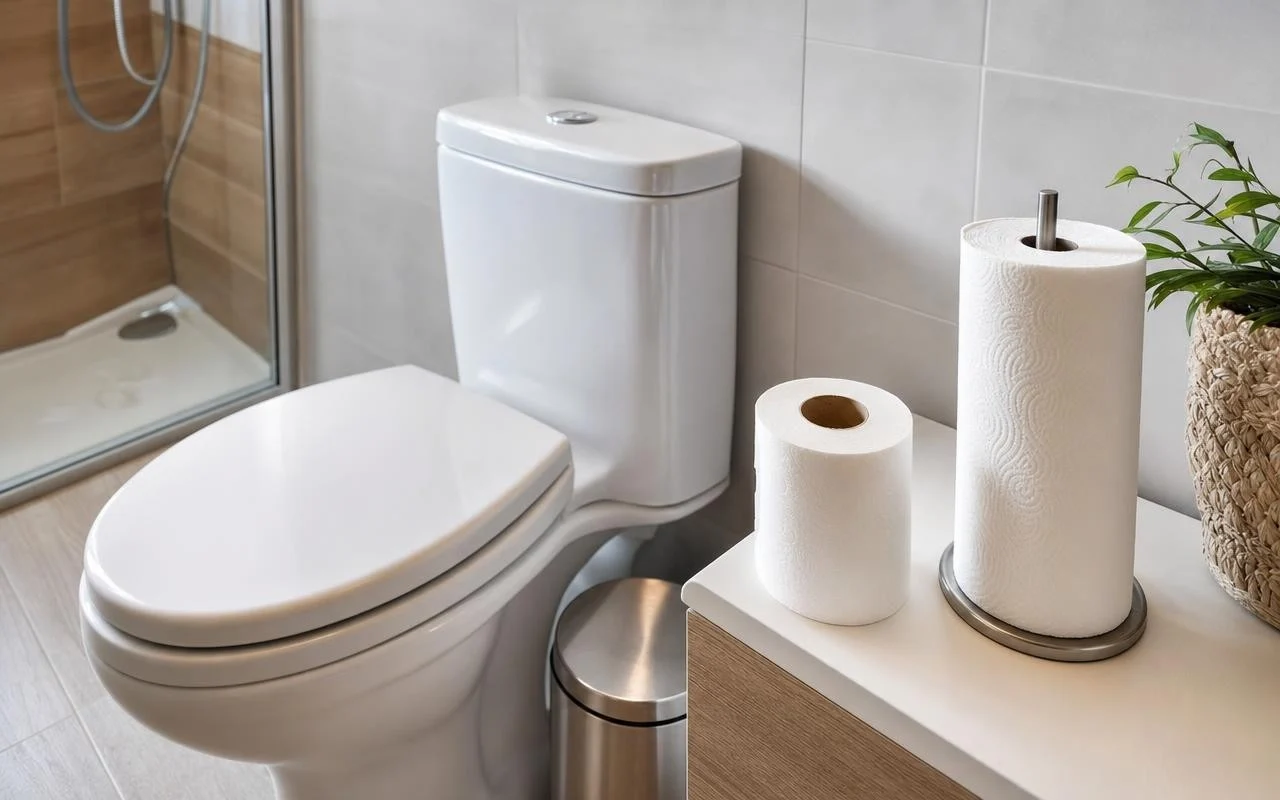
A small sheet of paper towels lying near the toilets, a quick, thoughtless gesture, and straight into the bowl: many households do this without a second thought. Water carries it away, the flush seems to work, and you tell yourself it’s not a big deal. In reality, this reflex can end up costing quite a bit, for your plumbing as well as for the wastewater networks.
In France, ADEME estimates the use of paper towels at about 2.9 kg per person per year, i.e., thousands of sheets that end up somewhere. Is it absolutely necessary to ban paper towels from the toilet, or are there occasional exceptions, a single sheet “for this time”? The specialists’ answer is very clear, and it often comes as a surprise.
Paper towels and toilets: the simple rule to remember
Wastewater management agencies reiterate the same guideline: toilets are not a trash can. The US Environmental Protection Agency (US EPA), which oversees septic systems in the United States, summarizes this rule by listing what should never be flushed and specifically notes: “Never flush paper towels down the toilet,” the agency reminds us. In other words, the toilet bowl is intended only for human waste and for toilet paper.
This position is shared by French sanitation services. The public wastewater service regulation for Bordeaux Métropole lists paper towels among the wastes prohibited from the network. The same message comes from the Metropolitan Water Reclamation District of Greater Chicago or the King County Wastewater Treatment Division in the United States: all consider paper towels as a “waste not to be flushed,” whether your home is connected to the sewer system or to a septic tank.
Why paper towels do not behave like toilet paper
On the surface, paper towels resemble toilet paper: same cellulose base, soft texture, white appearance. In practice, it was designed to resist. The Metropolitan Water Reclamation District explains that the sheets are manufactured to stay solid even when thoroughly soaked, so they won’t tear during cleaning. In the pipes, this resistance becomes a problem: the fibers do not break down quickly enough and can get stuck in a bend or catch on a small existing deposit.
In wastewater networks, these pieces of paper towel add up with other “intruders” (wet wipes, sanitary products, cotton) and form blockages. King County Wastewater Treatment Division notes spending more than $150,000 per year, about €140,000, solely to remove these wastes and send them to landfill. In a septic tank, the paper towels stay at the bottom of the tank instead of decomposing rapidly, which reduces usable volume and can trigger premature malfunctions; the US EPA also notes that roughly one in five American households relies on this type of system.
What to do with paper towels: good practices and cases where one has erred
To avoid these drawbacks, ADEME recommends disposing of paper towels with residual household waste. When used to wipe up kitchen spills or a little clear water, they can sometimes join garden compost in small quantities, provided they have not been soaked with household products, solvents, or cooking fats. In toilets, having a small closed trash bin remains the best way to resist the urge to flush everything away, both at home and in public restrooms.
Have you already flushed several sheets of paper towels down the bowl before learning these recommendations? If drainage is slow, it’s best to stop using the concerned toilets immediately, check if there is any sign of water backing up in the shower or nearby sink, and then carefully try the plunger. If the problem persists or you are connected to a septic tank, sanitation services such as those in King County advise contacting a professional promptly rather than repeatedly trying, to minimize the risk of water damage and system overload.
