
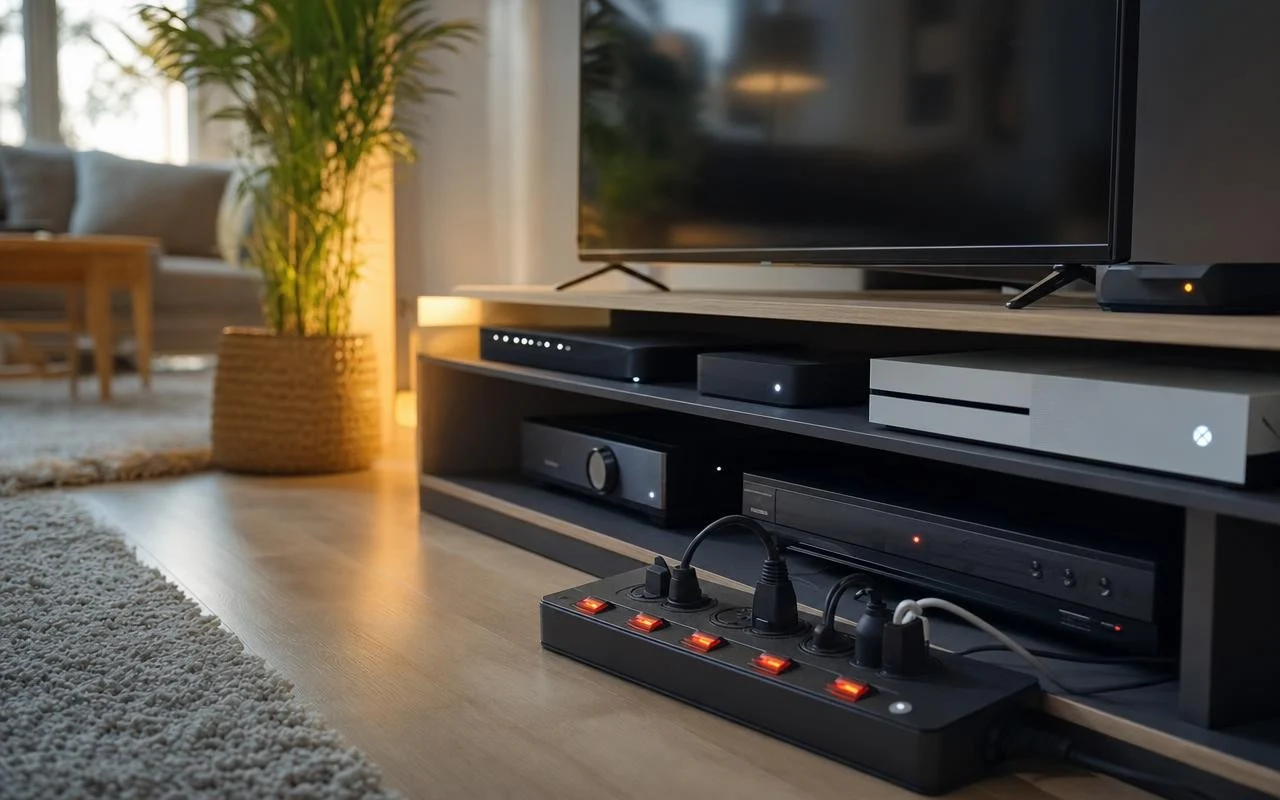
Even when everything at home seems off, the meter keeps ticking.
TVs in standby, blinking routers, chargers forgotten in outlets: this discreet electricity easily escapes the radar.
Electricians are now warning their clients about this hidden drain, which ends up weighing heavily on the electricity bill.
According to Gestoría Eléctrica Corbalán, devices left in standby mode throughout the year can account for around 8% of a household’s total electricity expenditure. ADEME itself speaks of “around 10% of a household’s annual electricity consumption.” Lemonade notes that this amounts to about €80 per year, and up to €180 for highly equipped homes.
Standby Consumption: A Real Electricity Cost
This portion corresponds to the famous standby consumption, sometimes called “phantom load.” Televisions, internet boxes, TV tuners/decoders, routers, gaming consoles, computers, and small power supplies stay connected even when off. The Ministry of Ecological Transition indicates that a TV or a standby box consumes between 1 and 10 watts continuously, up to 80 kWh per year for a single box.
Many myths persist, however. The belief that completely unplugging an appliance would cause a spike in consumption when it is turned back on is deemed false by the ministry. It states: “Turning devices off completely does not incur any extra cost at startup: the consumption is negligible compared with the hours spent in standby.” In other words, every hour cut saves real energy.
Which Standby Devices Weigh Most on the Bill?
Not all equipment is equal. Lemonade reminds us: “A device in standby is not a turned-off device.” The ones with the highest appetite are the internet box and TV decoders left on 24/7, large televisions and recent consoles that download updates. By contrast, a smartphone fully charged or an electric shaver resting on its base weighs very little.
The total of these small power draws depends on the number of devices, their age, and the time spent in standby. In a highly equipped home, the share can climb beyond the 8–10% mentioned, especially if several screens, consoles, and boxes remain on continuously. Modest households, with fewer devices, sit logically lower.
Simple Measures to Track Ghost Consumption
Reducing this invisible consumption does not require work or changing equipment. According to Gestoría Eléctrica Corbalán, many TVs, computers, or consoles stay plugged in “for convenience,” whereas a simple switch would suffice. A wattmeter, plugged between the outlet and the appliance, can measure standby power and identify the worst culprits piece by piece if needed. To act in daily life, experts mainly recommend focusing on the living room and the home office, where most standby activity accumulates.
- Group all screens and boxes onto a power strip with an on/off switch.
- Turn off the box at night or during extended absences.
- Unplug chargers and small power supplies that are not in use.
As Lemonade sums up, “By targeting the most energy‑hungry devices, you can reasonably reduce this bill by 30% to 50%.”
