
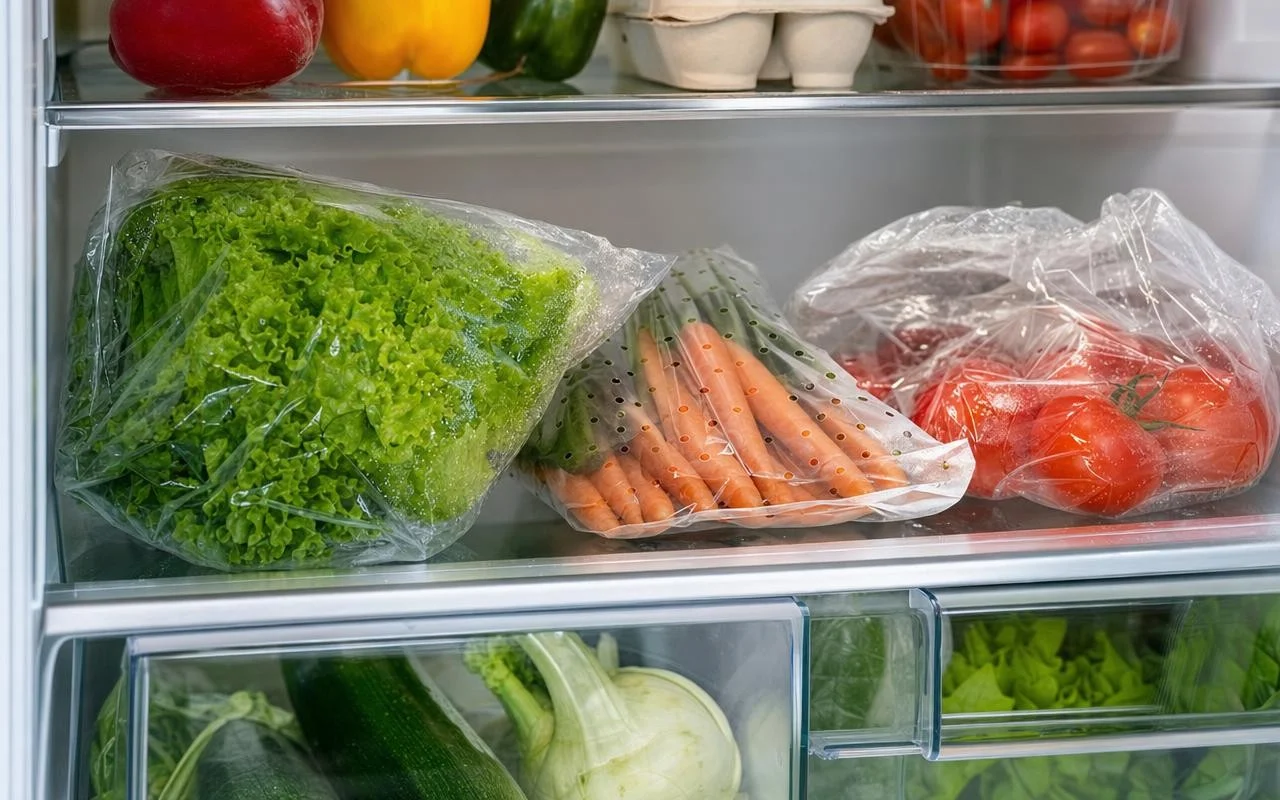
Between wilted lettuce after two days and carrots that soften too quickly, many people end up stuffing their vegetables into a tightly sealed plastic bag in the hope of keeping them longer. Sometimes it works, sometimes you find a bag full of condensation and slimy bits. It’s hard then to know whether the bag is an ally or an enemy.
This habit seems logical: the refrigerator blows cold but dry air, and brands brag about the merits of every closed plastic bag. Official recommendations, for their part, stress mostly the temperature, hygiene, and keeping foods covered. Between protection against drying out and the risk of a steamy environment, everything hinges on how you seal, or don’t seal, the bag.
Légumes et sac plastique fermé : ce qui se passe vraiment au froid
According to the American Food and Drug Administration, a refrigerator should stay at 4 °C or lower to slow bacterial growth. Yet this cold air is dry, which causes produce to continue losing water and eventually wilt. A partially closed or perforated bag creates a more humid atmosphere around the vegetable, limiting this water loss and extending its firmness.
Research from the University of Wisconsin and the University of California has shown that this elevated humidity delays wilting for several vegetables, such as bell peppers. But a completely sealed bag also traps the water that evaporates after washing or cutting and forms condensation on the walls. The FDA reminds us, by the way: “Keep foods covered. Store refrigerated foods in closed containers or sealed storage bags.”
Légumes entiers ou découpés : quand fermer le sac, quand l’aérer
American agricultural extension services like UC Davis or the Arkansas Extension recommend for most vegetables kept whole in the fridge a perforated or slightly open bag, placed in the crisper drawer. About twenty small holes are enough to allow air and gases to circulate while maintaining good humidity. Health Canada also advises separating the vegetable drawer from fruits, which emit ethylene.
For vegetables already washed and cut, the logic changes. Texas A&M AgriLife and Maricopa County recommend keeping them in an airtight container or bag, immediately in the refrigerator at 4 °C or lower. The exposed surface dries and becomes more prone to contamination. You can slip a clean sheet of absorbent paper into the bag before sealing to absorb the excess moisture.
Frigo, tiroir à légumes et erreurs fréquentes avec les sacs
The crisper drawer of your refrigerator isn’t just a simple bin. Health Canada explains that it helps maintain a high humidity that is ideal for most vegetables, while another, drier compartment is better suited for fruits. This separation also limits the action of ethylene emitted by certain fruits, which speeds up the yellowing and softening of delicate vegetables like broccoli or lettuce.
The most common mistakes then come down to details: storing vegetables still damp in a completely sealed bag, washing whole pieces before storage, mixing ethylene-producing fruits with sensitive vegetables in the same bag, or leaving the refrigerator too full or too warm. In all these cases, the bag speeds up spoilage rather than slowing it down.
