
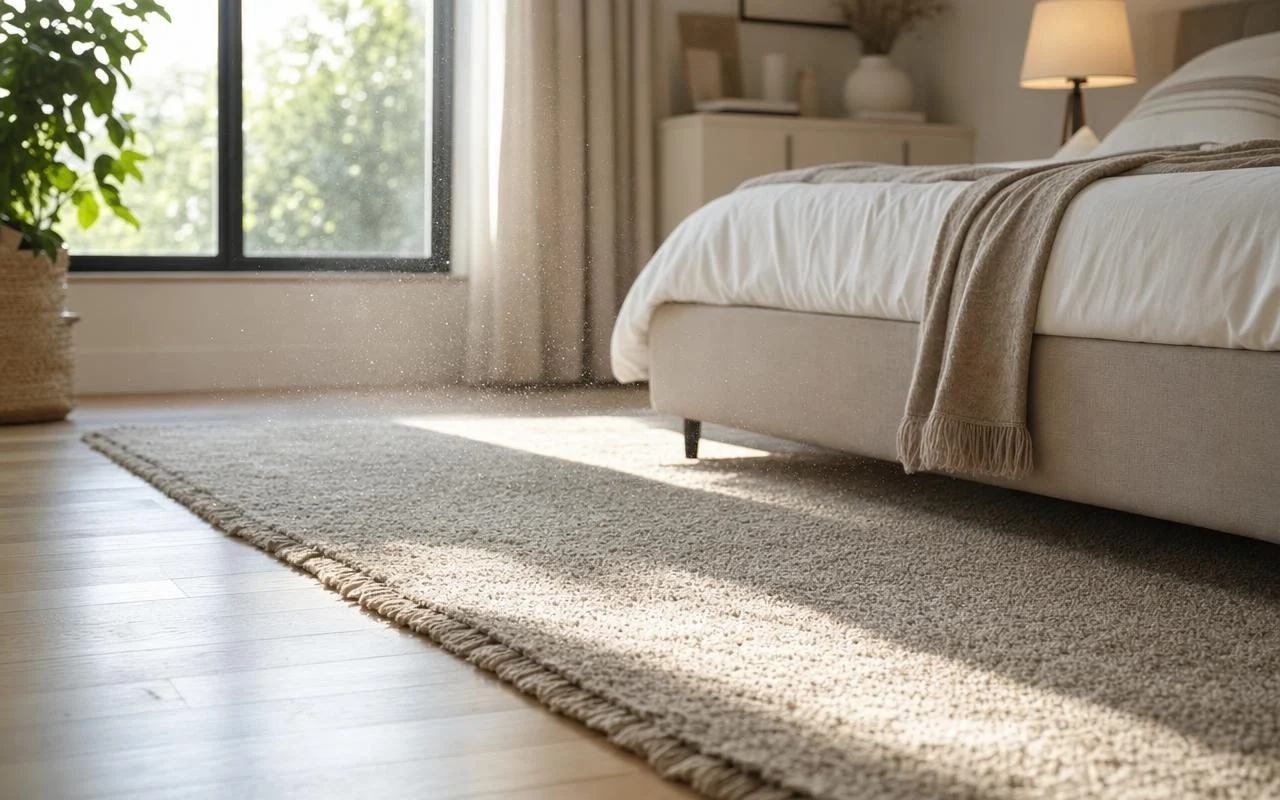
No matter how hard you vacuum, wipe the nightstand and wash the sheets, a fine gray film keeps settling on your furniture almost overnight. In a bedroom, it’s even more noticeable, especially when you love cozy, well-decorated atmospheres. An element highly valued for warming the space could, in fact, be the main culprit of this dust that accumulates everywhere.
Dust is a mixture of skin cells, hair, textile fibers, animal dander, pollen, and sometimes mold spores. Specialists note that adults shed between 30,000 and 40,000 skin cells per hour, and a large portion ends up in the bedroom, where the air circulates little. And what if the real trigger wasn’t your nightstand, but what lies on the floor?
Why the Bedroom Carpet Sends Dust Skyrocketing
The decorative item singled out is simply the rug. According to experts quoted by the site House Digest, carpets trap a lot of dust, pollen, mold spores, and other microscopic particles lodged deep within the fibers. A hard floor can be cleaned with a few passes of the vacuum or a mop. With a bedroom rug, these same particles lodge between the fibers, where they can stay for weeks if you don’t take care of them seriously.
The situation gets more complicated when the rug is partially tucked under the bed, a very common setup in bedrooms. On bare parquet, you can easily reach under the bed with a long-handled tool. With a rug, the dust remains trapped within the invisible fibers. Each step, each movement of a chair lifts part of these particles back into the air, giving that impression of a “ten times dustier” room.
The Long-Pile Rug, Bed, and Allergies: A Real Trap
Long-pile rugs are the most problematic. Their thick fibers create nooks where dust penetrates deeply, where many vacuums can’t reach. The American Lung Association reminds us that older carpets and rugs can accumulate allergens, pollutants, and even residues of volatile organic compounds from glues or underlays. Every time you walk on them, some of that material is re-suspended in the air you breathe while sleeping.
For people with allergies or asthma, several health guides, such as the CHAMPS manual for asthma patients, recommend limiting carpets in the bedroom as much as possible. When that’s not possible, frequent vacuuming with a device equipped with a HEPA filter is considered essential. Some signs that your rug is becoming a problem include long fibers, under-bed placement, the presence of pets, dust that comes back very quickly, and a itchy nose upon waking.
How to Keep a Rug in the Bedroom Without Choking on Dust
Good news: it isn’t always necessary to ban the rug. House Digest’s décor experts advise opting for short-pile models, which are easier to vacuum, or two small washable runner-style rugs placed on either side of the bed rather than one large rug tucked underneath. This lightweight rug type can go in the washing machine, allowing you to remove much more dust than with a simple vacuuming.
To limit the dust in the bedroom, several steps work in concert: vacuum the rug at least once a week, or more often if you have allergies, using a vacuum cleaner with a HEPA filter; flip the rug to vacuum the backside from time to time; have the rug deeply cleaned once a year; install an air purifier if needed with a good CADR; take off your shoes before entering; and regularly dust the furniture. With these habits, the rug stays cozy without turning your bedroom into a permanent dust cloud.
Sources
- JLM
“No More Dust! Discover the Decor Trend That Finally Replaces Open Kitchen Shelves”
