
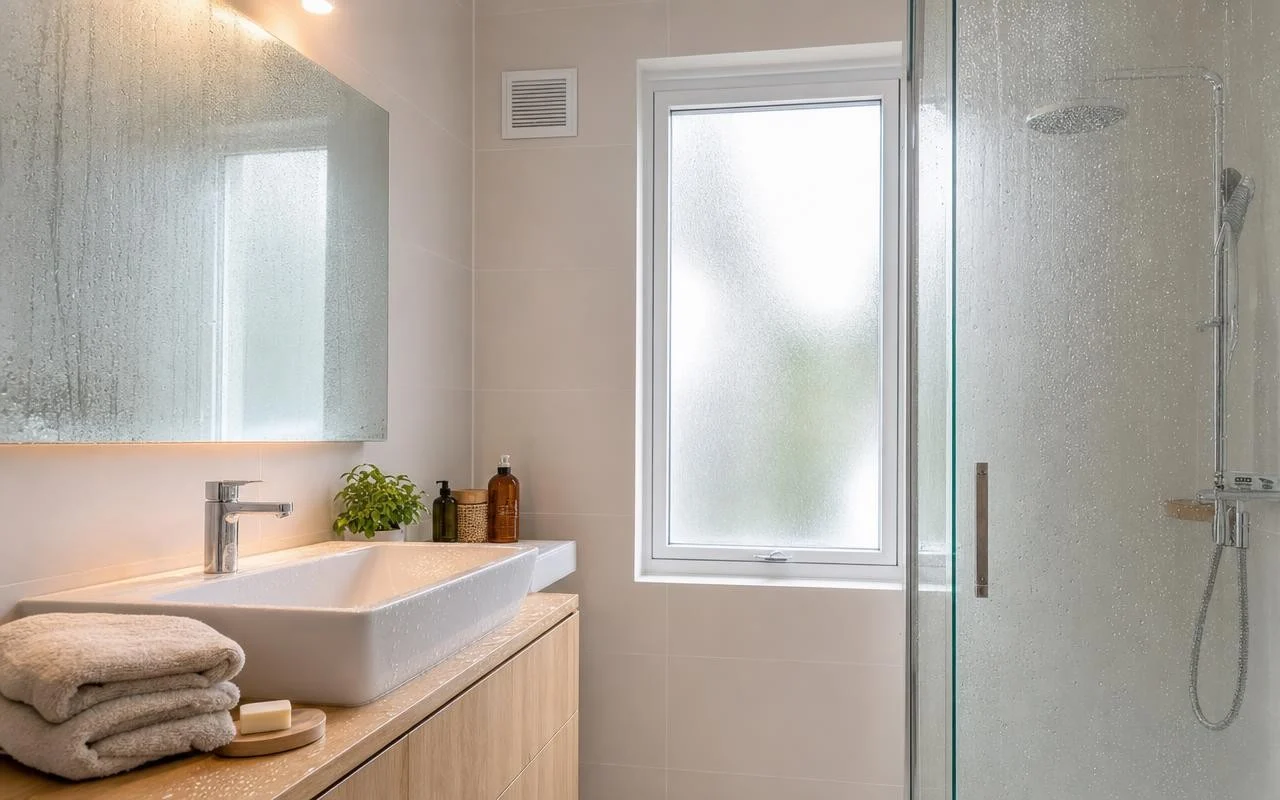
After a steaming hot shower, many people share the same reflex: to throw the bathroom window open wide in order to chase away the fog. This gesture seems obvious, especially when mirrors are slick with condensation and the air feels stifling. Yet ventilation specialists are now warning about this reflex, considered counterproductive, particularly during cold spells.
In this small, humidity-soaked space, even a minor ventilation mistake can promote condensation, followed by mold. According to several studies reported by experts, an excess of water on surfaces allows mold to develop in as little as 24 to 48 hours if nothing is done. The reflex of opening the bathroom window after the shower thus does not have the intended effect.
What happens to the bathroom air after a shower
When you step out of the shower, the air is warm and rich with water vapor, while walls, tiles, and the window remain cooler. The relative humidity climbs to the dew point, the moment when water deposits on surfaces. “The cold air from outside rushes inward and mixes with the warm, humid air, and it is at that moment that condensation forms on the tiles, the walls, the mirrors and around the window”, explain the specialists at Plumbworld.
The more cold surfaces there are, the more this condensation accumulates as a film of water on the joints, the paint, or the window sills. “All this extra humidity is a real invitation for mold, and once they start to develop it can be very difficult to remove them” they add. Without humidity management, they warn, mold can appear in 24 to 48 hours, hence the value of favoring non-porous materials on walls and floors.
Why opening the window right after the shower can worsen condensation
On paper, opening the window seems logical: warm, humid air escapes, and outside air comes in. In reality, when it’s cold outside, the fresh air cools surfaces and accelerates the formation of condensation. Experts remind that opening a window just after the shower also disrupts the circulation created by the extractor or the VMC, which no longer has time to evacuate the humidity to the outside.
James Roberts, from Sanctuary Bathrooms, emphasizes these everyday practices: “We recommend closing the shower enclosure or door, keeping towels and surfaces dry, and running the extractor with the door closed”, he explains. The experts advise turning on the extractor before the shower and letting it run for at least 30 minutes afterward, rather than opening the window wide immediately.
The right habits to ventilate without promoting mold
To keep a bathroom healthy without giving up ventilation, experts recommend a simple protocol. Run the extractor or the bathroom VMC before and after the shower, with the door closed, for at least 30 minutes, then run a squeegee over the shower enclosure, the tiles and other wet surfaces to remove most of the water, as Nicholas Auckland reminds us.
The same expert also recommends heating the room with a towel warmer or a radiator, so that surfaces stay above the dew point. He warns to avoid opening the window wide immediately, for the risk of blowing away all the warm air. Agencies like ADEME instead advocate a brief, wide ventilation, 5 to 10 minutes, once the steam has settled.
