
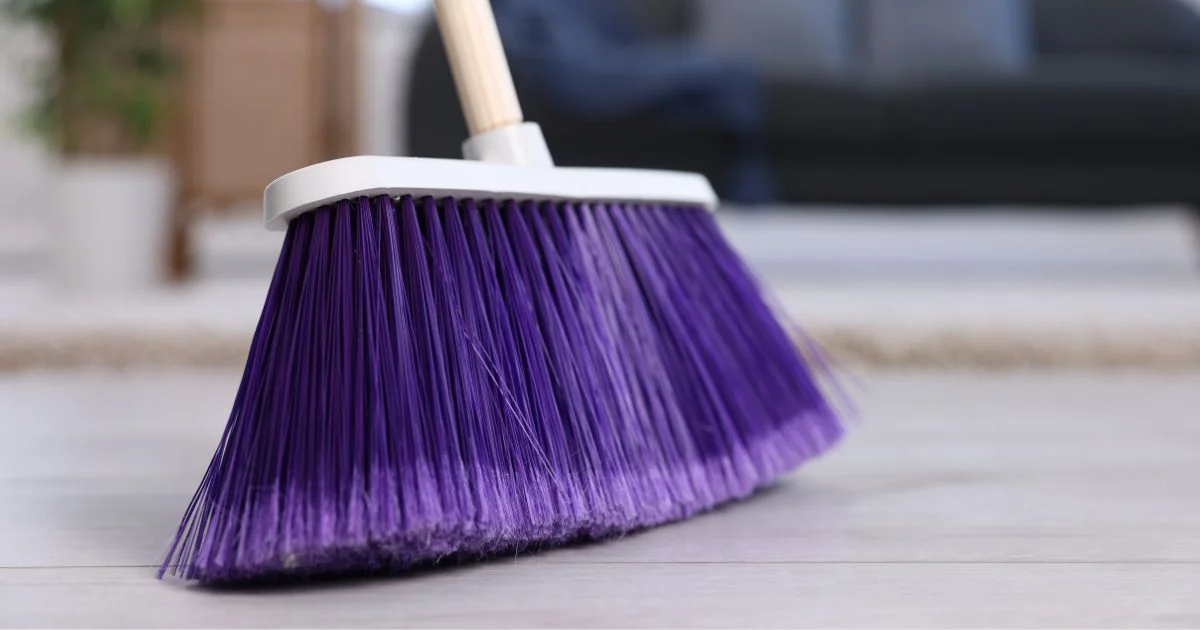
We tend to think about cleaning floors, but we rarely consider maintaining the broom that does the hard work of sweeping up dust and dirt. With repeated use, its bristles accumulate residues, lose their rigidity, and sometimes begin to splay in every direction. Before deciding to replace a broom that has become less effective, a simple trick can help: using salt, combined with white vinegar and hot water. The distinctive feature of this method? Let the bristles soak for several hours, ideally overnight, to give them a thorough cleaning.
Salt on the broom, a trick to clean and firm up the fibers
The principle is not simply to sprinkle a few grains of salt onto the broom. To perform this method correctly, prepare a bath in a bucket or container wide enough to accommodate the entire lower portion of the broom. Pour in very hot water, then about a cup of white vinegar and roughly half a cup of salt. Only the bristles should be submerged. During the soak, the mixture penetrates the gaps between the fibres, where dust and small debris tend to get trapped despite a quick rinse with water, reports El Cronista.
Salt would also play an interesting role in the bristles’ firmness. Over time and with repeated passes on the floor, the broom’s fibres can soften, bend, or splay, making it progressively less precise at gathering dust. In this trick, salt is used to help restore more firmness. Combined with hot water and white vinegar, it cleans the fibres while aiding the broom in regaining a shape closer to its original condition. A way to extend its use without having to invest immediately in a new accessory.
The right soaking time to thoroughly clean your broom
The duration of soaking can vary depending on the broom’s condition. About thirty minutes is the minimum to allow the mixture to act, but leaving the bristles submerged overnight is generally recommended when they are particularly dirty or deformed. This solution is therefore easy to implement in the evening, after the last sweep. The next morning, simply remove it from the container. There is no need to soak the handle or other parts that are not designed to stay in contact with water for long.
Once the bath is finished, the drying process deserves its own attention. The broom should first be shaken gently to remove as much water as possible, then positioned to allow the bristles to dry properly. Ideally, leave it upside down, bristles facing downward toward drainage, for example in the shower or above a sink. This setup prevents moisture from being trapped inside the bristles for too long and reduces the risk of bad odors. It is best to wait until the broom is completely dry before using it again.
A broom stays cleaner longer with regular maintenance
This tip can be especially useful for regularly maintaining a broom that is still in good condition. It obviously cannot repair broken, very worn, or permanently deformed bristles. Likewise, it is prudent to check the material of the fibres and the manufacturer’s recommendations beforehand, since some brooms are made from materials that may not tolerate very hot water or prolonged soaking. The goal remains primarily to remove the residues accumulated in the bristles and to preserve their effectiveness as long as possible, not to restore a heavily damaged accessory to the appearance of a new product.
Beyond salt, this method mainly reminds us that a broom also deserves regular cleaning. Used on floors that can be dusty or dirty, it can quickly accumulate hair, crumbs, and other debris between its bristles. Letting it soak occasionally in a mixture of hot water, white vinegar, and salt can thus be a simple and economical maintenance routine. Performed overnight, the operation requires almost no effort and allows the next day to find a broom that is cleaner, with bristles potentially firmer and better grouped, ready to return to service.
